
Why Do My Feet Hurt When I Snowboard? The Ultimate Guide to Pain-Free Riding
You’ve waited all week for fresh powder. You strap in, catch the first lift, and by the third turn of your second run, it hits: that agonizing, burning sensation in your arches, or perhaps a sharp pinch on your pinky toe. If you’ve ever wondered, “Why do my feet hurt when I snowboard?” you are far from alone. In fact, foot pain is the single most common complaint among riders of all skill levels.
Snowboarding foot pain isn’t just an annoyance; it’s a performance killer. When your feet hurt, your technique suffers. You stop leaning into your edges, your weight distribution gets messy, and you start making “panic turns” to avoid further discomfort. Understanding the mechanics of your foot inside a snowboard boot is the first step toward a pain-free season.
Common Types of Snowboarding Foot Pain
Not all foot pain is created equal. To fix the problem, you first need to identify the “flavor” of agony you’re experiencing:
- Arch Cramping: Often described as a “burning” or “seizing” in the middle of the foot. Usually caused by muscle fatigue or lack of support.
- Top of Foot Pressure: A dull ache or numbness on the dorsal part of the foot. This is frequently linked to over-tightened laces or binding straps.
- Heel/Ache: Sharp pain in the back of the foot, often resulting from friction or the heel lifting inside the boot.
- Toe Bang: When your toes repeatedly smash into the front of the boot, common during heavy carving or in boots that are too large.
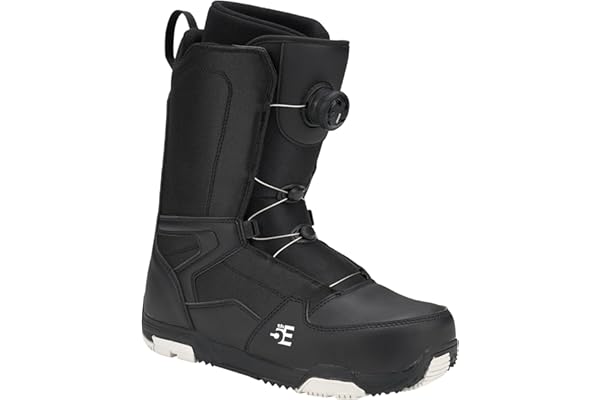
Upgrade Your Comfort: Top-Rated Snowboard Boots
If your current boots are causing agony, it might be time for a pair designed with modern ergonomics and heat-moldable liners.
View Best Snowboard BootsPoor Boot Fit: The #1 Cause
The snowboard boot is the most critical piece of gear you own. While a fancy board looks cool, a poorly fitting boot will ruin your day faster than a core shot. Most riders suffer from pain because they treat snowboard boots like sneakers. Snowboard boots need to be snug—very snug—but never restrictive.
When there is extra space in your boot, your foot moves. Every time you move your foot inside the boot before the boot moves the binding, you are losing energy and creating friction. This “slop” forces your smaller foot muscles to work overtime just to stabilize yourself, leading to massive cramping.
Incorrect Boot Size or Width
Here is a hard truth: roughly 60% of snowboarders are riding in boots that are at least a half-size too large. Why? Because when you try them on in the shop, a larger boot feels “comfortable” like a slipper. However, on the mountain, that extra room leads to heel lift and toe bang.
The Shell Fit Test
To check if your size is right, remove the liner from the boot. Put your foot in the empty shell and slide your toes until they touch the front. If you can fit more than two fingers behind your heel, the shell is too big. Ideally, you want a “one-finger” fit for performance riding.
Heel Lift and Pressure Points
Heel lift occurs when your heel rises off the footbed during a toeside turn. To compensate, riders often over-tighten their bindings, which creates a new problem: pressure points. These sharp pains usually occur on the ankle bone or the top of the foot where the binding strap sits.
If you find yourself constantly cranking down your budget snowboard bindings to stop your heel from moving, the problem is your boot volume, not the binding tightness.

Responsive Control: Pro-Level Bindings
Better bindings distribute pressure more evenly across the foot, reducing hot spots and improving edge-to-edge response.
Check Burton Cartel X ReviewBinding Setup and Stance Issues
Sometimes the pain isn’t in the boot—it’s in the geometry of how you stand on the board. If your binding angles are too aggressive or your stance is too wide, it puts lateral pressure on your feet. This often manifests as pain on the outside of the foot or the knees.
Consider trying a “duck stance” (e.g., +15 / -15) to allow your body to move more naturally. If you are unsure of your orientation, check out our guide on goofy vs regular snowboard stances to ensure you’re set up for success.
Lack of Proper Footbeds or Insoles
Most stock snowboard boot insoles are essentially “packaging foam.” they provide zero arch support. When you lean into a turn, your arch collapses, the foot elongates, and the muscles on the bottom of your foot stretch painfully. This is the primary cause of “boot bang” and arch burn.
Switching to a supportive, aftermarket footbed can be a total game-changer. It holds your foot in a “neutral” position, preventing the collapse and keeping your foot from sliding forward into the toe box.
Over-Tightening BOA or Lace Systems
We see it every day: a rider experiences a little bit of movement, so they crank their BOA or speed lace system until their foot turns purple. This cuts off circulation and compresses nerves. If your feet feel cold or numb, but not necessarily “sharp” pain, you are likely over-tightening. Tighten the lower zone of your boot just enough to be snug, and keep the upper zone tight for support.

Stay Protected on the Slopes
Foot pain makes you more likely to fall. Ensure you have the right protection when your technique fails due to fatigue.
Best Impact Shorts GuideRiding Technique and Muscle Fatigue
Newer riders often suffer from “the claw.” This is when you subconsciously scrunch your toes to try and “grip” the board during turns. Your toes cannot grip a snowboard. This tension travels through the metatarsals and causes the entire foot to cramp. Focus on keeping your toes flat and relaxed, letting the boot and bindings do the work.
Additionally, if you haven’t been doing your off-season prep, your feet simply might not be conditioned for the lateral stresses of snowboarding. Our fitness guide for snowboarding can help you build the necessary foot and calf strength.
How to Prevent Foot Pain While Snowboarding
- Heat Molding: Most modern liners can be heat-molded to the shape of your foot. This creates a custom pocket and eliminates “hot spots” before you even hit the snow.
- Thin Socks: Counter-intuitively, thick socks cause more pain. They bunch up, create pressure points, and actually make your feet colder by reducing circulation. Wear one pair of thin, merino wool snowboard-specific socks.
- Dynamic Warm-up: Roll your feet over a lacrosse ball or a frozen water bottle before you head out to loosen the plantar fascia.
Quick Fixes You Can Try on the Mountain
If you’re already on the mountain and the pain is starting, don’t just “power through it.” Try these:
- Unstrap on the Lift: Give your feet a 5-minute break from the binding pressure on every chairlift ride.
- The Toe Tap: If your toes are numb, wiggle them vigorously while sitting on the lift to restore blood flow.
- Micro-Adjust: Loosen your boots by 10% before your next run. Often, just a tiny bit of released pressure is all the nerves need to stop firing pain signals.
Snowboarding Foot Pain FAQ
Should my toes touch the end of my snowboard boots?
Yes. When standing straight, your toes should lightly graze the end. When you sink into a “snowboard stance” (knees bent), your toes should pull back slightly from the front.
Is it normal for my feet to hurt for the first few days of the season?
A mild ache from muscle fatigue is normal as your “snowboarding muscles” wake up. However, sharp, stabbing pain or total numbness is a sign of a fit issue.
Do BOA boots cause more pressure points than laces?
Not necessarily. However, BOA systems are so easy to tighten that riders often over-crank them without realizing it, leading to pinched nerves.
How long do snowboard boots take to break in?
Typically 3 to 5 full days of riding. If they still hurt after 10 days, the fit is likely wrong.
Why do my arches burn specifically on the cat-track?
Cat-tracks require constant small edge adjustments which fatigue the arch muscles. This is a classic sign of needing better insoles.
Can binding angles cause foot pain?
Absolutely. If your angles are “fighting” your natural knee and ankle alignment, it forces your feet to twist inside the boots.
Should I wear two pairs of socks to stop my heel from lifting?
No! This will cut off circulation and lead to more pain. Use J-bars or foam inserts to narrow the heel pocket instead.
Does boot stiffness affect pain?
Yes. A boot that is too stiff for a beginner will be unforgiving, while a boot that is too soft for an expert will force them to over-tighten to get response.
Final Thoughts
Snowboarding is supposed to be about freedom and fun, not endurance and agony. By taking the time to understand your boot fit, stance, and technique, you can eliminate foot pain and focus on what really matters: the next turn. Don’t settle for “good enough” gear; your feet are the foundation of your riding.
Remember, if you’ve tried everything and the pain persists, go see a professional boot fitter. They are the “doctors” of the snowboarding world and can perform “surgery” on your boot liners to make them fit like a second skin.


 Home
Home
 About
About
 My Cart
 Reviews
 Compare