
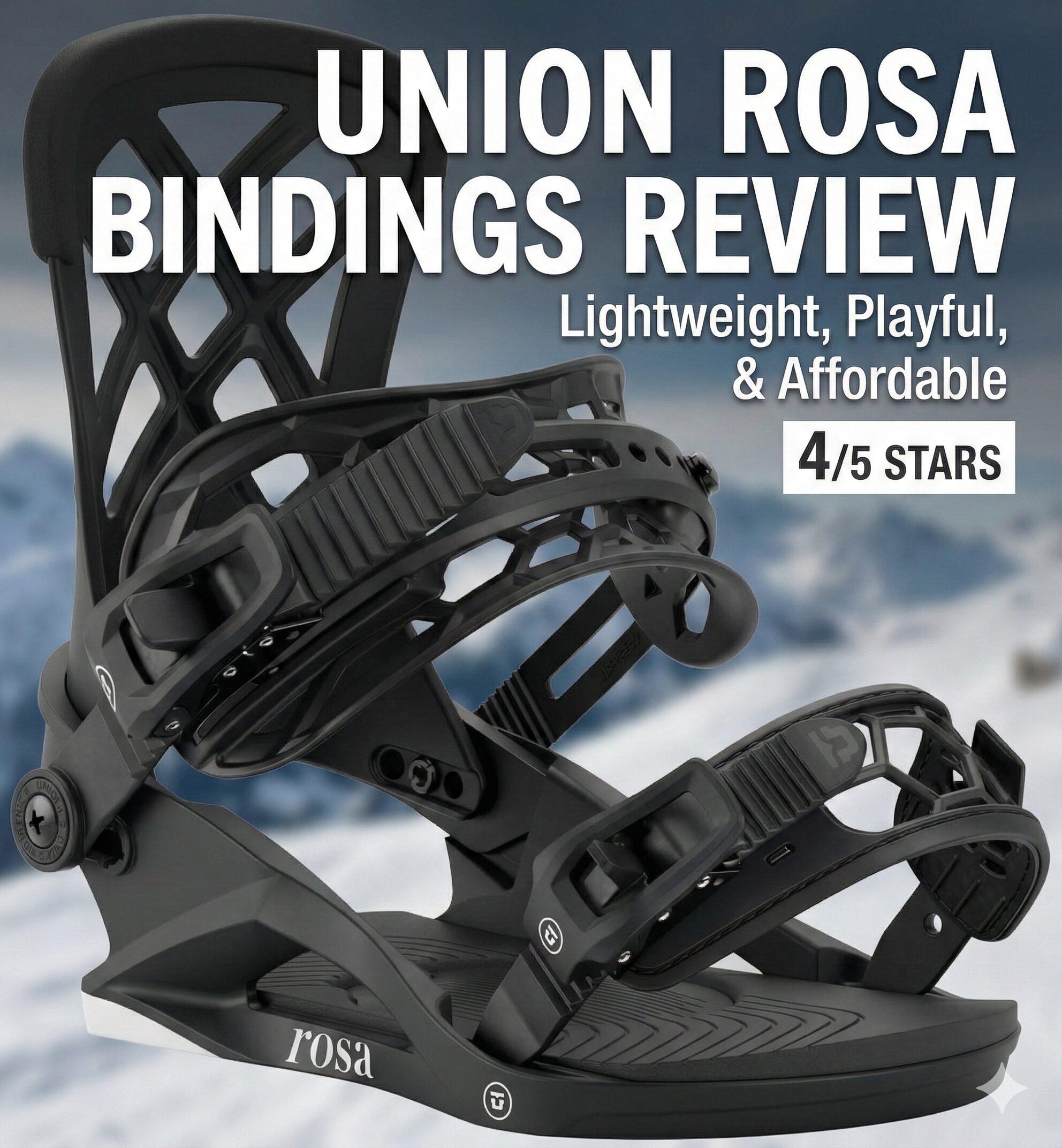
Union Rosa Women’s Snowboard Bindings Review: The Lightweight Champion
For beginner and intermediate female riders, the search for the perfect snowboard binding often ends up being a frustrating game of compromise. You find something affordable, but it’s heavy and clunky. You find something lightweight, but it lacks durability. Enter the Union Rosa. Union Binding Company has long been the gold standard in the industry, and their women’s line is no afterthought. The Rosa was specifically engineered from the ground up to solve the weight problem.
Touted as one of the lightest snowboard bindings on the market, the Rosa isn’t just about shedding grams; it’s about making snowboarding effortless. Heavy gear fatigues your legs faster, cutting your day short. By utilizing advanced Thermoformed EVA and Duraflex nylon, Union has created a binding that feels like an extension of your boot rather than an anchor. This review dives deep into whether the Rosa is just a beginner’s entry-point or a legitimate contender for park laps and all-mountain cruising.
We will explore the specific flex patterns tailored for female anatomy, the durability of the Stage 8 baseplate, and how it compares to higher-end models like the Union Strata (which many women also ride). If you are tired of heavy, unresponsive rental gear and are ready to invest in your own progression, keep reading. And if you’re new to the lingo, brush up on your slang terms for snowboarding before hitting the slopes.

Who is the Union Rosa For? (The Target Rider)
The Union Rosa is unapologetically designed for Beginner to Intermediate freestyle and all-mountain riders. It is the perfect “first binding” for someone moving away from rental equipment, but it also has a loyal following among advanced park riders who want a soft, skate-like feel.
This Binding is For You If:
- You Are Learning: The soft flex is forgiving. If you catch an edge, the binding has enough give to help you recover rather than slamming you into the snow instantly.
- You Ride Park: Jibbers love the Rosa because it allows for easy tweaking of grabs and presses on rails.
- You Hate Heavy Gear: If you find your legs burning by 1:00 PM, switching to a lightweight binding like the Rosa can extend your riding day significantly.
- You Are on a Budget: It offers premium Union technology at an entry-level price point.
Who Should Avoid It? If you are a hard-charging freerider who bombs steep groomers at 50mph, the Rosa will feel too soft. You won’t get the instant edge-to-edge response needed for aggressive carving. For that, you might want to look at the Union Atlas or the women’s Trilogy. Also, if you ride extremely stiff boots, the Rosa will create a mismatch in flex.
Tech Specs & Materials
Union owns their own factory (“The Box” in Italy), allowing them to use proprietary materials that other brands can’t access. The Rosa benefits from this trickle-down technology.
| Component | Material / Technology |
|---|---|
| Baseplate | Stage 8 Duraflex |
| Bushing | Thermoformed EVA |
| Heelcup | Extruded 3D Aluminum |
| Highback | Stage 12 Rosa Duraflex |
| Ankle Strap | Forma |
| Toe Strap | TS 4.0 |
| Ratchets | Aluminum |
| Disk Type | Universal Disk (Compatible with 4×4, 4×2, and Channel) |
| Flex Rating | 4/10 (Soft/Medium) |
Stage 8 Duraflex Baseplate: The Foundation
The core of the Rosa’s weight savings comes from the Stage 8 Duraflex Baseplate. Duraflex is a custom-blended nylon that is engineered specifically for cold temperatures. Cheap plastic gets brittle and snaps when it freezes; Duraflex retains its engineered flex profile whether it’s 30°F or -10°F.
The Stage 8 design removes as much material as possible without sacrificing structural integrity. It is cored out in specific areas to shave grams. Paired with Thermoformed EVA bushings, the baseplate provides excellent vibration dampening. This means when you are riding over “chunder” (choppy snow), the binding absorbs the chatter before it reaches your knees. If you struggle with foot pain, this dampening is crucial—learn more in our article on why do my feet hurt when I snowboard.
Rosa Highback: Soft & Surfy
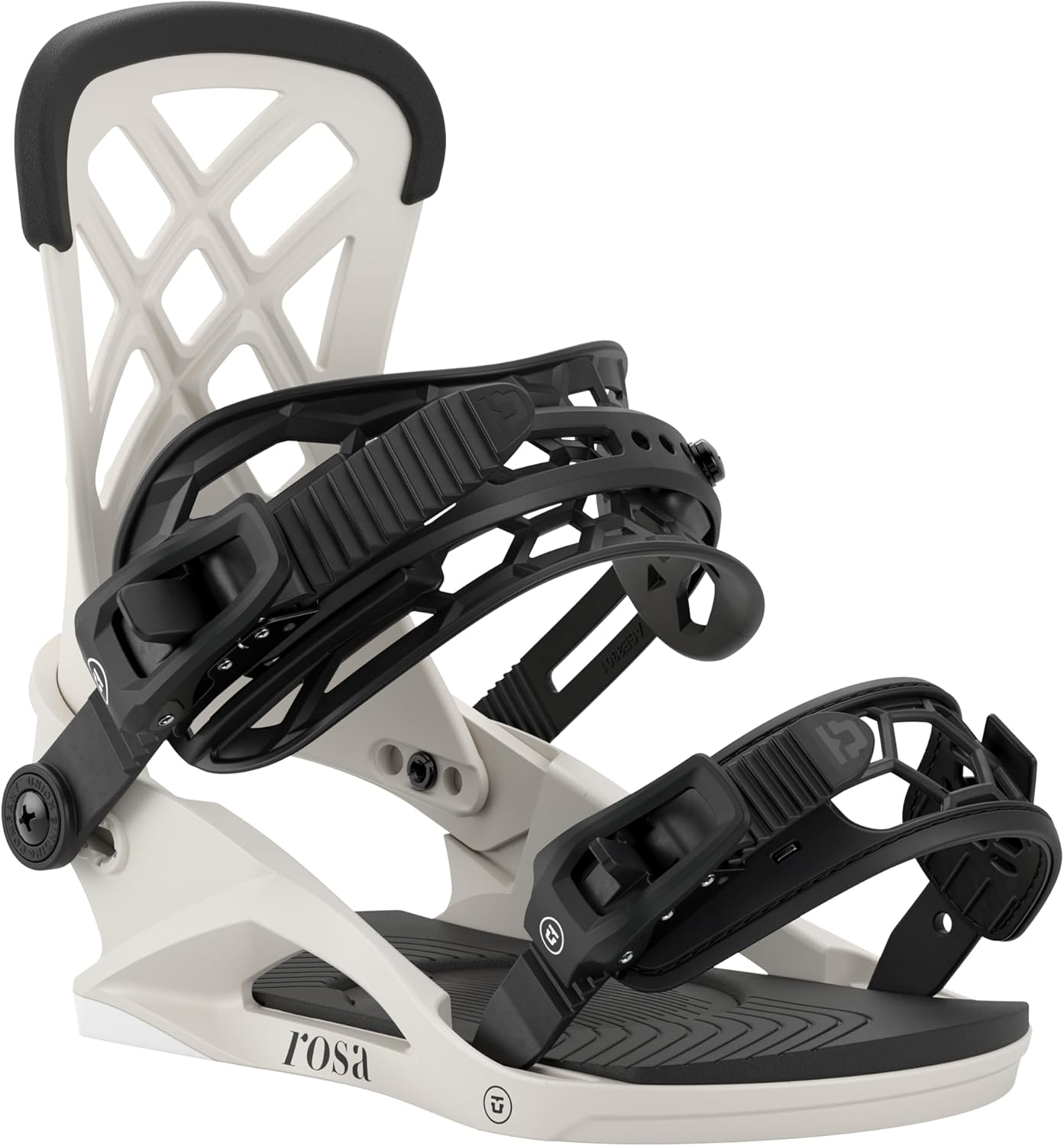
The highback is where you get your heelside response. The Stage 12 Rosa Highback is designed with a symmetric shape and a progressive flex. It is stiffer at the bottom for response but softer at the top.
This design is intentional. The softer top allows you to “tweak” your grabs and press into turns without the highback biting into your calf muscle. It creates a surfy, loose feel that is incredibly fun in powder and slush. It also features a tool-less forward lean adjuster, allowing you to quickly change the angle on the fly—crank it forward for the pipe, lean it back for the lift line.
Comfort First: Forma Ankle Strap & TS 4.0 Toe
Ankle Strap: The Rosa uses the Forma ankle strap. This is a padded, pillow-like strap that focuses on comfort. Unlike the stiff, minimalist straps on high-end freeride bindings, the Forma molds around your boot like a memory foam mattress. It eliminates pressure points, ensuring you can ride all day without numbness.
Toe Strap: The TS 4.0 toe strap is a simple, effective design. It can be positioned over the top of the foot or over the toe cap. We highly recommend the toe cap position, as it pulls your boot back into the heel cup for a locked-in feel. The material is grippy and fits virtually any snowboard boot brand.
Performance on Snow
How does the Rosa actually feel when you strap in?
Forgiveness (10/10)
This is the Rosa’s superpower. It is incredibly forgiving. If you make a mistake and catch an edge, the binding flexes rather than instantly transferring that energy into a slam. This builds confidence rapidly for learners.
Park & Freestyle
The soft flex makes buttering and pressing effortless. You don’t have to fight the binding to lift the nose or tail of your board. It feels like wearing a skate shoe. It pairs perfectly with softer, twin-tip boards designed for park riding.
Response
The tradeoff for all this comfort is response. On steep, icy terrain, the Rosa can feel a bit “washy.” When you really need to drive energy into the edge to hold a line on ice, the binding absorbs some of that energy. It is not built for high-speed carving.
Union Rosa vs. The Competition
Union Rosa vs. Union Juliet
The Union Juliet is the next step up. It features canted footbeds (which align your knees) and a slightly stiffer baseplate.
Verdict: Choose the Rosa for pure budget/beginner needs. Choose the Juliet if you ride more days per year and want canting.
Union Rosa vs. Burton Citizen
The Burton Citizen is the direct competitor. It uses the Re:Flex disc which offers great board feel. The Rosa feels slightly more durable due to the extruded aluminum heel cup (Burton uses polycarbonate).
Verdict: Rosa wins on durability. Citizen wins on board flex feel.
Union Rosa vs. Union Trilogy
The Trilogy is the pro-level binding. It is stiffer, more responsive, and uses higher-end materials.
Verdict: Only upgrade to the Trilogy if you are an advanced rider charging hard.
Pros & Cons Summary
Pros
- Extremely lightweight (reduces fatigue).
- Very forgiving flex (great for learning).
- Lifetime warranty on baseplate and heel cup.
- High-quality aluminum ratchets (rare at this price).
- Tool-less adjustments.
Cons
- Too soft for aggressive all-mountain riding.
- Lacks canted footbeds (can cause knee fatigue for some).
- Basic toe strap compared to higher-end models.
Setup & Compatibility
The Rosa uses a Universal Disk. This is compatible with:
- Standard 4×4 Insert Pattern
- 4×2 Insert Pattern
- The Channel (Burton Boards)
Pro Tip: Before your first day, adjust the heel cup. You can slide the aluminum heel cup in or out to ensure your boot is perfectly centered over the board. This prevents toe drag and heel drag, which are common issues for beginners.


 Home
Home
 About
About
 My Cart
 Reviews
 Compare