
There is a specific kind of pain known only to winter sports enthusiasts: the sound of a sharp snowboard edge slicing into the leather upholstery of a car. Or the puddle of melting slush soaking into the carpet of your trunk. In 2026, hauling gear inside your vehicle is not just outdated; it destroys the resale value of your car and damages your expensive equipment.
Choosing the right transport solution is critical. Do you go for the sleek aerodynamics of a roof clamp? The massive storage of a cargo box? Or the easy access of a hitch mount? In this comprehensive guide, we have tested, measured, and analyzed the top 10 racks on the market to help you make the perfect choice.
If you aren’t ready to invest in a hard rack yet, you absolutely must protect your car’s interior. Check out our guide to the best snowboard bags for padded protection during transport.
1. Thule SnowPack Extender
Best Overall 2026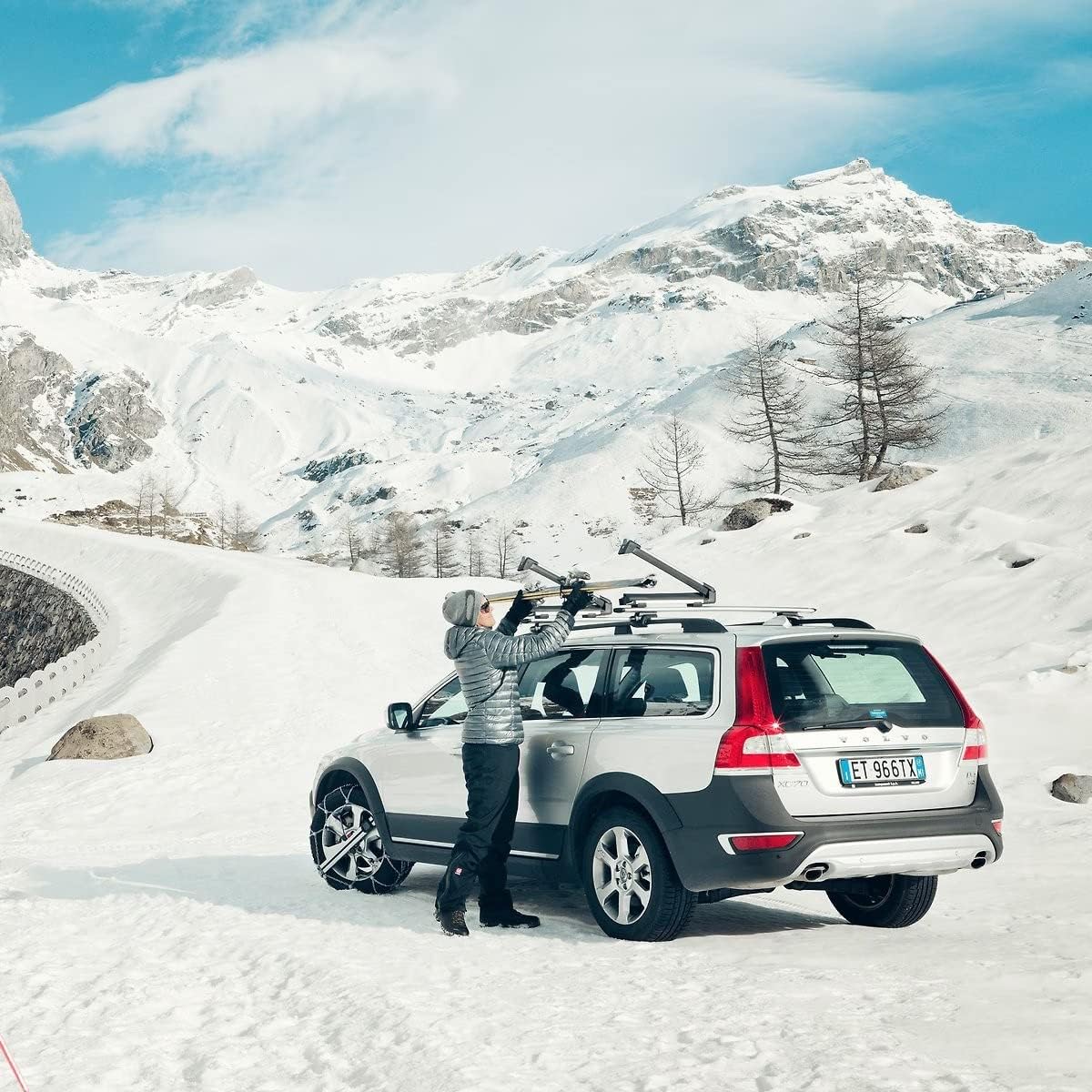
The Thule SnowPack Extender solves the biggest problem with roof racks: reaching the middle of the roof. With a slide-out mechanism that extends the rack 15 inches off the side of the car, you can load and unload your gear without leaning against a dirty, salty vehicle.
Pros
- Slide-out action saves your back.
- Giant buttons easy to use with mittens.
- Rubber arms protect edges.
Cons
- Expensive price point.
- Adds height to vehicle (watch garages).
2. Yakima FatCat EVO 6
Best Aerodynamics
Wind noise can ruin a road trip. The Yakima FatCat EVO is engineered with an airfoil shape to slice through the wind, significantly reducing the “whistle” common with other racks. It also features a “HangOver” clamp that allows it to attach to thicker crossbars easily.
Aerodynamics matter, but so does gear maintenance. Road salt from highway driving can corrode your edges. Make sure you read our guide on removing rust from snowboard edges if you use an open roof rack.
Check Price on Amazon3. Kuat Grip 6
Best Premium Design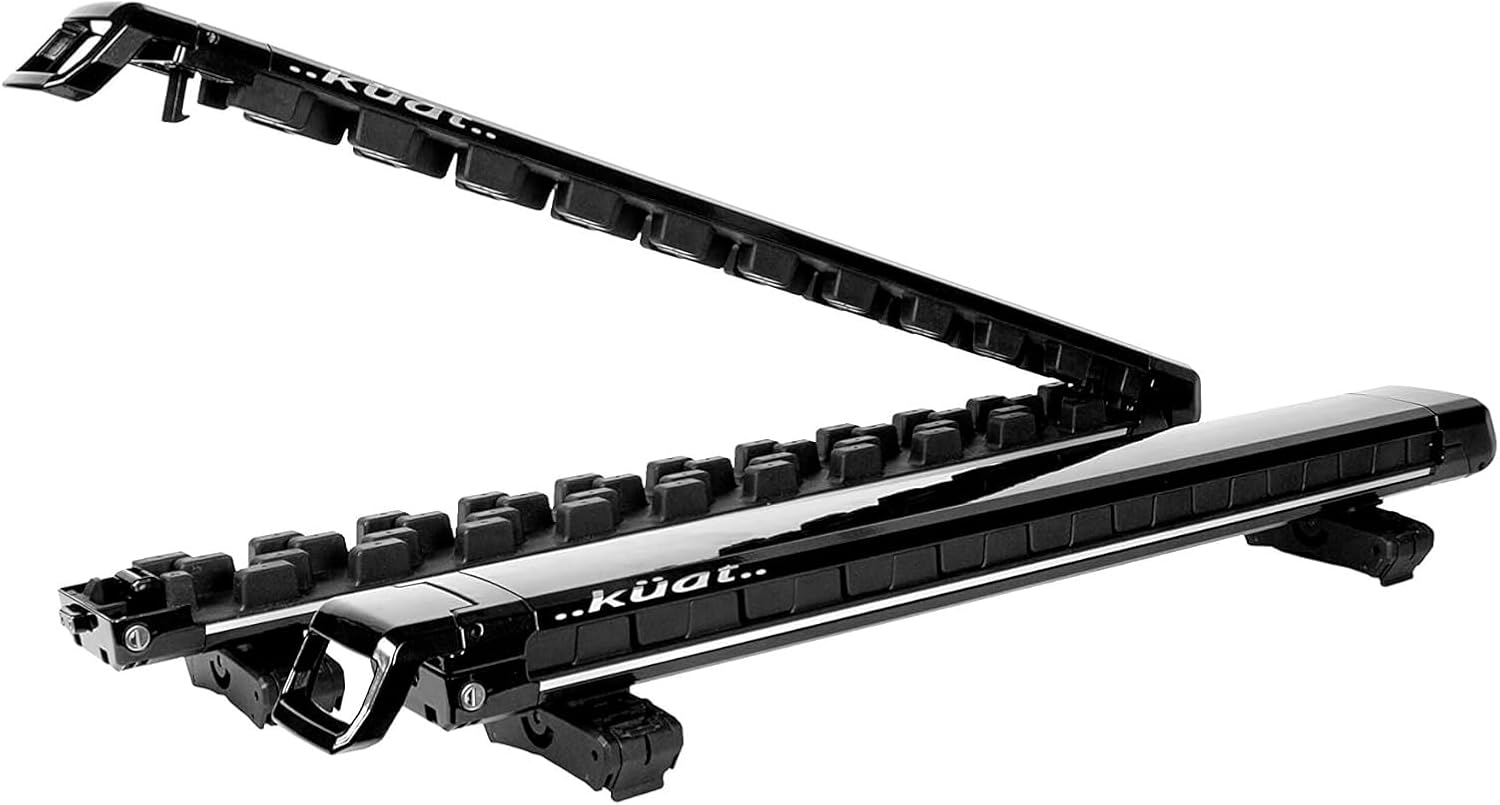
Kuat is known for making the best bike racks in the world, and their entry into snow is no different. The Grip 6 features a unique handle design that is arguably the easiest to operate on the market. It slides out like the Thule but feels more robust and metallic.
4. Tyger Auto TG-RK
Best Budget Pick
You don’t need to spend $400 to carry skis. The Tyger Auto rack offers 90% of the functionality of the big brands for a fraction of the price. It lacks the slide-out feature and some of the aerodynamic refinement, but it holds gear securely and locks.
Saving money on the rack means you can upgrade your actual gear. Timing is everything; check out when is the best time to buy snowboarding gear for the best deals.
Check Low Price5. Yakima HitchSki
Best Hitch Mount
If you have a tall SUV, reaching the roof is a nightmare. The HitchSki converts your existing bike rack into a ski carrier. This keeps the gear behind the car (better aerodynamics) and at waist height (easy loading).
Note: Requires a compatible Yakima bike mast rack.
6. VelociRAX Tilt & Rack
Best Vertical System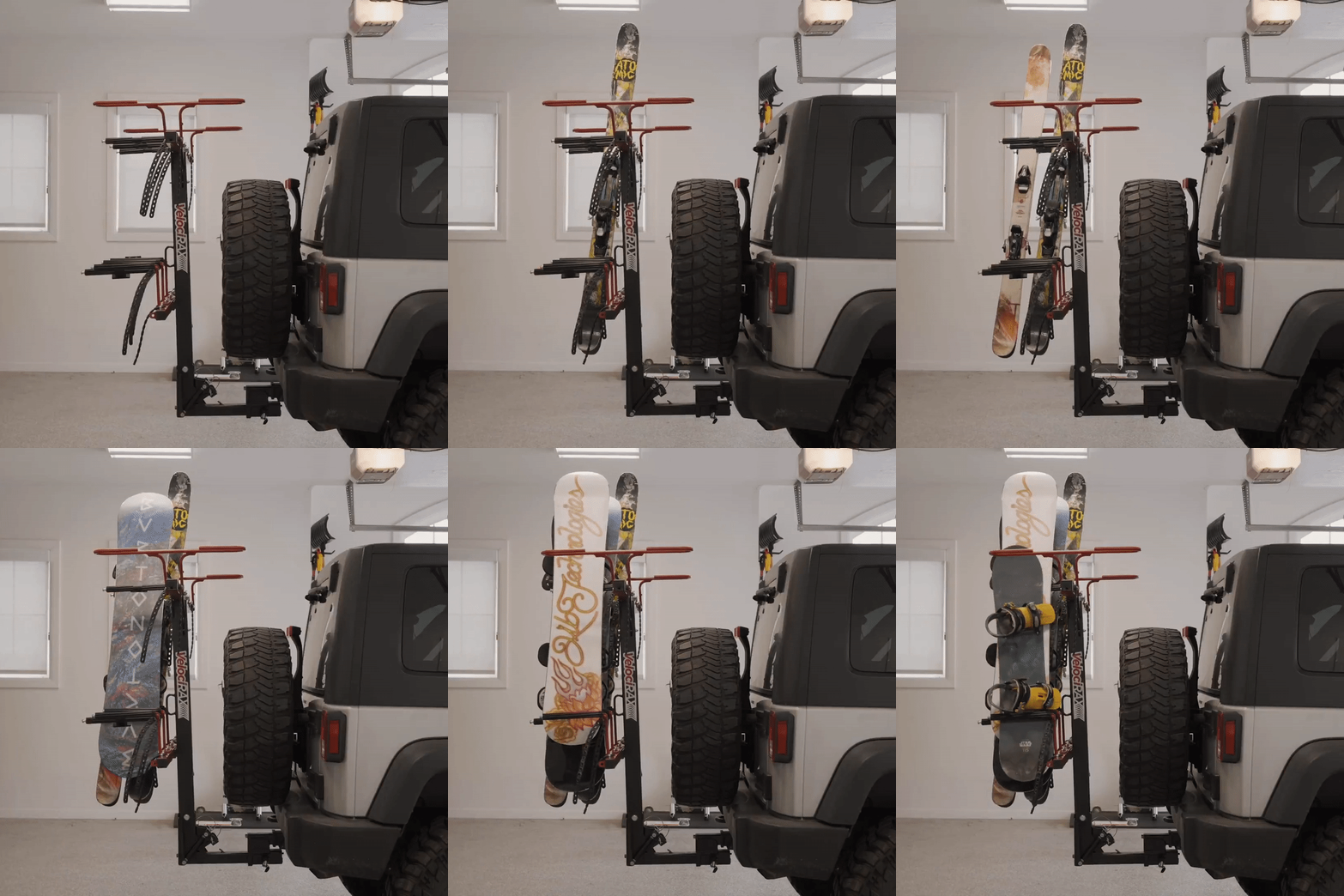
Vertical racks are taking over the industry. By storing boards vertically on the hitch, you eliminate wind drag entirely and can carry massive amounts of gear (up to 6-7 boards easily). The VelociRAX system tilts down to allow trunk access even when fully loaded.
7. Thule Motion 3 Cargo Box
Best Cargo Box
Racks expose your gear to salt, slush, and road grime. A cargo box fully encloses your equipment. The Thule Motion 3 is the 2026 update to the legendary Motion XT, featuring improved aerodynamics and a slide-lock system. It also carries boots, helmets, and poles, freeing up massive interior space.
8. SeaSucker Pallavicini
Best for Sports Cars / Tesla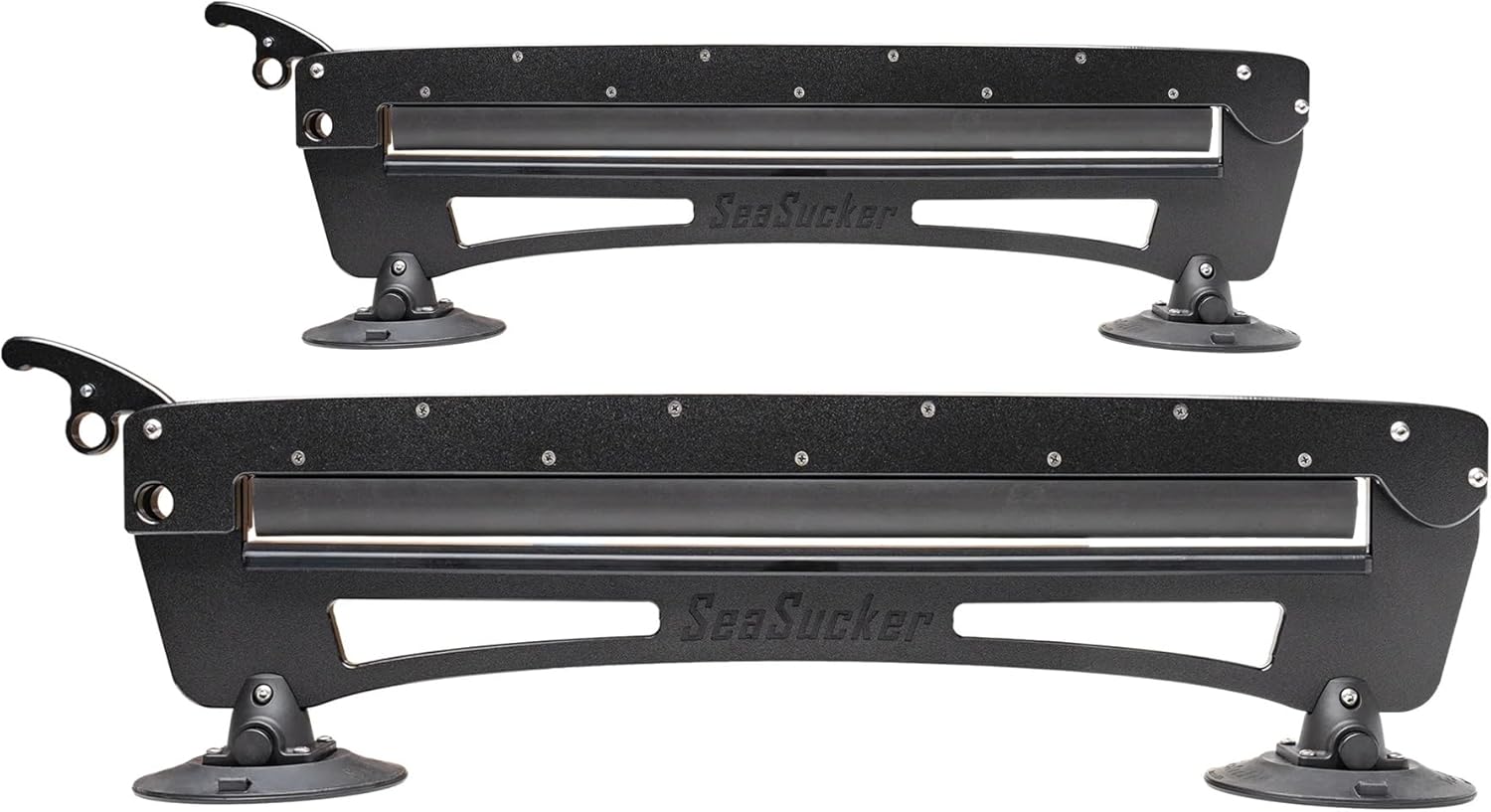
If you drive a Porsche 911, a Tesla Model 3 with a glass roof, or any car that cannot accept traditional crossbars, the SeaSucker is your only option. It uses industrial-grade vacuum cups (not suction cups) to mount directly to glass or metal. It sounds terrifying, but these mounts are NASCAR-tested at 140mph.
Pros
- Fits literally any car.
- Zero permanent hardware needed.
- Incredible holding power (120lb pull strength).
Cons
- Must re-pump cups every 4 hours.
- Easily stolen if left on car.
9. Rhino-Rack Ski Carrier
Best for Off-Road / Jeep
For the Toyota Tacoma and Jeep Wrangler crowd, Rhino-Rack builds gear that survives abuse. This carrier is designed with oversized buttons specifically for thick work gloves. It integrates seamlessly with Rhino-Rack’s “Pioneer” platforms commonly found on overland rigs.
10. Inno Gravity
The Sleeper Pick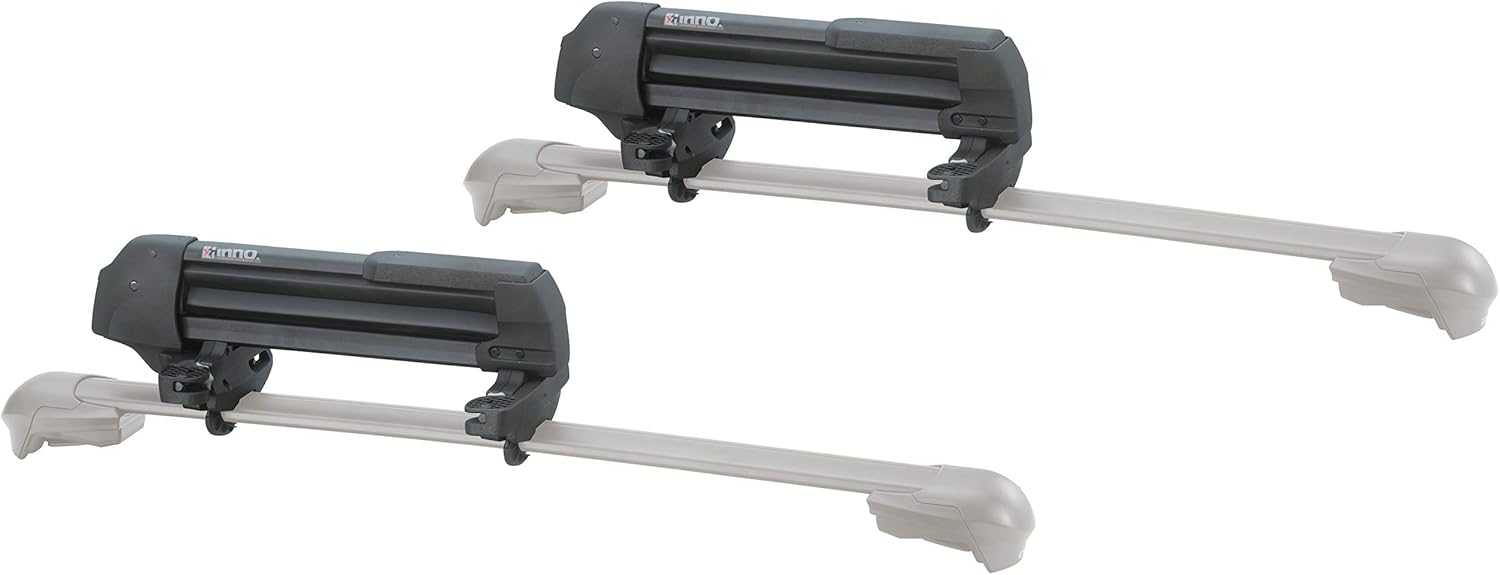
Often overlooked for the big brands, Japanese manufacturer Inno makes some of the smartest racks on the market. The Gravity features a unique “Crane” mounting system that wraps around crossbars like a hand, making it significantly easier to install than the fiddly bolts found on Yakima or Thule racks.
1. The Physics of Transport: Why Your MPGs Drop
The “Wall of Wind” Effect: Most people think aerodynamics is just about the shape of the rack. In reality, it is about “Laminar Flow.” When you put a square binding on a flat roof, you create a turbulent wake that acts like a parachute behind your car. For every inch your bindings stick up, you lose roughly 1.5% fuel efficiency at highway speeds.
The Helmholtz Resonance: Ever hear that annoying whistling sound at 60mph? That is the same physics that happens when you blow over a beer bottle. The gap between your roof and the rack creates a resonance chamber. This is why racks like the Yakima FatCat EVO use a teardrop shape (airfoil) to disrupt the air and silence the whistle.
Range Anxiety for EV Owners
If you drive a Tesla Model Y or Rivian R1S, aerodynamics aren’t just about cost; they are about reach. Studies show that a loaded roof rack can reduce EV range by up to 15%.
- Roof Box: ~8-10% Range Loss (Better aero, but larger frontal area).
- Open Rack: ~12-15% Range Loss (Turbulent air from bindings).
- Hitch Rack: ~1-3% Range Loss (Drafting behind the vehicle).
2. Vehicle-Specific Guides: What fits your ride?
Compact Cars
Challenge: Short roofline. Long skis interfere with the hatchback opening.
Solution: Use a slide-out rack like the Thule Extender to maximize forward mounting, or a magnetic rack to position skis diagonally.
Tall SUVs & Trucks
Challenge: You can’t reach the roof without a ladder.
Solution: The Yakima HitchSki or a door-step ladder attachment is mandatory. Do not rely on balancing on a wet tire in ski boots.
Electric Vehicles
Challenge: Glass roofs (Tesla) and Range.
Solution: SeaSucker vacuum mounts are the only option for glass roofs without rail gutters. Otherwise, prioritize hitch mounts to save battery.
3. The Dark Side: Rust, Salt, and Maintenance
Road salt (Magnesium Chloride) is the enemy of all ski racks. It creates a chemical reaction with aluminum called “galvanic corrosion,” which can weld your rack to your car permanently if not treated.
The 3-Step Cleaning Protocol:
- The Rinse: Immediately after a trip, hose down the rack. Do not let salt sit for a week.
- The Core Lube: Once a month, spray graphite powder (NOT WD-40) into the lock cores. WD-40 attracts dirt; graphite lubricates without gunk.
- The UV Protectant: The rubber arms that grip your skis will crack in the sun. Wipe them down with 303 Aerospace Protectant twice a season to keep them grippy.
4. Glossary of Terms
- T-Track
- A mounting system where the rack slides into a channel on top of the crossbar, rather than clamping around it. Provides a cleaner, lower-profile look.
- Fairing
- A plastic shield attached to the front of a roof rack to deflect wind up and over the bars, reducing noise and drag.
- Dynamic Weight Limit
- The maximum weight a roof rack can hold while the car is moving. This is usually lower than the Static Limit (when parked).
- Crossbar Spread
- The distance between the front and rear crossbar. Ski bindings usually require a minimum spread of 30 inches to fit between the racks.
The Massive 2026 Buying Guide: How to Choose
1. Roof Clamp vs. Cargo Box vs. Hitch Mount
Roof Clamps (e.g., Thule SnowPack):
Pros: Cheaper, easy to store in summer, lightweight.
Cons: Gear gets dirty from road spray, worse MPG than boxes, harder to load on tall cars.
Cargo Boxes (e.g., Thule Motion):
Pros: Total protection from elements, carries boots/helmets, locks securely.
Cons: Expensive ($800+), hard to store in a garage, creates crosswind drag.
Hitch Mounts (e.g., Yakima HitchSki):
Pros: Waist-level loading (great for short people), zero wind noise, better MPG.
Cons: Blocks backup cameras/sensors, gear gets very dirty from rear spray.
Deep Dive: Aerodynamics & MPG Loss
Adding anything to the exterior of your car ruins the drag coefficient. We analyzed the MPG impact of the top racks:
- Empty Roof Rack: -1 to -2 MPG.
- Loaded Roof Rack (4 boards): -3 to -5 MPG. The bindings act like air brakes.
- Cargo Box: -2 to -4 MPG. While large, the smooth shape is often more efficient than jagged bindings.
- Hitch Rack: -0 to -1 MPG. Being in the “slipstream” behind the car creates the least drag.
Since your boards are exposed to the elements, maintenance is non-negotiable. Learn why wax your snowboard regularly, especially if you transport it on an open roof rack.
Installation & Security
Most modern racks use “Universal Mounts” which are rubberized straps that wrap around your crossbars. They fit Aero, Square, and Round bars. Security is key—ensure your rack comes with SKS (Same Key System) cores so you lock the rack to the car, and the boards to the rack.
Frequently Asked Questions
Yes, over time. Road salt corrodes metal ratchets and dries out plastic straps. If using an open roof rack, rinse your gear with fresh water immediately after the trip. Or, use a snowboard bag/cargo box.
Yes. 99% of roof racks require crossbars (the bars that run left-to-right). If your car only has side rails (front-to-back), you need to buy crossbars first.
Maybe. Low-profile racks often sit too close to the glass. You must check the clearance before opening, or you risk shattering the sunroof mechanism.
Usually 4. Snowboards are much wider. You stack them base-to-base. A “4-ski” rack usually holds 2 snowboards.


 Home
Home
 About
About
 My Cart
 Reviews
 Compare