
Rome Ravine Pro Snowboard Review 2026: The Ultimate All-Mountain Weapon?

The Bottom Line: What You Need to Know
There are snowboards that are good at everything, and then there are snowboards that define a category. The Rome Ravine Pro sits squarely in the latter camp. Designed as a beefed-up, more aggressive sibling to the cult-classic Rome Ravine, the “Pro” model promises to take that signature surfy feel and inject it with a massive dose of carbon-infused horsepower.
If you are the type of rider who looks at a mountain and sees a playground — slashable windlips, high-speed groomers, and deep powder stashes — this board was engineered for you. Built for riders who want an aggressive all-mountain board for high-octane riding, the Ravine Pro combines a powerful flex profile with 7.5mm of taper and 3D shaping in the nose, making it a team favorite for serious terrain and deep days. It is the board that Rome’s own team riders bring when the conditions demand respect.
But is it too stiff for the average rider? Does the stiffness kill the fun? In this deep-dive review, we put the Rome Ravine Pro through its paces across everything from bulletproof ice to knee-deep powder to answer one question: Is this the only board you need in your quiver? The short answer: for the right rider, absolutely yes.
Before we drop in, understand that this is a directional, volume-shifted beast with a stiff flex rating and carbon-infused construction. It’s not your soft park noodle. It demands input and rewards aggressive, forward-leaning riding with a performance ceiling that is genuinely difficult to reach.
The Rome Ravine Pro is the best all-mountain / powder crossover board for expert riders who refuse to compromise on either carving performance or deep snow capability. Its weakness — limited freestyle flex — is a deliberate design trade-off, not a flaw. If you want to butter and jib, look elsewhere. If you want to charge, this is your board.
Awards & Industry Recognition
The Rome Ravine Pro has not gone unnoticed by the snowboard media. Before we dig into the specs and on-snow feel, it’s worth acknowledging the external validation this board has received — because it helps contextualize why it commands a premium price and commands such loyalty from the riders who ride it.
Tech Specs & Construction
Rome Snowboards didn’t just slap a “Pro” sticker on the standard Ravine and call it a day. They overhauled the core dynamics substantially to handle higher speeds, bigger landings, and more aggressive riding. The Ravine Pro sits in Rome’s “uber-responsive” Pro line alongside the Artifact Pro and Agent Pro — these are the boards built without compromise for serious mountain riding. Let’s look under the hood.
| Specification | Detail |
|---|---|
| Profile | Free-The-Ride 3D Camber (Rocker nose / Flat under front foot / Camber tail) |
| Shape | Directional — Tapered (7.5mm nose-to-tail taper) |
| 3D Tech | Directional Diamond 3D (nose contouring) |
| Flex | Stiff — 8/10 |
| Core | SuperPop Core — 2:1 Paulownia/Poplar ratio (lighter than standard Ravine) |
| Carbon | Carbon Omega HotRods (tail placement for explosive pop) |
| Sidewalls | Flax Walls — woven flax around nose perimeter for dampening |
| Impact Plates | Flax Impact Plates under binding inserts |
| Base | SinterStrong Sintered Base (fastest base in Rome’s lineup) |
| Stance Setback | 1.5mm setback from center |
| Taper | 7.5mm (nose wider than tail) |
| Factory | Titan Factory (changed from SWS for 2025/26 — improved durability) |
| 2026 MSRP | $699.95 |
| Available Sizes | 152, 155, 158, 161 (standard) · 159W, 162W, 165W (wide) |
The standout features here are the Carbon Omega HotRods placed in the tail of the board that deliver explosive pop and snap out of turns. Unlike the standard Ravine, which relies on a softer paulownia/poplar blend for its feel, the Pro’s 2:1 ratio in favor of paulownia makes it significantly lighter without any loss of strength or responsiveness. Furthermore, the base material matters enormously for speed. The Ravine Pro uses a high-density sintered base — the fastest in Rome’s lineup. To understand why this is a meaningful upgrade over cheaper boards, read our comparison on sintered vs extruded bases.
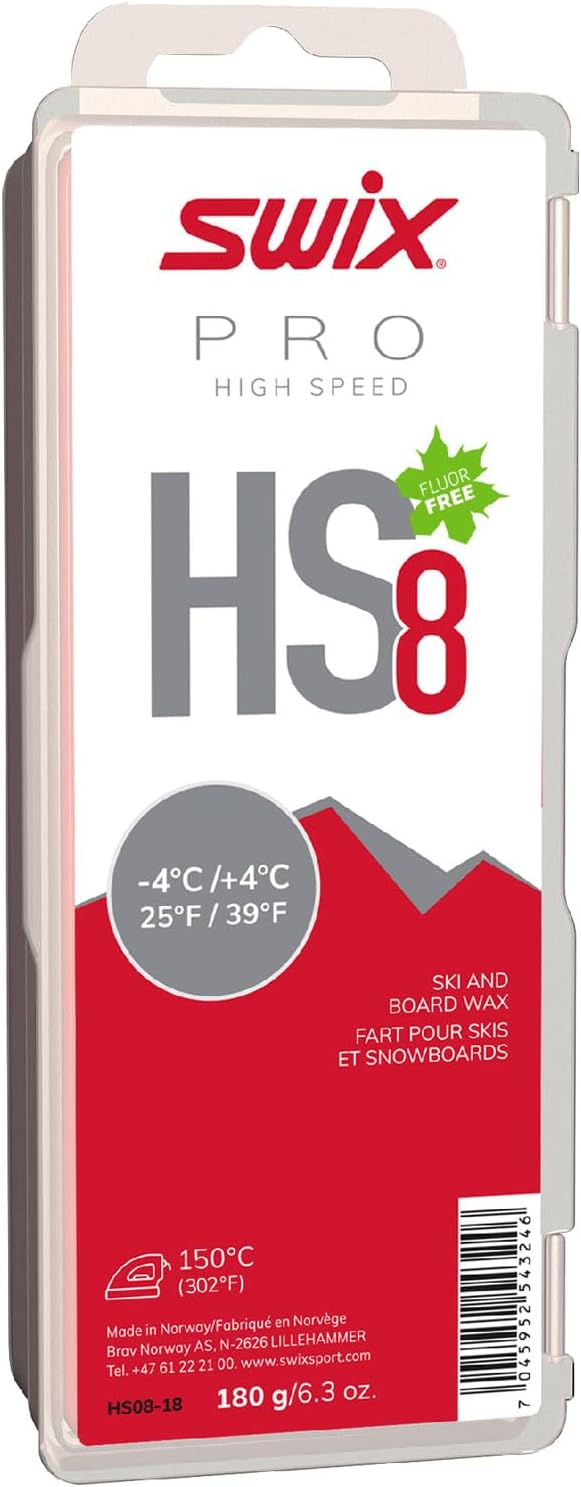
Feed the Beast: Swix Universal Wax
A sintered base like the Ravine Pro is thirsty. To keep it fast, wax every 3–4 days of riding. A dry sintered base loses its speed advantage fast.
Get Fast WaxFlax Tech: The Secret Weapon Most Reviews Miss
The most underreported and misunderstood aspect of the Rome Ravine Pro’s construction is the flax fiber integration — and it may be the single most important differentiator between this board and competitors at the same price point.
Rome uses two distinct flax applications in the Ravine Pro. First, the Flax Walls: woven flax mats are integrated around the perimeter of the nose area, sandwiched between the core and the sidewall. This horizontal layup serves multiple functions simultaneously — it dampens chatter at high speeds across rough terrain, distributes impact more evenly through variable conditions, and increases the board’s overall structural lifespan without adding significant weight or dramatically changing flex characteristics.
Second, Flax Impact Plates: these sit around the board’s insert packs, sandwiched between the core and the top sheet. Their primary function is withstanding deep landings — the kind of impacts that, on a lesser board, accelerate delamination and binding blowout failures. Multiple long-term testers have reported that the 2025/26 Ravine Pro’s topsheet feels noticeably more durable than the previous generation, which Rome confirms is a direct result of both the Flax Impact Plates and the change to the Titan factory.
The practical on-snow effect is that the Ravine Pro rides significantly smoother through variable terrain than its stiffness rating would suggest. When testers from OutdoorGearLab overshot jumps on this board, they reported that “the landings didn’t sting our feet one bit.” That is the Flax Impact Plates doing their job — absorbing shock before it reaches your joints.
Flax fiber has a natural vibration-dampening frequency that outperforms both fiberglass and carbon in absorbing the specific frequencies generated by edge chatter on rough snow. It is also lighter than fiberglass, stiffer than typical fabric layers, and more environmentally responsible than synthetic alternatives. Rome has used it selectively in their Pro line because its properties most directly address the high-speed chatter problem that plagues stiff directional boards on imperfect snow surfaces.
Camber & Shape Profile: Free-The-Ride 3D Explained
The Rome Ravine Pro utilizes what they call the Free-The-Ride 3D Camber. This is a complex hybrid profile designed to offer the best of both worlds — aggressive power and effortless float — without the compromise that usually comes with trying to serve both masters.
The 3D Directional Diamond Nose
The nose features the Directional Diamond 3D shaping — a convex contour that begins just outside the front inserts. This is not a subtle design element; you can see and feel it clearly when you pick the board up. It serves two distinct purposes. First, it makes turn initiation smooth and catch-free, acting like a slip plane that guides the nose into the arc rather than grabbing suddenly. Second, it functions like the hull of a boat in deep snow — the three-dimensional shape naturally lifts the nose without you consciously weighting your back foot, which is what saves your back leg on long powder days.
Flat Section Under the Front Foot
Directly beneath the front binding, the board transitions to flat. This flat section between the rocker nose and the cambered tail provides stability at speed without the aggressive kick of a full-camber entry. It is the sweet spot of the profile — enough float influence to prevent edge catches, enough platform to hold a line on groomers.
Positive Camber Tail
From the front foot back to the tail, the board is in positive camber. The 2026 model’s camber is notably higher than previous generations — the 25/26 camber profile is substantially increased, running longer up toward the nose. This provides the grip, stability, and explosive pop you need when charging hard. It locks in on groomers and provides a solid, forgiving platform for landing off-piste drops. On groomers, the Ravine Pro feels more like a full-camber board than its profile would suggest — the flat-to-camber transition happens aggressively enough that most of your riding time is spent on positive camber.
Understanding this profile is key to riding it well. If you are coming from a full rocker board, this will feel aggressive and demanding. Read more about camber vs rocker snowboards to understand why camber is preferred for technical riding at speed.
Watch the Ravine Pro’s Free-The-Ride camber in action across groomed runs, powder, and variable terrain.
Carving & Edge Hold: The Board’s Primary Talent
On groomers, the Ravine Pro is a trencher. The stiffness (rated 8/10) means it does not chatter at speed — or more precisely, the chatter it generates is absorbed by the Flax Walls before it reaches your feet. When you lay it over on edge, the positive camber tail bites into the snow and holds the line with tenacity. One reviewer described this precisely: it has the edge hold performance of a full-camber board, with the initiation ease of a rockered nose.
Because it is a directional shape with 7.5mm of taper (the nose is measurably wider than the tail), the board naturally wants to exit turns quickly. It drives through the arc of the turn and then snaps you into the next one thanks to those Carbon HotRods. The tail doesn’t wash out — it drives. The sidecut is progressive, meaning it has a seamless integration of three radii that creates a fully continuous curvature. This translates to turns that feel increasingly engaged the harder you carve them; the board rewards aggression.
For technical carving, your body position needs to be dialed. The Ravine Pro punishes lazy, backseat riding but rewards the forward-aggressive stance of a committed carver. Check our guide on how to carve on a snowboard to ensure your technique matches the board’s capabilities before you commit to it.
“The Ravine Pro offers a traditional carving experience with nimble edge changes — but it’s only when you look under the bonnet that the differences are revealed.”
— Whitelines Magazine, Ravine Pro Review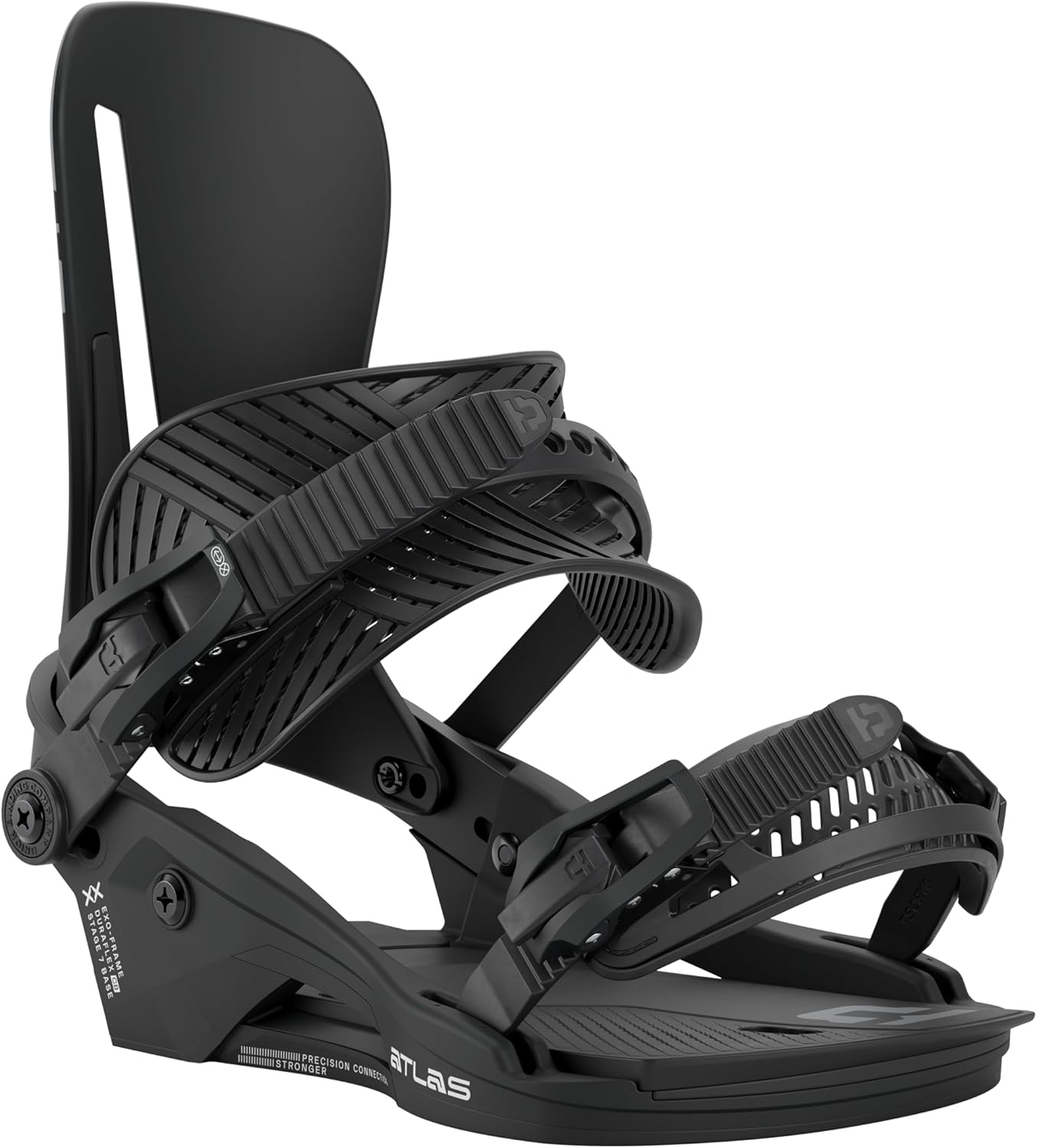
Union Atlas Bindings
A stiff board needs a stiff binding to transfer energy instantly. The Union Atlas is the industry standard for all-mountain response and pairs perfectly with the Ravine Pro’s aggressive flex.
Check PricePowder Performance: Where Ravine DNA Shines
This is where the “Ravine” DNA shows what it was born to do. Despite being stiff and powerful, the Ravine Pro floats with a lightness that is genuinely surprising the first time you ride it in deep snow. The Directional Diamond 3D contouring in the nose works magic — you barely need to engage your brain to keep the nose afloat, giving you more cognitive headspace to plot your route and seek out the most slashable stashes.
The 7.5mm taper means the tail naturally sinks while the nose rides high, without requiring you to burn your back leg by consciously weighting it. The 1.5mm stance setback works in tandem with this taper to further bias the float behavior without any rider effort. On a deep powder day, this combination means you can genuinely charge at full speed without the backseat-riding survival mode that less well-designed directional boards demand.
Whether you are threading tight trees or opening it up in wide-open bowls, the Ravine Pro feels nimble and buoyant in a way that belies its stiff flex rating. It gives you the confidence to drop cliffs and smash pillows without worrying about pearling the nose. Multiple professional reviewers have named it their top recommendation for powder riding — a remarkable achievement for a board that is equally at home on groomers.
Set your binding stance back to the rearmost position in the Ravine Pro’s insert range to maximize the taper’s float benefit. Running your rear binding at 0° or slightly positive (rather than deeply negative duck stance) also improves powder turn initiation. The directional nature means it is not designed for riding switch in powder — learn more about the pros and cons of directional vs twin snowboards.
Crud, Chunder & Variable Terrain: The Real-World Test
Most boards review well on groomed corduroy at 9am. The Ravine Pro’s real differentiator is what it does to the mountain at 2pm on a busy Saturday — when the runs are tracked out, the snow is chunky, and the conditions are demanding an honest accounting of your equipment choices.
In chopped-up, variable snow, the Ravine Pro’s Flax Wall dampening system earns its place in the construction. The board smashes through crud rather than deflecting off it. The stiffness that makes it demanding on groomers becomes an advantage here — it doesn’t lose its line when it hits unexpected chunks of snow. On moguled terrain, testers found safety in knowing that the stiff carbon-reinforced tail could withstand intense drops and bumps and still generate power through turns.
Tree riding is where the Ravine Pro’s directional shape requires the most adaptation. In tight trees, the board is less maneuverable than a shorter twin shape, and the lack of switch capability means you need to commit to turn direction more decisively than on a symmetrical board. For riders comfortable at speed in trees, the Ravine Pro’s float and stability are major advantages. For technical tight-tree riders who need to stop, pivot, and reverse frequently, a shorter or softer board may serve better.
The Ravine Pro handles hardpack very well due to the cambered tail, but on pure ice, the 3D diamond nose has slightly less contact length than a traditional flat-nosed board — meaning it requires more precise, deliberate edge pressure than a full-camber design would. This is not a significant issue on typical hardpack, but on sustained bulletproof ice, the board requires active engagement rather than passive leaning.
Freestyle & Pop: A Missile, Not a Noodle
Can you take it in the park? Yes, but bring your A-game. This is emphatically not a jib board. It is stiff and unforgiving on rails — the carbon HotRods in the tail that make it so explosive on groomed carves make it actively resistant to the slow-speed pressing and twisting that rail riding demands. The stiff nose is similarly reluctant to butter. For dedicated park riding, look at boards like the Capita Mercury or Rome’s own park-specific offerings.
However, for jump lines and natural terrain features, it is a missile. The pop generated from the carbon-reinforced tail is massive and immediate — load it up with your knees and it will launch you significantly higher than an equivalent non-carbon board. It is stable on landings, meaning if you land slightly backseat on a 40-foot table, the stiff tail will support you rather than buckling. The combination of high speed, explosive pop, and stable landing platform makes it an exceptional board for the big-mountain freestyle style — finding natural features, side-hitting wind lips, and launching off anything the mountain provides.

Smith Holt Helmet
When you are sending big side hits on a stiff board, crashes happen fast. The Smith Holt is a classic, durable, and affordable option to keep you safe while you charge.
View HelmetReal-world deep powder test — see how the 3D nose and 7.5mm taper handle backcountry conditions.
Sizing Guide: Which Length & Width is Right for You?
The Ravine Pro is available in seven sizes — four standard width and three wide-waist options. Choosing the right size is critical: too long and it becomes cumbersome in trees and technical terrain; too short and you lose float in powder. Rome’s recommendation is to size this board based on your weight and riding goals, not purely your height.
| Size | Best For | Rider Weight | Waist | Note |
|---|---|---|---|---|
| 152cm | Agile all-mountain, occasional powder | 130–165 lb | Standard | Most playful, fastest edge changes |
| 155cm | All-day versatility, pow + groomer balance | 145–175 lb | Standard | The most popular size — best all-rounder |
| 158cm | Dedicated powder / aggressive all-mountain | 165–195 lb | Standard | Noticeably more float; less agile in tight trees |
| 161cm | Big mountain charger, open terrain | 185–215 lb | Standard | For large riders who want the full charging experience |
| 159W | Wide-footed riders, boot sizes 11+ | 150–185 lb | Wide | Prevents boot drag on toe/heel edges |
| 162W | Large wide-foot riders, powder preference | 175–210 lb | Wide | Best float in class at this width |
| 165W | Big riders, dedicated freeride / big mountain | 200+ lb | Wide | Maximum float and stability at speed |
The Ravine Pro has a slight volume-shift quality due to its wider nose-to-tail taper ratio — it rides slightly longer than a traditional shape of the same length. Some riders size down 1cm from their normal length. If you are between sizes and predominantly ride powder, go up. If you ride 60%+ groomed terrain or tight trees, go down. The 155cm is the safest starting point for most riders in the 150–180 lb range.
Who Should Buy the Rome Ravine Pro?
Rather than a generic “advanced riders” recommendation, here is a specific breakdown of who will love this board — and who should look elsewhere.
✅ The Aggressive All-Mountain Rider
You ride everything the mountain offers at speed. You attack groomers in the morning, find powder stashes after a storm, and hit side hits all day. This is the board’s home territory.
✅ The One-Board Quiver Seeker
You only own one board and it needs to do everything from groomed corduroy to knee-deep powder competently. The Ravine Pro does this better than almost anything at its price point.
✅ The Freeride / Big Mountain Rider
You ride steep terrain, drop off-piste lines, and need a board that performs at speed in variable snow. The carbon-stiffened tail and flax dampening are built exactly for this.
✅ The Wide-Footed Rider (W Sizes)
Riders with boot sizes 11+ will appreciate the W variants, which eliminate the toe/heel drag that makes standard-width boards problematic for large feet on aggressive angles.
❌ The Beginner or Early Intermediate
The stiff flex and directional shape will actively fight you if your technique isn’t solid. This board demands input — you need to tell it what to do or it will take control of you.
❌ The Park & Jib Specialist
If you spend 70%+ of your time in the park, on rails, or buttering around, this board is wrong for you. The carbon rods and stiff flex work against the slow-speed pressing park tricks require.
❌ The Switch-Riding Enthusiast
The directional shape means switch riding is possible for traverses and landing occasional spins, but it will never feel natural. If switch is core to your riding, choose a twin.
❌ The Budget-Conscious Buyer
At $699.95, the Ravine Pro is a premium investment. If you cannot justify the price, the standard Rome Ravine (significantly cheaper) delivers 80% of the Ravine Pro’s all-mountain capability.
Pros & Cons
- Explosive Pop: Carbon Omega HotRods deliver massive, immediate energy return out of every turn.
- Surfy Yet Stable: A rare combination of 3D nose float and positive camber tail grip.
- Flax Dampening: Noticeably smoother through variable terrain than stiffness alone would suggest.
- Lightweight Core: 2:1 Paulownia/Poplar ratio — lighter than the standard Ravine despite being stiffer.
- Fast Sintered Base: Glides through flat spots and holds wax exceptionally well.
- Factory Quality: Titan factory production delivers noticeably more durable topsheet than previous generation.
- 7.5mm Taper: Effortless powder float without conscious rider effort.
- Industry Recognition: Snowboard Mag Platinum Pick 2026, OutdoorGearLab Top Pick.
- Not Beginner Friendly: Will actively punish lazy technique and backseat riding.
- Ice Performance: 3D nose has slightly less contact length than a traditional board on pure bulletproof ice.
- Park Riding: Stiff tail and carbon rods make slow-speed pressing and jibbing genuinely difficult.
- Price: At $699.95 it is a premium commitment — the standard Ravine at ~$499 delivers similar feel with less carbon horsepower.
- Weight: Despite the lightweight core, the Flax integration adds mass over budget alternatives.
2026 vs 2025: What Actually Changed?
If you own the 2024/25 or the older 2023/24 Ravine Pro (which was called the Ravine Select in previous seasons), you may be wondering whether the 2026 model justifies an upgrade. The answer depends on how long you’ve had your current board and how aggressively you ride.
The most significant 2025/26 change is the completely revised shape — this is not just a graphics refresh. The 2026 model features a substantially higher and longer camber profile than previous generations. Where earlier models had a more subtle camber arc, the 2026 camber extends noticeably further up toward the nose. The practical effect is more spring in turns and improved performance ripping groomers. Multiple riders who have tested both the 2023/24 and 2025/26 versions side-by-side report that the new version feels “crisper” — with a more immediate, responsive energy return out of turns.
The second major change is the factory switch from SWS to Titan. Rome has confirmed this change directly improved durability, and riders who experienced minor delamination issues with early-production 2023/24 boards report that the 2025/26 construction is visibly more robust. The topsheet finish also reflects the improved manufacturing environment.
If you own the 2024/25 model: The shape changes are real but moderate — unless you’re competing or riding at an extremely high level, your current board still performs at a very high level. Wait another season. If you own the 2023/24 (formerly Ravine Select): The shape revision is significant enough to justify the upgrade if you ride 30+ days per season. The increased camber and Titan factory quality are noticeable differences.
Best Alternatives: How It Stacks Up Against the Competition
No board is perfect for every rider. Here is an honest comparison of the Ravine Pro’s closest competitors so you can make an informed decision.
Rome Ravine Pro
Best overall balance of powder float, carving precision, and carbon pop. The champion for aggressive all-mountain riders who want one board for everything except the park.
Rome Ravine (Standard)
~$499. Flex 6/10. Same DNA, more forgiving. Better for intermediate-advanced riders or anyone who wants more playfulness and less consequence on technical terrain. 80% of the Pro’s capability.
Jones Flagship
If carving is your primary pursuit over powder float, the Flagship’s stiffer, more traditional camber profile and Jones’s hand-laid carbon construction deliver arguably superior edge-to-edge precision.
Jones Aviator 2.0
Pure powder performance in a directional shape. Multiple testers note that the Ravine Pro’s sintered base is “on par” with the Aviator 2.0. Choose the Aviator if powder is 80%+ of your riding.
Capita Mercury
If you want more freestyle flex alongside all-mountain capability, the Mercury’s FSC-certified construction and medium flex deliver a more well-rounded experience — but without the Ravine Pro’s powder chops.
Rome Artifact
Rome’s own all-mountain offering at a lower price point. Slightly softer flex, no carbon HotRods. A solid choice for riders who want the Rome DNA at a more accessible price.

Dakine Low Roller Board Bag
At $699.95, the Ravine Pro deserves protection. A padded bag protects edges during travel and storage — don’t let your investment pick up dings in the truck bed.
See Best Bag


 Home
Home
 About
About
 My Cart
 Reviews
 Compare