
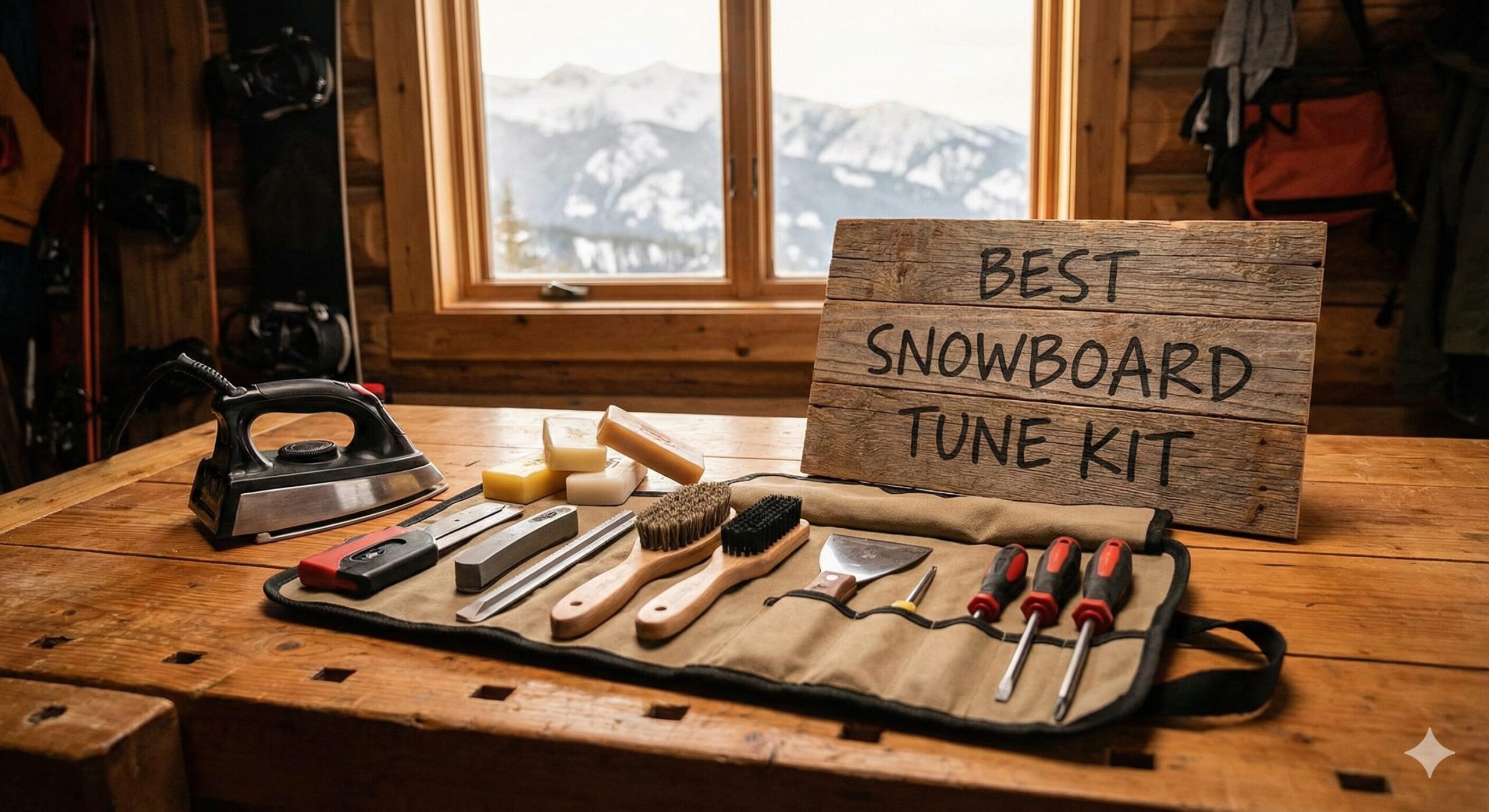
8 Best Snowboard Tuning Kits: Save Money, Ride Faster
Every snowboarder knows the feeling: you hit a flat spot on the cat track and grind to a halt while your friends fly past you. Or you hit a patch of ice and your edges wash out. These aren’t just skill issues; they are maintenance issues.
Paying a shop $50-$70 for a tune every few weeks adds up fast. For the price of two shop tunes, you can buy a complete kit that will last you for years. Plus, learning how to wax a snowboard at home gives you a deeper connection to your gear and ensures you are always the fastest rider in your crew.
1. Demon Complete Tune Kit with Iron
#1 Best Overall
Why It Wins Top Honors
The Demon Complete Tune Kit has held the title of “Best Seller” for years, and for good reason. It represents the perfect intersection of quality, quantity, and price. While many kits give you “sample size” tools, Demon provides a full-service workshop in a bag. The centerpiece is the heavy-duty iron. Unlike cheap travel irons found in budget kits, the Demon iron features a thick heat plate that maintains a consistent temperature. This is critical because temperature fluctuations can lead to “hot spots” that seal your base pores or, worse, burn the P-Tex material.
The Tool Breakdown:
Beyond the iron, the kit shines in its comprehensive approach to base repair. Most riders will eventually hit a rock or tree branch, resulting in a “core shot” or deep gouge. Demon includes both clear and black P-Tex candles, allowing you to match your base color seamlessly. The included metal scraper is sharp and rigid, making it easy to plane down the excess P-Tex after a repair—a step often overlooked by beginners who ruin their repair jobs with flimsy plastic scrapers.
Living With The Kit:
The edge tool provided is a side-edge tuner with options for 88 and 90-degree bevels. A 90-degree bevel is standard for most riders, offering a durable, reliable edge. The 88-degree option is a game-changer for East Coast riders or anyone dealing with icy conditions, as it creates a sharper, more aggressive bite. The kit also includes a flat file for detuning your contact points (the tip and tail), which prevents the board from feeling “catchy” when initiating turns.
One underrated feature is the inclusion of three different buffing pads. After scraping your wax, the texture of your base matters. You use the stiff pad to structure the wax, the medium pad to polish, and the soft fiber pad to buff it to a high gloss. This 3-step finishing process is what separates a “backyard wax job” from a shop tune, significantly reducing friction on wet snow.
Pros
- Iron maintains heat mass excellently.
- Full base repair suite (P-Tex + Metal Scraper).
- Included wax is high-quality universal blend.
- Case has room for extra tools.
Cons
- Edge tool is plastic-bodied (functional but feels cheap).
- No dedicated base cleaner fluid included.
- Instructions are basic; YouTube is your friend.
2. XCMAN Complete Ski Snowboard Tuning Kit
Best Value
The Budget King with Pro Features
XCMAN (often pronounced “X-Man”) has disrupted the tuning market by offering what is essentially a professional-grade kit at a direct-to-consumer price point. If you were to buy the components of this kit individually from big-name brands like Swix or Toko, you would likely spend double the price. The value proposition here is undeniable, but it isn’t just about being cheap—the tools actually perform.
The Edge Tool Advantage:
The standout component of this kit is the ergonomic edge tuner. Unlike the simple block tuners found in other kits, the XCMAN tool allows for precise angle adjustments ranging from 85 to 90 degrees. Why does this matter? A racer might want an aggressive 87-degree angle for biting into hardpack, while a park rider might prefer a 90-degree angle for durability on rails. Having the ability to experiment with these angles gives you complete control over your board’s personality. It also includes a high-quality file that sits securely in the tool, minimizing the risk of slipping and gouging your sidewall.
Comprehensive Waxing Workflow:
The kit excels in the waxing department by including a full wax removal and application suite. It comes with a dedicated wax scraper that is thick enough (4mm) to not bend under pressure—a common frustration with cheaper scrapers. Crucially, it includes a gummi stone. This small, rubbery block is essential for “de-burring” your edges after sharpening. It polishes the metal edge to remove microscopic jaggedness that slows you down. Using a gummi stone is the secret step that makes an edge feel smooth and “buttery” rather than grabby.
The carrying case is also worth mentioning. It is designed with elastic straps for every single tool. This prevents the heavy iron from smashing into the delicate wax blocks during travel. For the weekend warrior who throws their gear in the back of a truck, this organization ensures your tools survive the trip to the mountain intact.
Pros
- Edge tool offers pro-level angle selection (85-90).
- Gummi stone included (rare at this price).
- Excellent case organization prevents damage.
- Wax apron prevents mess on your floor.
Cons
- Included wax block is small (buy extra).
- Iron cord is slightly shorter than Demon’s.
- Plastic scraper requires frequent sharpening.
3. Dakine Super Tune Kit
Best Portable
Travel-Ready Reliability
Dakine is synonymous with snowboard luggage, so it makes sense that their tuning kit is designed with travel in mind. The Super Tune Kit is streamlined, compact, and devoid of the “fluff” that bulks up other kits. If you are flying to Japan or taking a road trip to the Rockies, this is the kit that fits easily into your board bag without pushing you over the airline weight limit.
The “Octane” Advantage:
Instead of a generic block of wax, Dakine includes their “Octane” All-Temp Boost wax. This formula is designed for a wide range of temperatures, which is perfect for travel when you don’t know if you’ll be riding slush or ice. It applies smoothly and scrapes off easier than harder cold-weather waxes. The kit also features a “Triangle” scraper. This unique shape provides three different scraping edges and a pointed corner that is perfect for cleaning wax out of your edges—a detail that prevents drag when you are carving.
Small but Mighty Tools:
The edge tool in this kit is a smaller, handheld device. While it lacks the intricate angle adjustments of the XCMAN kit, its compact size makes it easier to handle for quick touch-ups in a hotel room or even the parking lot. It provides a standard 90-degree tune, which is ideal for 95% of riders. The included wire brush is aggressive, excellent for cleaning dirt and old wax out of your base before you apply a fresh coat. However, users should be gentle with the wire brush to avoid scratching the base structure too deeply.
Durability is a key selling point here. The case itself is made from the same bombproof ripstop nylon as Dakine’s backpacks. The zippers are heavy-duty YKK, meaning they won’t bust open when you stuff the case full of extra P-Tex or stickers. It’s a kit designed to be thrown around.
Pros
- Compact footprint fits in any board bag.
- High-quality “Octane” wax included.
- Triangle scraper cleans edges effectively.
- Bombproof case construction.
Cons
- Edge tool is less ergonomic for full tunes.
- Wire brush is small; takes longer to clean base.
- Price premium for the brand name.
4. RaceWax World Cup Tuning Kit
Best Pro Quality
For the Perfectionist and Speed Freak
If you are the type of rider who obsesses over base structure, bevel angles, and glide speed, the RaceWax World Cup kit is your holy grail. This is not a “starter” kit; it is a professional toolkit scaled down for home use. The primary difference lies in the quality of the abrasives. While other kits give you a standard metal file, RaceWax includes a set of Diamond Stones.
The Power of Diamond Stones:
Standard files cut metal, which leaves microscopic burrs and roughness. Diamond stones polish the metal. This kit includes three grits of diamond stones. You start with the coarse stone to remove rock damage, move to the medium to sharpen, and finish with the fine stone to polish the edge to a mirror finish. A polished edge is not only sharper; it stays sharper longer because there is less friction and drag. This is the secret to holding an edge on bulletproof ice.
The Brush Trilogy:
Most kits give you one synthetic brush. RaceWax gives you the “Holy Trinity” of brushing: Brass, Nylon, and Horsehair.
1. Brass: Use before waxing to open base structure and clean out old wax.
2. Nylon: Use after scraping to remove bulk wax from the texture.
3. Horsehair: The final step. The fine bristles remove microscopic wax particles to reduce static friction.
Using this three-step process significantly improves glide speed, especially in wet or very cold snow conditions.
While the initial cost is high, you are buying tools that will last a lifetime. The edge bevel tool is machined metal, not plastic, and the iron is a precision instrument. If you plan on tuning multiple boards for a family or racing team, this investment pays off in performance.
Pros
- Diamond stones provide a superior, longer-lasting edge.
- Complete 3-brush set for maximum speed.
- Edge tool allows for base and side beveling.
- Includes high-fluorocarbon (or equivalent) racing wax.
Cons
- Steep learning curve for beginners.
- Expensive upfront cost.
- Overkill for jibbers/rail riders who dull edges anyway.
5. Wintersteiger Ski & Snowboard Tuning Kit
Best Minimalist
Industrial Grade Simplicity
Wintersteiger is a name usually found on the giant, $50,000 automated tuning machines in the back of high-end ski shops. This consumer kit brings that industrial heritage to your workbench. It eschews fancy packaging and “gadgets” for simple, robust tools that work. If you believe in the philosophy of “buy it for life,” this minimalist approach will appeal to you.
The Iron Horse:
The included iron is a highlight. While it looks basic, the heating element is consistent and the plate is thick. Many users report these irons lasting for 10+ years of regular use. It features a simple analog dial that is less prone to electronic failure than digital screens found on newer “smart” irons. The texturing on the base plate helps distribute wax evenly, reducing the amount of expensive wax you waste during the drip process.
Focus on Essentials:
This kit assumes you know what you are doing. It provides a file guide and a high-quality Austrian-made metal file. The bite on this file is aggressive, making quick work of dull edges. However, the kit lacks brushes. Wintersteiger assumes you probably already have brushes or will buy the specific ones you prefer separately. This “a la carte” philosophy keeps the kit price down while keeping the quality of the included components high.
One specific use case for this kit is the splitboarder or backcountry enthusiast. The lack of bulky extras makes it a decent option to keep in a vehicle or a cabin. It provides exactly what you need to fix a base or sharpen an edge after hitting early-season rocks, without forcing you to carry a 10lb bag of accessories.
Pros
- Industrial durability; tools don’t break.
- High-quality file stays sharp longer.
- Iron is a workhorse.
- No “filler” items you’ll never use.
Cons
- Must buy brushes separately (crucial for speed).
- No carrying case included (comes in a box).
- Aesthetics are very utilitarian.
6. Swix Waxing Kit
Best Wax Focus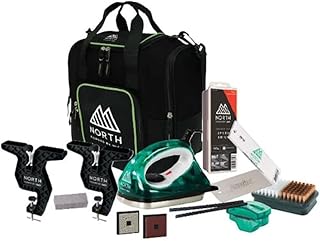
The Chemist’s Choice
Swix is the undisputed global leader in ski and snowboard wax. While other brands are tool companies that happen to sell wax, Swix is a chemical engineering company that happens to sell tools. This kit is heavily biased towards the waxing side of tuning, making it the best choice for riders who prioritize glide speed over edge sharpening (e.g., powder hounds or park riders).
Temperature Specific Mastery:
Most kits give you a generic “All-Temp” wax. Swix provides a spectrum: typically a Red (Warm/Slush), Violet (Mid-Range), and Blue (Cold/Ice). Using the correct temperature wax transforms your riding. On a 10°F day, an all-temp wax will feel sticky and slow, whereas the Swix Blue will glide effortlessly because it hardens the base to resist snow crystal penetration. Learning to mix and match these waxes makes you a true tuner.
The T77 Iron:
The included T77 iron is an entry-level classic. It has a wide plate which is excellent for snowboards (covering more surface area per pass) and features a precise temperature dial. The beveled edges on the iron plate allow you to move it smoothly across the base without “plowing” the wax, ensuring a thin, even coat that is easier to scrape.
The Fiberlene Factor:
Unique to Swix kits is the inclusion of Fiberlene paper. This is a special lint-free paper used between the iron and the base. It absorbs dirt and old wax impurities as you heat the wax, effectively cleaning your base while you wax it. This technique is often used by World Cup techs and extends the life of your base significantly compared to just scraping alone.
Pros
- Superior wax selection for all weather.
- Iron is wide and stable.
- Fiberlene paper teaches pro cleaning habits.
- Combo brush saves space but cleans well.
Cons
- Zero edge tools included (must buy file guide separately).
- The case is small and tight.
- Not a “complete” tune kit (wax only).
7. One Ball Jay Hot Wax Kit
Best Budget Starter
The Cool Kid on the Block
One Ball Jay (OBJ) has deep roots in the Pacific Northwest skate and snow culture. Their branding is irreverent, but their products work. This kit is stripped down to the absolute bare essentials, making it the most affordable entry point into hot waxing. It is the perfect gift for a teenager or a park rat who trashes boards and just wants to keep moving.
Scented Performance:
One unique feature of OBJ wax is the scent. It sounds gimmicky, but your garage smelling like root beer, pine, or berries is a lot more pleasant than the chemical smell of standard waxes. The “4WD” (4-Wheel Drive) wax formula included is a fluorinated blend (check local regulations, as some areas restrict fluoro) that is exceptionally fast in the wet, heavy snow typical of the West Coast.
The “One Setting” Iron:
The iron included is basic. It typically does not have a temperature dial, instead operating at a fixed “safe” temperature for melting standard wax. While pros will hate this lack of control, it is actually a safety feature for beginners. You physically cannot crank it up to 400°F and burn a hole in your board. It makes the process foolproof: plug it in, wait for heat, drip wax.
This kit focuses purely on speed. It includes a scraper and a texturizing pad (similar to a Scotchbrite pad) to buff the wax. It skips the edge tools entirely. For many snowboarders who detune their edges for rail riding anyway, this is actually a benefit—why pay for edge tools you won’t use?
Pros
- Most affordable hot wax option.
- “Dummy-proof” iron prevents base burns.
- Wax smells great and performs well in slush.
- Perfect for park riders who don’t need edge tools.
Cons
- Fixed temp iron can’t handle hard/cold waxes well.
- No edge tools or P-Tex.
- Scraper is basic plastic (dulls fast).
8. Grayne Premium Snowboard Tuning Kit
Best Mid-Range
The International Traveler’s Choice
Grayne might not have the brand recognition of Swix or Burton, but they have carved out a solid niche by offering feature-rich kits at mid-range prices. This Premium Kit sits comfortably between the budget One Ball Jay and the expansive Demon kit. It covers all the bases—waxing, edging, and repair—without feeling bloated.
Dual Voltage Versatility:
The killer feature of the Grayne kit is the Dual Voltage Iron (110/220v). If you dream of chasing powder in the Swiss Alps, Japan (Hokkaido), or Chile, this is non-negotiable. Standard US irons will fry if plugged into European outlets (even with an adapter). The Grayne iron has a switch to swap voltage, meaning you can tune your board in a hostel in Niseko just as easily as in your garage in Colorado.
A Step Up in Finishing:
Unlike budget kits that just give you a scraper, Grayne includes both a Nylon Brush and a Polishing Pad. As mentioned earlier, brushing is critical for structure. The nylon brush is stiff enough to pull excess wax from the stone grind of your board but soft enough not to damage the base material. The polishing pad finishes the job for that “wet look” shine.
The case is also well-thought-out. It uses a semi-rigid shell design rather than a soft bag. This offers decent protection for the iron and prevents the P-Tex candles from snapping in transit. While the wax included is a small generic bar, the space in the case allows you to easily add your preferred brand of temperature-specific wax later.
Pros
- Dual Voltage makes it the best for international travel.
- Includes both brush and pad for proper finishing.
- Metal scraper included for base repairs.
- Case offers good protection.
Cons
- Edge tool is basic plastic design.
- Included P-Tex is sometimes brittle.
- Generic branding lacks “cool factor”.
The Complete Buyer’s Guide: Beyond the Box
Buying the kit is just the first step. To set up a functional home workshop, you need to understand the ecosystem of tools and how they interact with your specific board. Here is what the product descriptions often leave out.
1. The Missing Component: Vises
You will notice that none of the kits listed above include snowboard vises. This is standard for the industry, but it catches beginners off guard. You cannot effectively scrape wax or sharpen edges if your board is sliding around on a table.
The Pro Solution: Buy a dedicated set of suction-cup or clamp vises (like the Swix Jaws). They lock the board horizontally for waxing and vertically for edging.
The Budget Hack: If you aren’t ready to buy vises, use two chairs with rubber non-slip mats on top. The friction will hold the board steady enough for waxing, though edging will still be tricky.
2. Wax Chemistry: Hydrocarbon vs. Bio vs. Fluoro
In 2026, the wax game has changed.
Hydrocarbon (Standard): This is what comes in most kits. It is paraffin-based, cheap, and effective for 90% of riders.
Fluorinated (High Performance): “Fluoro” waxes repel water incredibly well, making them fast in wet snow. However, they are toxic to the environment and banned in many competitions. We recommend avoiding them for recreational use.
Bio-Based (The Future): Brands like Mountainflow Eco-Wax are plant-based. They are biodegradable and non-toxic. If you tune in a basement with poor ventilation, these are the safest option for your lungs.
3. Ventilation & Safety
Melting wax releases fumes. While standard hydrocarbon wax smells like a candle, burning P-Tex smells like toxic burning plastic (because it is). Always tune in a garage or a room with an open window. Never tune in your bedroom or kitchen unless you want a headache and a fine layer of wax dust covering your furniture.
4. The “Hot Scrape” Cleaning Method
Most kits don’t include base cleaner (a citrus solvent). You can buy it separately, or you can use the “Hot Scrape” method. This involves applying a layer of warm soft wax and scraping it off immediately while it is still liquid. The hot wax pulls dirt and oil out of the pores of your base, which you then scrape away. It is an effective way to clean your base without using harsh chemicals that dry it out.
Frequently Asked Questions
Most factory snowboards come with a 90-degree side edge. This is durable and predictable.
Choose 90°: For park riding, rails, and beginner/intermediate cruising. It holds an edge but is less likely to “catch” unexpectedly.
Choose 88° (or 89°): For East Coast ice, racing, or aggressive carving. The sharper angle bites harder into hardpack but dulls faster and can feel “twitchy” on flat bases.
A “core shot” is when a rock gouges through the P-Tex base material and exposes the wood or fiberglass core of the board.
Yes, IF: The gouge is small (less than 1 inch) and not near the metal edge. You can use the P-Tex candles included in these kits to drip fill the hole.
No, IF: The gouge is massive, exposes a large area of wood, or has damaged the metal edge. This requires a “base patch” and epoxy work that should be done by a professional shop with a stone grinder.
Technically, no. A block of wax can sit in your kit for 10 years and still work fine. However, if wax is left on the board for a year without being scraped (like in summer storage), it can dry out and become brittle. Always scrape old storage wax before riding.
No. We repeat this because it’s the #1 mistake. Clothes irons have steam holes. Wax will melt into these holes, smoke, and eventually drip out onto your clothes later. Furthermore, clothes irons fluctuate wildly in temperature. Snowboard irons have a thick metal plate (thermal mass) that holds a steady temp (usually 130°C-150°C) to melt wax without burning the P-Tex base.
This is called “base burn” or oxidation. It means your base is thirsty! The friction from the snow has stripped all the oil/wax from the pores. If you see white patches near your edges, you need to wax immediately. Riding on a dry base creates excessive heat friction which can permanently melt and seal the pores of your board, ruining its ability to hold wax in the future.
Detuning is the process of slightly dulling the sharp edge at the contact points (the widest parts of the nose and tail). You use the file or gummi stone to round off the edge for about 2-3 inches.
Why? It prevents the board from feeling “hooky” or catchy when you initiate a turn. Park riders also detune their edges between the bindings to prevent catching on rails. Most of the kits above include a file or stone specifically for this purpose.
Take Control of Your Ride
Investing in a tuning kit isn’t just about saving money at the shop—it’s about the ritual of preparing for the mountain. There is a specific satisfaction in dropping into a line knowing your edges are sharp and your base is fast because you made it that way.
- 🚀 Best Overall: Demon Complete Tune Kit for the full workshop experience.
- 💰 Best Value: XCMAN Complete Kit for pro tools on a budget.
- ✈️ Best Travel: Dakine Super Tune for the minimalist traveler.
Don’t let a dry base or a dull edge ruin your next powder day. Grab a kit, crack a beverage, and give your board the love it deserves.
Shop All Tuning Kits


 Home
Home
 About
About
 My Cart
 Reviews
 Compare