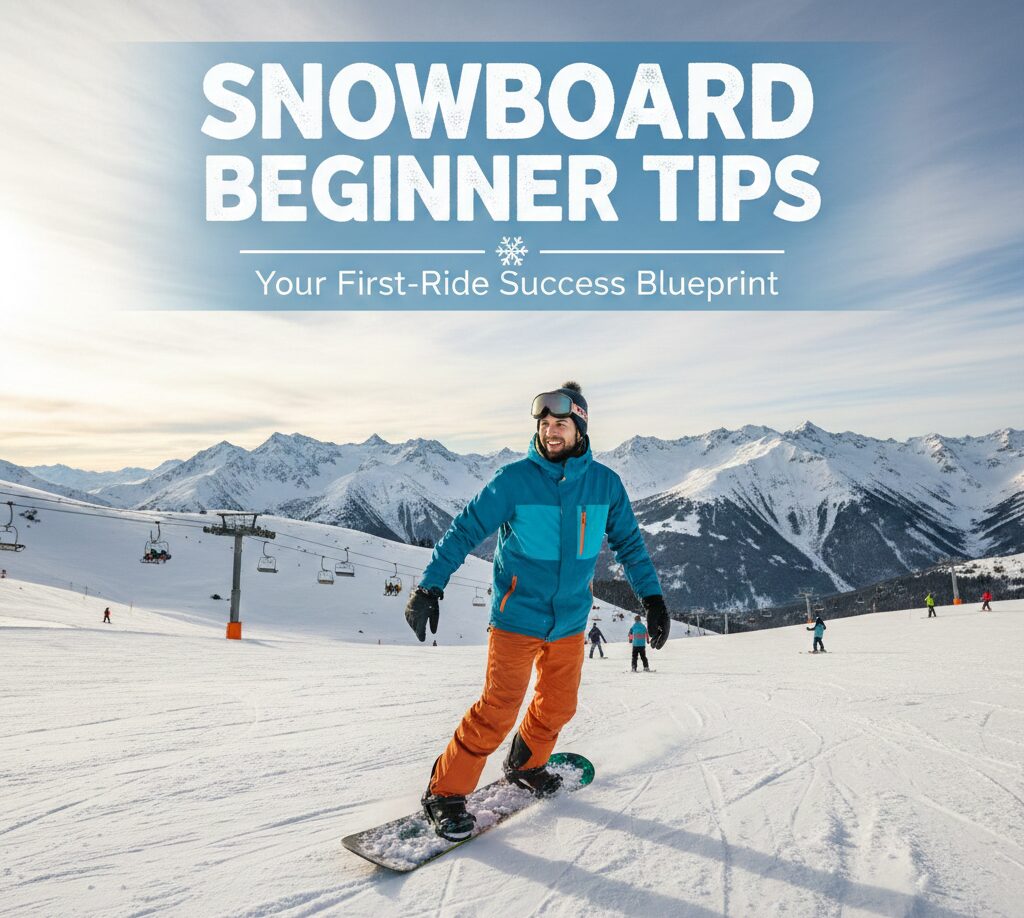
Snowboard Beginner Tips: Your First-Ride Success Blueprint
Stop feeling overwhelmed. This step-by-step guide cuts through the noise, giving you the 12 most critical tips to go from nervous newbie to confident cruiser in your first season.
1. Gear Essentials: Rent First, But Know What to Look For
Your first day is not the day to buy everything. Rent a beginner-friendly package from a reputable shop. Ask for a soft-flexing, all-mountain board with a hybrid camber profile. This offers forgiveness and stability. Focus your initial investment on items that affect comfort and safety directly: boots, goggles, and a helmet.
Pro Tip: Never buy a helmet without trying it on. Fit is paramount for safety. Learn about the latest in head protection with our guide to best snowboard helmets with MIPS integration.
A proper helmet should sit snugly without pressure points. Goggles should fit seamlessly with your helmet to prevent fogging and give you clear vision in all conditions.
2. Find Your Stance: Goofy or Regular?
Before you strap in, figure out your natural stance. Are you “regular” (left foot forward) or “goofy” (right foot forward)? A simple test: slide on a slippery floor in your socks. Which foot goes forward to catch your balance? That’s likely your front foot. Start with a shoulder-width stance, angled slightly outwards (e.g., +15° front, -6° back).
3. First Boots: Fit is Everything, Not Brand
This is your most important purchase. Poorly fitting boots cause pain and kill progression. Your boots should feel snug—like a firm handshake—but not crush your toes or cause numbness. Wear your snowboard socks when trying them on. Walk around the shop for at least 15 minutes. Remember, liners pack out (compress) over time, so they shouldn’t start out roomy.
4. Protective Layers: Stay Dry, Stay Warm, Stay Out Longer
Cotton is the enemy. It holds moisture and makes you cold. Use a three-layer system: a moisture-wicking base layer (merino wool or synthetic), an insulating mid-layer (fleece or synthetic puffy), and a waterproof/breathable shell jacket and pants. Don’t skimp on mittens vs. gloves for snowboarding thermal efficiency – dry hands are happy hands.
Wrist guards are a highly recommended investment for your first week, as wrist fractures are the most common beginner injury.
5. On-Slope Basics: The Magic Happens on the Bunny Hill
Swallow your pride and spend your first half-day on the gentlest slope. Practice three things: 1) Strap in while sitting down. 2) Stand up by rolling onto your knees and pushing up. 3) Practice “skating” (pushing with your back foot) to move on flat ground. Get comfortable with the feeling of having one foot free.
6. Master Heel & Toe Side Sideslips
Your first control exercise. Strap both feet in on a gentle slope. Point your board across the hill. To slide down on your heel edge, lean back slightly and lift your toes. To slide on your toe edge, lean forward slightly and lift your heels. This teaches you edge control—the fundamental skill of snowboarding. Practice until you can stop confidently on both edges.
7. Linking Turns: It’s a Weight Shift, Not a Steering Wheel
A turn is initiated by shifting your weight from your front foot to your back foot and from one edge to the other. Look and point your front shoulder where you want to go. Start with large, gentle “C” shaped turns. The board will follow your gaze and weight. Don’t fight the board; guide it. This is where the feeling of “flow” begins.
8. Falling Safely: How to Bail Without Getting Hurt
You will fall. A lot. Learn to do it safely. Avoid sticking your arms out straight to catch yourself—this leads to wrist and collarbone injuries. Instead, try to fall on your forearms and roll onto your shoulder/backside. If you’re falling backward, tuck your chin and try to absorb the impact with your entire back and butt, not your tailbone. Wearing impact shorts can be a game-changer for confidence.
9. Lift Etiquette: How to Not Be “That Person”
Chairlifts intimidate beginners. Watch a video beforehand. As you approach the loading line, look back to spot the chair, then sit down as it scoops you up. On the ride up, keep your board’s nose up. As you approach the top, point your board straight, stand up as your board touches the snow, and skate straight away from the chair. Don’t sit down in the offload area!
10. Basic Board Maintenance: Keep It Gliding Smoothly
If you rent, they handle this. If you buy, learn the basics. Keep the base waxed. A dry base is slow and can be damaged. Dry off your board completely after a wet day. Store it somewhere cool and dry, not in a hot car or damp bag. Use a quality snowboard tune kit to keep edges de-burred and the base in good condition. It makes learning easier.
11. Progress Smartly: One Skill at a Time
Don’t rush to the terrain park. Solidify your fundamental turns on green runs before trying blues. Master stopping at will on any edge. Then, work on varying your turn shape and speed. Consider a single group or private lesson after your first couple of days—an instructor can spot and fix bad habits instantly, saving you weeks of frustration.
12. Embrace the Journey: It Gets Easier, Fast
The first two days are the hardest. Your body uses new muscles. It feels awkward. But there’s a well-known “click” moment, usually on day 2 or 3, where it starts to make sense. Celebrate small wins. Stay hydrated, take breaks, and have fun. The snowboarding community is incredibly supportive. Remember why you started: for the incredible feeling of gliding down a mountain. You’ve got this.
Final Word: The learning curve is real, but so is the payoff. Understanding the ski vs snowboard learning curve for first-time riders can help set realistic expectations and keep you motivated.
Snowboard Beginner Tips: Your Questions Answered
Is snowboarding hard to learn for a complete beginner?
The initial learning curve is steeper than skiing, but many find it more intuitive after the first few days. You will fall more at the start, but progression can be rapid once you master basic edge control. Focus on the fundamentals and the “click” will come.
What should I wear on my first day snowboarding?
Avoid cotton at all costs. Wear moisture-wicking thermal underwear, warm socks (snowboard-specific), fleece or insulated mid-layers, and waterproof snowboard pants and jacket. Don’t forget waterproof gloves/mittens, a neck gaiter, a helmet, and goggles.
Are lessons worth it, or can I teach myself?
A single professional lesson is one of the best investments a beginner can make. An instructor will teach you safe falling, proper stance, and basic control, accelerating your learning and preventing painful bad habits that are hard to unlearn later.
How do I know what size snowboard to get?
As a beginner, rent. The shop will size you based on your height and weight. Generally, a board standing vertically should reach somewhere between your chin and nose. A softer flex is better for learning. Don’t buy until you know what style of riding you prefer.
Why do my feet hurt so much in snowboard boots?
This is often due to boots that are too big, too small, or improperly fastened. Your heels should be locked down. Over-tightening the lower part can cut off circulation. Ensure you have proper snowboard socks (thin, no seams) and consider custom insoles for better arch support.
How many days does it take to not fall constantly?
Most beginners see a significant reduction in falls by the end of day 2 or 3, once they can confidently link heel-side and toe-side turns on gentle slopes. Consistent, controlled stopping is the key milestone that reduces fear and falling.
What’s the biggest mistake snowboard beginners make?
Leaning back (away from the slope) out of fear. This takes weight off your front foot, making the board impossible to steer. You must learn to trust the edge and keep your weight centered or slightly forward to initiate turns.
Can I use my ski gear for snowboarding?
Jacket and pants: yes, if they are waterproof/breathable. Base layers: yes. Gloves/mittens: yes. Socks: similar, but snowboard-specific are best. Helmet: yes. Goggles: yes. The critical items you CANNOT share are boots, bindings, and the board itself.
Should I start with a regular or rocker snowboard?
For most beginners, a hybrid camber (like rocker-camber-rocker) or a flat-to-rocker profile is ideal. These are more forgiving, less “catchy” on the edges, and easier to turn. Pure camber boards are more stable at speed but require more precise control.
What’s the best age to start learning to snowboard?
You can start at any age! For young children (under 7), coordination and attention span can be factors. Many recommend starting kids around 5-7 years old. For adults, the best time is now—just be prepared to be patient and enjoy the process.


 Home
Home
 About
About
 My Cart
 Reviews
 Compare