
Snowboard Maintenance Basics: The Complete Home Care Guide
Stop paying for costly shop tunes. Learn the 12 essential steps to keep your board gliding fast, turning sharp, and lasting for seasons to come.
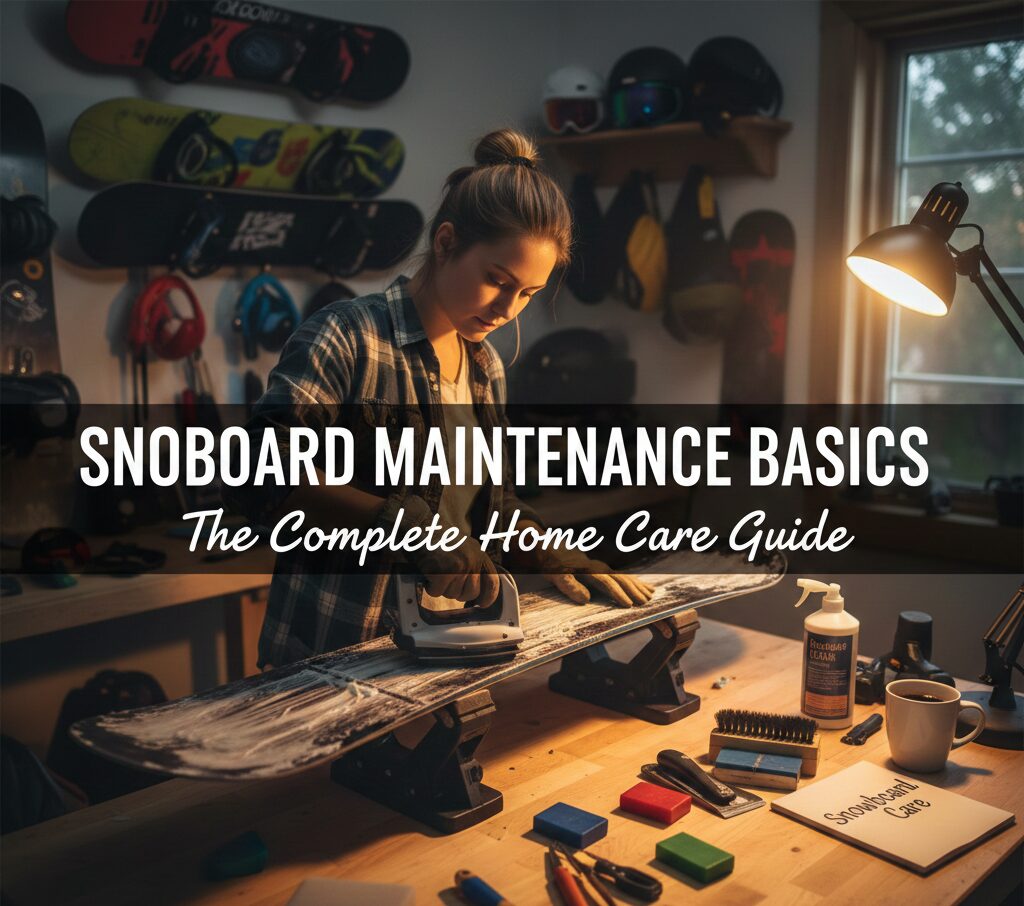
1. Why Maintenance Matters: Performance & Longevity
Regular maintenance isn’t just for pros. A well-tuned board is faster, more responsive, easier to control, and safer. It protects your investment by preventing base damage and edge rust, which can lead to costly repairs. Think of it like changing the oil in your car – a small, regular effort prevents major breakdowns.
Core Concept: A dry base absorbs water, becoming slow and susceptible to damage. Rusty edges lose grip. Simple, consistent care solves both. Learn the science behind it in our article on why wax your snowboard: P-tex porosity & hydrophobic metrics.
2. Essential Tools: Building Your Home Tune Kit
You don’t need a full workshop. Start with these basics:
Removes old wax & dirt.
For most conditions.
Dedicated, no steam holes.
To remove excess wax.
For pre-wax cleaning.
De-burrs edges safely.
For filling gouges.
For binding adjustments.
A good starter kit is cheaper than two professional tunes. We review the top options in our guide to the best snowboard tune kits.
3. Daily Ride Care: The 2-Minute Ritual
At the end of each riding day, before putting your board away, do this: Wipe down the base and top sheet with a dry cloth to remove surface snow and moisture. Check edges for any major burrs or damage. Loosen your binding straps to relieve tension on the liners and plastic. This simple habit prevents rust and material fatigue.
4. Drying & Storage: Never Store a Wet Board
Moisture is the enemy. Always dry your board completely in a cool, dry place—never next to a heater or in a hot car. Store it upright in a board bag or on a rack, not leaning against a wall where it can warp. Ensure the storage area is temperature-stable to prevent adhesive issues.
5. Edge Inspection: Feel for Burrs & Rust
Run your fingernail lightly along the metal edges, both base and side. Catch any rough spots? Those are burrs from hitting rocks or park features. Tiny orange/brown spots are surface rust. Light rust and small burrs can be handled at home with a gummi stone. Deep rust or large dents may need a shop file.
6. Base Inspection: Identify Scratches vs. Core Shots
Clean the base and look at it in good light. Superficial scratches are white lines only in the P-tex; these are normal and wax fills them. A core shot is a deep gouge where you can see the board’s wood core (usually darker material). Core shots need immediate P-tex repair to prevent water damage. Learn how to handle light edge damage with our guide on removing rust from snowboard edges safely.
7. P-Tex Repair: Filling Gouges at Home
For core shots and deep scratches: Clean the area with base cleaner. Let it dry. Light the P-tex candle and let it drip into the gouge, overfilling slightly. Once cooled completely, use a sharp razor blade or specialized tool to scrape the excess flush with the base. Then wax as normal. It’s easier than it sounds and saves $30 per repair.
8. Edge Tuning: De-Burring with a Gummi Stone
Do not file your edges unless you know what you’re doing! You can easily ruin them. For maintenance, use a gummi stone (a rubberized abrasive block). Lightly rub it along the base edge and side edge to remove burrs and light rust. Always move the stone from tip to tail, following the edge’s direction. This keeps edges smooth without altering their factory angles.
9. Waxing: Why & When to Do It
Wax lubricates the base, protects it from abrasion, and makes your board faster. Wax when the base looks white and dry (not shiny). A good rule: every 3-5 days of riding, or anytime you do a base repair. Fresh wax also protects the base during summer storage. The type of base affects frequency; sintered vs extruded snowboard bases have different absorption rates.
10. How to Wax: The Hot Wax Process
1. Clean: Apply base cleaner, scrub with pad, wipe dry.
2. Drip: Using a dedicated wax iron (medium heat), drip wax along the base.
3. Iron: Smooth the wax over the entire base with the iron. Don’t let it smoke.
4. Cool: Let the board cool completely (30+ minutes).
5. Scrape: Use a plastic scraper at a 45° angle to remove all excess wax.
6. Brush: Use a nylon or horsehair brush to polish the structure.
Pro Tip: Letting the wax cool completely is crucial. Scraping warm wax removes the protective layer you just added. For a visual walkthrough, see our full tutorial on how to wax a snowboard at home for faster glide.
11. Summer Storage: The “Storage Wax” Method
Never put your board away dry. Apply a thick coat of wax (any temperature) at the end of the season, but do not scrape it off. This “storage wax” layer seals the base, preventing oxidation (drying out). Store the board in a cool, dry place, away from direct sunlight and extreme temperatures. Scrape and tune it fresh in the fall.
12. Pro Tune vs. DIY: When to Visit the Shop
Do your own daily care, waxing, light de-burring, and P-tex repairs. Take your board to a professional for: major edge re-sharpening (if you’ve dulled them on rails), base grinding (to restore structure), or fixing severe damage (e.g., delamination, edge compression). An annual professional base grind can rejuvenate an older board.
Maintaining your board is a rewarding part of the sport. A well-cared-for board performs better and becomes a trusted companion for years of epic rides.
Snowboard Maintenance Basics: Your Questions Answered
How often should I wax my snowboard?
It depends on use and base type. For most riders, every 3-5 full days on snow is a good rule. Wax when the base looks dry, chalky, and white instead of shiny and black. Always wax before long-term storage.
Can I use a regular clothes iron to wax my board?
Not recommended. Clothes irons can have hotspots, steam holes, and contaminants (like fabric softener residue) that can damage your base. A cheap, dedicated waxing iron is a much safer investment.
What’s the difference between a base grind and a wax?
Wax adds lubricant to the existing base surface. A base grind uses a machine to shave off a thin layer of P-tex, removing deep scratches, restoring the base’s texture (structure), and creating a perfectly flat surface. Do waxes regularly; get a grind every 1-2 seasons or if the base is badly damaged.
How do I remove rust from my edges without damaging the base?
Use a gummi stone or a specific rust eraser. Lightly rub along the edge, keeping the stone flat. For light rust, this works perfectly. Avoid using metal files or sandpaper unless you’re experienced, as you can alter the edge angles.
My board has a deep gouge. Can I fix it myself?
Yes, with a P-tex candle. Clean the gouge thoroughly, drip in the melted P-tex, let it cool, and scrape it flush. If you can see the wood core (a core shot), it’s especially important to seal it to prevent water damage.
Should I sharpen my edges as a beginner?
No. Beginners benefit from slightly duller edges as they are less “catchy.” Focus on de-burring (smoothing rough spots) with a gummi stone, not sharpening. Only sharpen if you’re an advanced rider on hard, icy conditions and you know what edge angle you need.
What temperature wax should I use?
For most riders, an all-temperature wax is perfect. If you want to specialize: colder wax (blue/purple) for temps below 25°F, warmer wax (green/yellow) for temps above 25°F. All-temp is the most versatile and mistake-proof.
Is it okay to store my board in a damp garage?
No. Dampness promotes rust and mold. Store your board in a cool, dry place inside your home, like a closet or under a bed, in a board bag for extra protection.
How long should I let the wax cool before scraping?
Let it cool to room temperature, at least 30 minutes, but several hours or overnight is even better. The wax needs to fully crystallize inside the base pores. Scraping too early removes most of the beneficial wax.
Do I need to wax a brand-new snowboard?
Yes! Factory wax is often a light, protective coating that wears off quickly. Giving your new board a proper hot wax before its first ride will ensure optimal performance and protection from day one.


 Home
Home
 About
About
 My Cart
 Reviews
 Compare