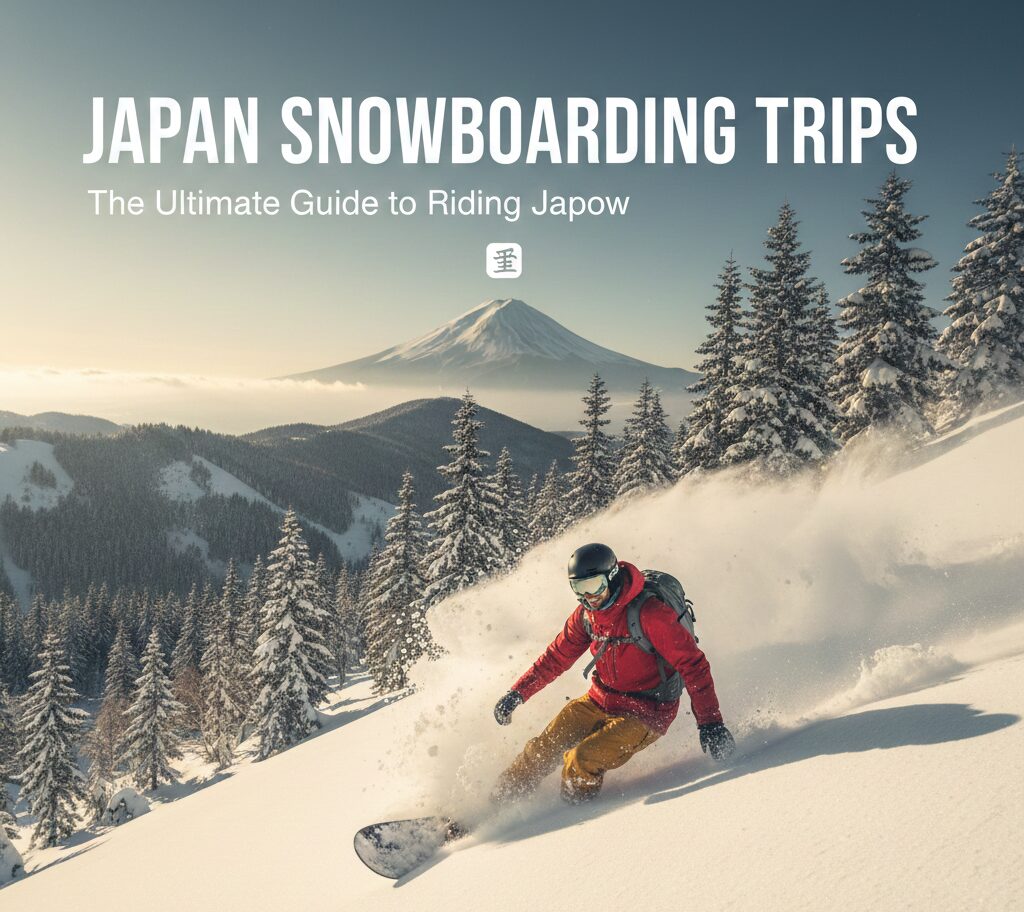
Japan Snowboarding Trips: The Ultimate Guide to Riding Japow
Experience the world’s lightest, deepest snow. This guide covers everything from resort picks and travel hacks to cultural tips for the ultimate Japanese snowboarding adventure.
1. Why Japan is Unique: The Science of Japow
Japan’s snow is legendary due to Siberian winds picking up moisture over the Sea of Japan, then dumping it as ultra-light, low-moisture powder upon hitting the mountains. This creates consistent, frequent dumps of 1-2 feet overnight, often for days in a row. The combination of deep snow, unique tree skiing (“gaijin trees”), and vibrant culture creates an unbeatable snowboarding pilgrimage.
Pro Tip: Japan’s snow is so dry that it behaves differently. You’ll need to adjust your stance set-back and learn to float. A dedicated powder board or a directional all-mountain board is highly recommended. For more on board selection, see our guide on directional vs twin snowboards for float and control.
2. When to Go: Chasing the Perfect Storm
The prime season is mid-January to late February. This period offers the most consistent cold temperatures and highest probability of powder days. December and early January can be great but may have variable base depths. March brings warmer temps, longer days, and fantastic “spring powder,” but can be wetter. Avoid late March-April unless targeting higher elevation resorts.
3. Top Resorts Overview: Find Your Match
Japan has over 500 resorts. Focus on two main islands: Hokkaido (famous for ultra-light snow, colder temps) and Honshu (the main island, with bigger vertical and more varied terrain). Key destinations include Niseko, Rusutsu, and Furano in Hokkaido; Hakuba Valley, Nozawa Onsen, and Myoko Kogen in Honshu. Each offers a distinct vibe.
4. Niseko United Deep Dive: The International Hub
Niseko is actually four interconnected resorts (Grand Hirafu, Hanazono, Niseko Village, Annupuri). It’s the most foreigner-friendly, with abundant English signage, Western-style accommodations, and a vibrant international apres scene. The tree skiing is phenomenal, but it can get crowded. Perfect for first-timers to Japan who want ease and guaranteed great snow.
Niseko Quick Facts
Best For: First-time visitors, deep tree runs, nightlife, families.
Snowfall: 15m+ annually.
Vibe: Bustling, international.
Tip: Buy the All Mountain Pass to access all four resorts.
5. Hakuba Valley Deep Dive: The Honshu Powerhouse
Hakuba Valley consists of 10 individual resorts, each with its own character. It hosted the 1998 Winter Olympics. You’ll find bigger mountain terrain, steep chutes, and less crowded slopes compared to Niseko. The towns are more traditionally Japanese. Hakuba gets tremendous snow, though it can be slightly denser than Hokkaido’s. Ideal for riders seeking varied terrain and a more authentic cultural experience.
6. Rusutsu & Furano: Hokkaido’s Hidden Gems
Rusutsu: Just 90 minutes from Niseko, it features incredible, low-angle tree skiing through perfectly spaced birch glades. Fewer crowds, more playful terrain. The resort has a quirky, retro amusement park vibe. A must-do day trip or 2-3 day stay.
Furano: Located inland, it offers drier snow, a more local feel, and fantastic inbound terrain. The town is charming and less developed for tourism. Great for intermediates and experts looking to escape the crowds.
7. Travel Logistics: Flights, Trains & Buses
Fly into New Chitose Airport (CTS) for Hokkaido or Narita (NRT) / Haneda (HND) for Tokyo/Honshu. For Hokkaido, book a connecting flight or take the train/bus to your resort (e.g., 2.5-3 hour bus to Niseko). For Hakuba, take the Shinkansen (bullet train) from Tokyo to Nagano, then a bus. Purchase a Japan Rail Pass *before* you arrive if planning extensive train travel.
Getting Around: While many resorts have shuttle buses, renting a car (with 4WD and snow tires) offers ultimate freedom to explore different resorts and onsens. International driving permits are required.
8. Accommodation Tips: From Ryokans to Condos
Book early (6+ months in advance for peak season). Options range from Western-style hotels and apartments to traditional Japanese ryokans (inns with tatami mats and onsens). For groups, renting a chalet or condo is cost-effective. Staying ski-in/ski-out is worth the premium for convenience. Consider the location relative to the lifts and town amenities.

9. Gear & Packing: Be Prepared for Deep Days
Rent or Bring? High-quality demo gear is widely available for rent, often with the latest powder boards. This saves on airline baggage fees. If bringing your own, a powder-focused board is ideal. Pack fully waterproof outerwear (15k+ rating recommended), multiple base layers, and neck gaiters. Don’t forget a durable snowboard bag for the flight. Consider waxing your board frequently for the dry snow.
🛡️ Shop High-Performance Outerwear10. Culture & Etiquette: Respect Goes a Long Way
Learn basic phrases (“Arigatou” – Thank you). Remove shoes when entering homes, ryokans, and some restaurants. Be quiet and respectful on public transit. When using onsens (hot spring baths), wash thoroughly before entering the bath, and no clothing or towels in the water. Tattoos can be frowned upon in public onsens; cover them with patches or seek private onsens.
11. Après & Off-Mountain: Unforgettable Experiences
Japan’s apres is more about savoring great food and onsens than rowdy bars. Indulge in ramen, sushi, and izakaya (pub) fare. Visit an onsen daily to soothe muscles. Explore local towns, visit temples, and try sake tasting. In Niseko, the nightlife is more active with international bars.
12. Booking Timeline & Final Checklist
6-12 Months Out: Research resorts, book flights.
6 Months Out: Book accommodation and car rental.
3 Months Out: Purchase travel insurance, Japan Rail Pass if needed.
1 Month Out: Book airport transfers, rent gear online (often cheaper).
1 Week Out: Pack, organize visas/permits, download translation apps.
Final Advice: Embrace the adventure. Things may not go exactly to plan, but that’s part of the experience. Be flexible with weather, try new foods, and immerse yourself in the culture. A Japan snowboarding trip is about more than just riding—it’s a cultural immersion that will leave you dreaming of your return.
Japan Snowboarding Trips: Your Questions Answered
What is the best month to go snowboarding in Japan?
Mid-January through February is the peak for consistent cold powder. Late January is often considered the sweet spot. March offers longer days and spring conditions but a higher chance of wetter snow.
Is it better to go to Hokkaido or Hakuba?
Hokkaido (Niseko, Rusutsu) generally has lighter, drier snow and more tree skiing. Hakuba has bigger mountain terrain, more vertical, and a more traditional Japanese culture. For guaranteed deep powder and ease for first-timers, choose Hokkaido. For varied terrain and culture, choose Hakuba.
Do I need to speak Japanese to snowboard in Japan?
No, especially in major resorts like Niseko where English is widely spoken. In more remote areas, learning basic phrases is appreciated. Translation apps and pointing work well. The Japanese are incredibly helpful and patient with visitors.
Should I bring my own snowboard or rent there?
Renting high-quality demo gear in Japan is excellent and often recommended. It saves on airline fees and lets you try a board optimized for Japanese powder. If you’re attached to your own setup, bring it, but ensure it’s a board suited for deep snow.
How expensive is a snowboarding trip to Japan?
It can vary widely. Budget around $200-$300 USD per day excluding flights for mid-range accommodation, lift tickets, food, and transport. Luxury trips cost more. Eating at local izakayas and staying slightly outside the main hubs saves money.
What should I pack besides snowboard gear?
Essentials: waterproof backpack, portable charger, cash (many places are cash-only), sim card or pocket Wi-Fi, small towel for onsens, comfortable shoes for town, and a sense of adventure!
Are there terrain parks in Japan?
Yes, but they are not the main focus. Most major resorts have parks, but they are often smaller than in North America/Europe. Japan’s true draw is the off-piste and tree riding. Check resort websites for current park features.
Is backcountry snowboarding allowed in Japan?
It’s complex. Some resorts have designated backcountry gates with avalanche control. However, much backcountry terrain is unpatrolled and carries high avalanche risk. Never go without a qualified local guide, proper avalanche gear, and training. The snowpack can be unstable.
Can I use my credit card everywhere?
Major hotels, some restaurants, and big shops accept credit cards. However, many smaller restaurants, onsens, and rural businesses are cash-only. Always carry a sufficient amount of Japanese Yen.
How far in advance should I book my trip?
For peak season (Jan-Feb), book flights and accommodation 6-9 months in advance, especially for popular resorts like Niseko. Last-minute trips are possible but limit your options and increase costs.


 Home
Home
 About
About
 My Cart
 Reviews
 Compare