

Are Gilson Snowboards Good? A Deep Dive into Their 3D Base Tech (2026)
In a sea of mass-produced snowboards from overseas factories, a handful of brands stand out for their radical innovation and commitment to homegrown craftsmanship. Gilson Snow is arguably at the forefront of this movement. You’ve probably heard the buzz, seen their unique-looking bases, and asked the same question I did: Are Gilson snowboards actually good, or is their wild tech just a gimmick?
As a rider who has tested everything from traditional camber workhorses to the most experimental shapes over the past two decades, I was deeply skeptical—and intensely curious. After putting multiple Gilson models through their paces in every condition imaginable, from bulletproof East Coast ice to deep Colorado powder, I’m here to give you the definitive answer.
The Quick Answer
Yes, Gilson snowboards are exceptionally good, particularly for riders who value a playful, surf-like feel and incredible powder floatation. Their signature 3D base technology, featuring a “Soft Edge” and “Powder Channel,” is a genuine game-changer that makes for a catch-free, intuitive, and incredibly fun ride. While their unique edge design may feel different to aggressive carvers accustomed to traditional sidecuts, their quality, American-made craftsmanship, and innovative approach make them a fantastic choice.
Homegrown Innovation: The Gilson Story 🇺🇸
You can’t talk about Gilson without talking about where they come from. Founded by Nick Gilson and Austin Royer, the company is proudly based in rural Pennsylvania, building every single board in their own factory—a place they affectionately call “The Gilson Snowboard Farm.” This isn’t just a marketing line; it’s central to their identity. They source their poplar wood cores from trees grown right in their backyard, giving them unparalleled control over the quality and character of their boards.
This commitment to American manufacturing in a world of outsourcing is a huge part of their appeal. When you buy a Gilson, you’re not just getting a snowboard; you’re supporting a team of passionate craftsmen and a sustainable, community-focused business model.
The Main Event: Deconstructing Gilson’s 3D Base Technology
Alright, let’s get to the heart of it. What makes a Gilson a Gilson? It all comes down to their revolutionary three-dimensional base design. Forget flat bases; Gilson shapes their boards more like the hull of a boat or the bottom of a surfboard, and it completely changes the way the board interacts with the snow.
Key Tech #1: The Soft Edge
Imagine the metal edge of your board. On a traditional snowboard, that edge is the lowest point, ready to dig into the snow the moment you tilt it. This is great for carving but is also why beginners (and even experts) “catch an edge” and slam. Gilson’s Soft Edge technology bevels the base of the board up and away from the snow along the contact points. This means when you’re riding on a flat base, the metal edges are slightly lifted off the snow. It makes the board feel incredibly loose, playful, and virtually impossible to catch an edge on.
Key Tech #2: The Powder Channel
Running down the center of the base is the second piece of the puzzle: the Powder Channel. This is a subtle concave channel that acts like a keel on a boat. On hardpack, it helps the board track straight and true. But in deep snow, it’s pure magic. The channel directs snow flow under the board, creating hydraulic lift. The result is a board that floats on top of powder with almost zero effort. I’ve ridden boards twice the size that don’t float as well as some of Gilson’s all-mountain decks.
So, How Does It Actually *Feel*?
Riding a Gilson for the first time is a unique experience. The initial feeling on a catwalk or flat base is one of looseness, which can be surprising. But as soon as you initiate a turn, the feeling clicks. Turn initiation is fluid and effortless. Instead of fighting to get the board on edge, it feels like it rolls smoothly from edge to edge. It’s less “knife” and more “surfboard.”
The 2026 Gilson Snowboard Lineup: On-Snow Reviews
Gilson primarily sells their boards directly to riders to ensure the best quality and service. Here are the standouts from their lineup, with links to their official website where you can see the latest designs and pricing.
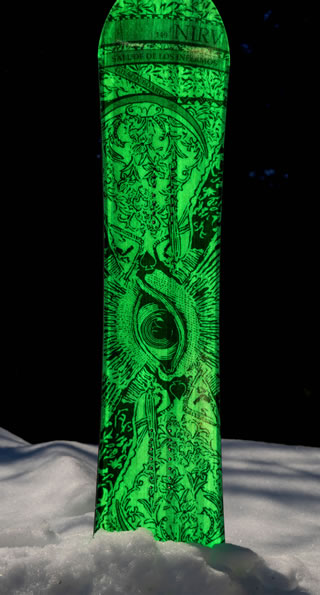
Gilson All Mountain
- Riding Style: All-Mountain / Do-It-All
- Profile: Camber-Rocker Hybrid w/ 3D Base
- Flex: Medium (6/10)
- Best For: The rider who wants one board to explore the entire resort.
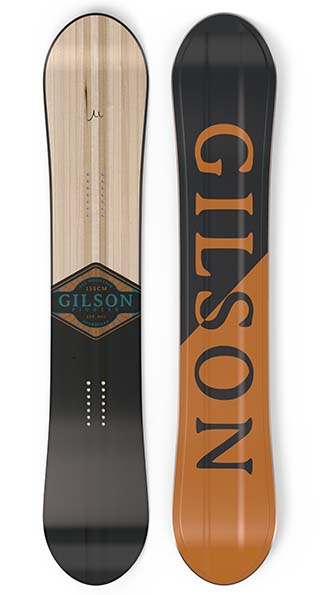
Gilson Pioneer
- Riding Style: All-Mountain / Freeride
- Profile: Camber w/ 3D Base
- Flex: Medium-Stiff (7/10)
- Best For: Aggressive riders who want to charge hard and float in powder.
Review: The Gilson All Mountain – The Swiss Army Knife
This is Gilson’s flagship, and it perfectly embodies their ethos. The All Mountain is designed to be your daily driver, and it excels in that role. The medium flex combined with the hybrid camber profile provides a perfect balance of pop and forgiveness. On groomers, once you learn to roll it onto its edge, it holds on surprisingly well. It doesn’t have that locked-in, razor-sharp feel of a traditional camber board from a brand like Yes Snowboards, but it’s more than capable of laying down deep trenches.
Gilson All Mountain: Pros
- ✔ Incredibly fun and playful ride
- ✔ Catch-free Soft Edge builds confidence
- ✔ Phenomenal float in powder
- ✔ Versatile enough for any terrain
Gilson All Mountain: Cons
- ❌ Carving feels different to traditional boards
- ❌ Not ideal for highly technical, icy conditions
Review: The Gilson Pioneer – The Freeride Charger
If the All Mountain is the playful puppy, the Pioneer is the alpha wolf. This board is built for speed, power, and deep snow. It features a stiffer flex and a more traditional camber profile between the feet, giving it a significant boost in stability and edge hold. It’s the perfect choice for the advanced rider who spends their time seeking out steep lines, deep tree runs, and open bowls.
Gilson Pioneer: Pros
- ✔ Unsinkable powder float thanks to the Powder Channel
- ✔ Extremely stable and damp at high speeds
- ✔ Powerful carving ability
- ✔ Made in the USA durability
Gilson Pioneer: Cons
- ❌ Less forgiving than other models
- ❌ Not suited for park or freestyle
Answering Key Rider Questions About Gilson
Is Gilson’s “Soft Edge” good for beginners?
Absolutely. In fact, it might be one of the best technologies for beginners on the market. The single biggest hurdle for new riders is overcoming the fear of catching an edge. The Soft Edge design all but eliminates this problem. If you’re wondering if snowboard lessons are worth it, pairing them with a forgiving board like a Gilson is a fantastic combination.
How does a Gilson carve without a full, sharp edge?
This is the most common point of skepticism for experienced riders. The key is understanding that the edge is still there and still sharp; it’s just positioned differently. You have to be more deliberate about tipping the board over to engage the “Central Power Core” (the flat part of the base) and the edge. It’s a different technique, not a lesser one.
Are Gilson snowboards just for powder?
No, this is a common misconception. While their powder performance is truly elite, boards like the All Mountain and their park-specific models are designed to be ridden everywhere. The 3D base makes them exceptional for butters, presses, and creative riding.
Gilson vs. The Competition: A Tech Showdown
- vs. Bataleon’s Triple Base Technology (3BT): Bataleon is the other big name in 3D bases. 3BT is similar in concept but focuses on uplifting the base at the sides. I find Gilson’s design to be a bit more surfy and fluid, while 3BT can feel a little more like it “locks” into a carve.
- vs. Traditional Brands (Burton, DC, etc.): Traditional camber boards will always have a slight edge in terms of pure, aggressive edge hold on the firmest snow. The trade-off is they are far less forgiving.
- vs. Volume Shifted Boards: Many brands now make short, wide “volume shifted” boards for powder. Gilson’s tech allows even their standard-sized twin-tip boards to float like dedicated powder shapes.
Frequently Asked Questions (FAQ)
Where are Gilson snowboards made?
Every single Gilson snowboard is designed and manufactured in their own factory in Winfield, Pennsylvania, USA. They even use locally sourced Pennsylvania Poplar for their wood cores.
What’s the ‘Gilson Edge’ feel like on ice?
On true, solid ice, the Soft Edge design means you have to lean the board over further to get the edge to bite. It still holds, but it doesn’t have the instant grip of Magne-Traction.
Is the price of a Gilson snowboard worth it?
Considering they are hand-crafted in the USA with high-quality, locally sourced materials, I believe they offer exceptional value. Tackling the question of how expensive is snowboarding involves looking at gear that lasts, and Gilsons are built to be tanks.
What kind of bindings and boots work best with a Gilson?
A medium-flex binding is a perfect partner. As for boots, look into sizing guides like our one on whether Vans boots are true to size or our in-depth K2 snowboard boots review.
The Final Verdict: Should You Buy a Gilson Snowboard?
Riding a Gilson is about more than just getting down the hill. It’s about embracing a different feeling—a more fluid, surf-inspired, and playful approach to snowboarding. After extensive testing, I can confidently say that their technology is not a gimmick.
You should absolutely buy a Gilson snowboard if:
- You value a playful, buttery, and surf-like feel over aggressive, locked-in carving.
- You are a beginner or intermediate rider looking to build confidence and avoid painful edge catches.
- You ride in areas with abundant soft snow and want a board that floats effortlessly.
- You believe in supporting American craftsmanship.


 Home
Home
 About
About
 My Cart
 Reviews
 Compare