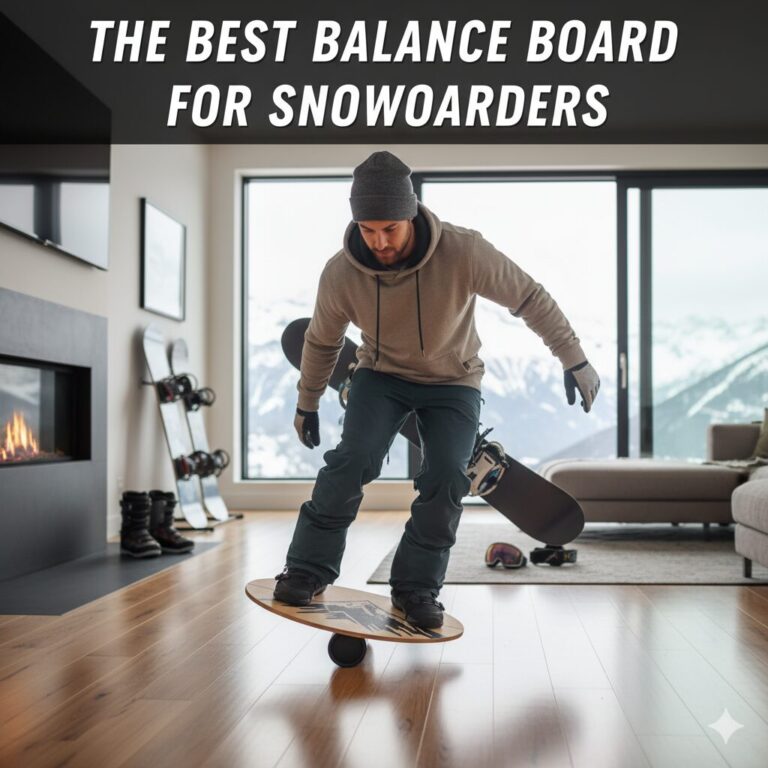
The Best Balance Board for Snowboarders: Off-Season Mastery of Edge and Core
Snowboarding demands a highly specialized form of athleticism known as dynamic balance. It’s not the static balance required to stand on one leg; it’s the continuous, reactive ability to correct micro-movements while moving at speed and under rotational strain. When the snow melts, the best way to maintain and enhance this crucial skill is through a dedicated balance board.
Article Key Highlights
- Kinetic Chain Integration: How boards simulate real ankle/knee/hip alignment.
- Proprioceptive Overload: Training your nervous system to react to ice and death-cookies.
- Injury Mitigation: Strengthening the lateral ligaments to prevent “snowboarder’s ankle.”
- Hardware Analysis: Why tapered rollers are superior for carving mechanics.
Chapter 1: The Science of Snowboard Balance
Effective training requires understanding precisely which types of balance snowboarding demands. A general fitness board only targets 20% of your needs. Snowboarding requires proficiency in four key domains, all of which are covered in depth in our full fitness guide for snowboarding.
1. Lateral Balance and Edge Geometry
Intermediate and advanced riders spend 90% of their time on an edge. When you are balancing on a roller, you are training your body to find a center of gravity over a narrow, moving point. This directly translates to the pressure control required to maintain an edge during a high-speed carve. Without this training, riders often experience “chatter”—where the board skips across the snow—because their stabilizer muscles are too weak to hold the isometric tension.
2. Fore/Aft Stability and Vibration Dampening
The “backseat driving” phenomenon is a result of poor fore/aft balance. A balance board forces you to keep your weight centered over the “bolts.” By moving weight towards the nose (to initiate a turn) or the tail (to butter or land a jump), you are teaching your CNS to manage pressure distribution. This is essential for navigating the variable conditions often found when snowboarding in Colorado.
Chapter 2: The Best Balance Boards (Top 5 Technical Reviews)

Revbalance 101 v2
The Revbalance 101 v2 is arguably the best starting point for year-round conditioning. Its magnetic stop system can be adjusted instantly, allowing beginners to start with minimal roll distance. It features a high-grip Dura-soft top that allows you to train barefoot, which is vital for strengthening the intrinsic muscles of the foot, often a cause of pain discussed in why do my feet hurt when i snowboard.
Vew-Do Flow Balance Board
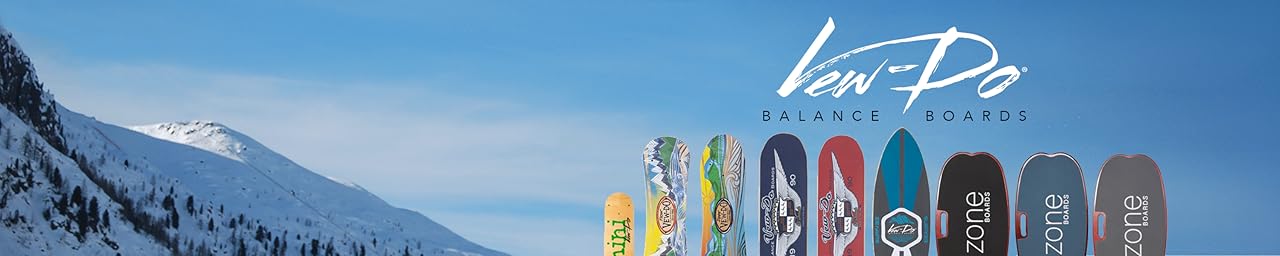
This is the most “snowboard-feeling” board on the market. Developed by instructors, the Vew-Do Flow utilizes a tapered wooden roller. This hourglass shape allows the board to tilt up to 45 degrees without slipping, perfectly mimicking the angle of a deep toeside or heelside carve (how to carve on a snowboard).

Revbalance Core 32
Designed for park rats. The Core 32 is a high-performance trick board with high kick-tails. This is where you practice the upper/lower body separation needed for spins. It’s built to withstand the impact of ollies and shuvits. Pair this with best impact shorts if you’re practicing on hard surfaces.

Yes4All Premium Trainer
For those questioning how expensive is snowboarding, this board proves that training doesn’t have to be. It’s a rock-solid, no-frills entry point that provides foundational core work and balance for beginner resorts.

Whirly Board 360
The Whirly Board uses half-spheres to allow for 360-degree rotation. This is the ultimate tool for practicing “butters”—shifting weight to the nose or tail and spinning on a flat base. It simulates the fluid, surfy feeling that makes snowboarding fun.
Chapter 3: Advanced Training Regimens
To truly get value from your balance board, you must simulate the isometric and eccentric demands of the mountain. Your quads aren’t just pushing; they are resisting gravity. This is why snowboarding is the best winter sport—it requires total physical presence.
The Carving Master Routine
- Heel-to-Toe Rocking (3 sets of 20): Focus on slow, controlled transitions. Do not let the board touch the floor.
- The Deep Crouch Hold (3 sets of 45 seconds): Lower your center of gravity until your quads burn. This builds the stamina needed for long runs at top European ski resorts.
Chapter 4: Frequently Asked Questions
Yes, but it is actually easier on carpet because it provides more friction. For a real snowboarding challenge, use a thin yoga mat on a hard floor to simulate “icy” conditions.
You can, but training barefoot is better for proprioception. It strengthens the arches of your feet, which can help if you’re worried about how long are snowboard boot laces or fit issues.
15 minutes of dedicated, high-focus training is better than an hour of mindless balancing. Focus on specific drills like 180-degree pivots.
Absolutely. Catching an edge usually happens because your stabilizers are tired. Balance boards build the endurance needed to stay “stacked” over your board late in the day.
It’s arguably *more* important for you. Weekend warriors are more prone to injury because their bodies aren’t conditioned. 10 days of riding can be ruined by one day of sore legs.
A roller board moves horizontally, while a rocker board just tilts. Snowboarders need the horizontal movement of a roller board to simulate side-to-side edge engagement.
If you are practicing advanced tricks like ollies on a hard floor, a best snowboard helmet is a smart safety precaution until you master the bail.
Yes! Balance training is excellent for youth development. Just ensure they use a board with safety stops like the Revbalance 101.
Backcountry requires reacting to hidden rocks and crust. The “Sphere” boards are incredible for this kind of “chaos training.”
Keep the wooden roller free of grit. If you wax your snowboard, you know the importance of a clean base (why wax your snowboard)—the same applies to your balance roller for a smooth glide.
By investing in a quality balance board and dedicating just 15 minutes a day, you will arrive on the slopes ready to carve, spin, and dominate. Protect your gear with the best snowboard bags when traveling to best snowboarding destinations. Visit snowboardchamp.com for more guides.


 Home
Home
 About
About
 My Cart
 Reviews
 Compare