The Ultimate Snowboard Goggle Guide: 2026 Edition
In the high-velocity world of snowboarding, your vision is your most valuable asset. As you navigate technical tree runs, navigate the chaotic shadows of a sunset session, or drop into a white-out bowl, your ability to read the terrain defines both your safety and your performance. Goggle technology has moved far beyond simple plastic shields; we are now in the era of high-definition optics, proprietary contrast-enhancing dyes, and thermal-regulation systems that mimic military-grade aerospace tech. This comprehensive guide breaks down the science of vision on snow, ensuring you see every bump, dip, and ice patch before it sees you.
Goggle Buyer’s Guide: Deep Dive Into Optical Science
Choosing the right goggles requires balancing physics, geometry, and environmental conditions. As we move into 2026, manufacturers are prioritizing lens depth and rapid-change systems more than ever. Here is the technical breakdown you need to master before investing in premium eyewear.
Spherical vs. Cylindrical vs. Toric Lenses
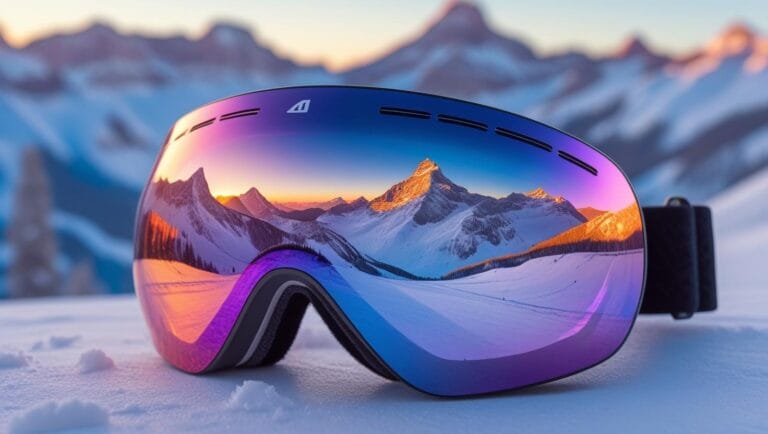
Spherical lenses are engineered to mimic the horizontal and vertical curvature of the human eye. This dual-axis curve serves two critical purposes: first, it provides a massive internal air volume that creates a superior thermal buffer against fogging. Second, it reduces optical distortion by ensuring light rays pass perpendicularly through the lens to your retina. This results in superior peripheral vision and “true” distance perception, which is essential when dropping off high-consequence cliffs.
Cylindrical lenses offer a classic, low-profile aesthetic. Curving only on the horizontal axis, they sit closer to the face. While historically prone to minor peripheral distortion, modern high-end cylindricals have largely solved this through injection molding. They are often favored by park riders for their slim look. Toric lenses, the newest hybrid, feature a tighter vertical curve than a spherical lens, offering the best of both worlds—maximum field of view with a less “bug-eyed” profile.
VLT & Contrast Tech: Seeing Through the Noise
Visible Light Transmission (VLT) measures how much light your lens lets through. However, the 2026 market is defined by contrast dyes. Technologies like Oakley Prizm and Smith ChromaPop don’t just dim the sun; they selectively filter out the “noisy” light waves that cause color confusion. By emphasizing the blue and orange parts of the spectrum, these lenses make shadows on the snow (terrain variations) look significantly darker and sharper.
- Sun (5-15% VLT): These often feature heavy mirror coatings to reflect intense high-altitude radiation. Without these on a bluebird day, you risk snow blindness and retina fatigue.
- Variable (20-50% VLT): The “one-lens” solution. These lenses use advanced coatings to adapt to moving clouds, allowing for enough light in the trees while blocking the glare of the open flats.
- Storm/Night (60-90% VLT): These lenses, often yellow or light rose, are designed to “find the light” in flat, gray conditions. They effectively boost contrast in white-out situations where depth perception usually disappears.
Fog Management & Thermal Buffers
Fogging is a thermodynamic failure. When warm moisture from your face meets the cold exterior lens, it condenses into droplets. Premium goggles combat this with dual-pane thermal barriers—essentially a double-paned window for your face. We also look for “permeable” foam and perimeter venting that aligns with helmet airflow. If your helmet’s brim blocks your goggle’s top vents, you will fog instantly. In 2026, keep an eye out for goggles with electronic anti-fog fans or chemically etched permanent anti-fog coatings that don’t wipe off over time.
1. Oakley Flight Deck L (Prizm)
Best Field of View & Optical Clarity

The Oakley Flight Deck L remains the undisputed heavyweight champion of peripheral vision. Inspired by the visors of fighter pilots, this rimless design removes the traditional frame boundaries that clutter your “downward” view. This is critical for snowboarders who need to see their lead foot and the terrain directly beneath them without tilting their head. The injection-molded Plutonite lens is remarkably durable, and the F3 anti-fog coating is among the most resilient we’ve tested.
What truly separates the Flight Deck is the Prizm™ Snow technology. Oakley spent years studying the light spectrum on glaciers to develop dyes that boost terrain contrast to an almost unnatural level. Even in flat, gray light, the Prizm Sapphire and Rose lenses can pull out shadows that look invisible to the naked eye. The “L” (Large) sizing is generous, providing a massive surface area that accommodates most faces comfortably, though riders with particularly small bridges may find the “M” version a better fit. The Ridgelock lens system, while manual, ensures a completely airtight seal against the wind.
- Lens Geometry: Premium Injection-molded Spherical
- Venting: Full perimeter channel venting with helmet integration
- Anti-Fog: F3 Military-grade inner lens coating
- Best For: High-speed chargers and backcountry riders who demand the absolute widest field of vision.
2. Smith Squad MAG
Best Overall Package & Lens Swapping

The Smith Squad MAG is the industrial-strength answer to changing weather. For 2026, the Smith MAG system continues to lead the pack in security. Using six N52 magnets and two locking levers on the sides, the lens is held in place with more force than you’ll ever exert in a crash, yet it can be swapped in under 10 seconds. This is a game-changer when you’re on the chairlift and the sun suddenly ducks behind a storm front. The Squad’s cylindrical look is timeless, sitting flush against the face for a sleek profile.
Optically, the ChromaPop™ lens tech is Smith’s secret weapon. It filters two specific wavelengths of light that cause color confusion, giving you a more natural yet highly vivid view of the mountain. The Squad MAG package is particularly valuable because it almost always includes a dedicated low-light “Storm” lens and a high-end hard case. The 5X anti-fog inner lens is specifically engineered to handle five times more moisture than standard lenses, making this an excellent choice for riders who tend to run hot or ride in humid regions like the Pacific Northwest.
- Lens Geometry: Carbonic-X Cylindrical with TLT optics
- Bonus Lens: Includes two ChromaPop™ lenses (Sun & Storm)
- Anti-Fog: 5X robust internal anti-fog tech
- Best For: Versatile riders who want the fastest lens-swapping tech in a premium, inclusive package.
3. Anon M4 Toric MFI
Best for Features & Face Protection

The Anon M4 is the “Swiss Army Knife” of high-end goggles. What makes it legendary is the MFI® (Magnetic Facemask Integration). The bottom of the goggle frame contains four magnetic points that snap onto an included face mask. This creates a gapless, seamless seal between your goggles and your mask, preventing the “moist breath” fogging that plagues riders who tuck their masks into their goggles. For riders in extreme cold (think Japan or Vermont), this tech is life-changing.
The M4 is also unique because the frame is compatible with both Toric and Cylindrical lenses, allowing you to change your entire “look” just by swapping lenses. The Perceive lens technology provides world-class contrast, and the lenses are finished with a hydrophobic and oleophobic coating, meaning water and fingerprints slide right off. The Magna-Tech quick-change system uses 14 rare-earth magnets for a connection that is incredibly fast and satisfyingly secure. This is the choice for the gear junkie who wants every possible bell and whistle in one kit.
- Lens Geometry: Toric (mimics spherical optics in a lower profile)
- Special Feature: Includes MFI magnetic facemask and molded hard case
- Interchange System: Magna-Tech (14 rare-earth magnets)
- Best For: Cold-climate riders and those who prioritize integrated face protection and high-end features.
4. OutdoorMaster PRO
Best Value & Budget Pick

The OutdoorMaster PRO proved to the industry that high-performance features don’t have to cost $200. While it lacks the proprietary contrast dyes of Oakley or Smith, the injection-molded spherical lens provides clarity that is 90% as good as the big brands for a fraction of the cost. The magnetic system is surprisingly robust, featuring eight magnets that hold the lens firmly in place during impacts. For beginners or those who only get 5-10 days on the mountain a year, this is the smartest financial choice.
Durability is where this goggle shines for the price. The TPU frame is highly flexible even in deep freezes, and the triple-layer foam provides a comfortable, moisture-wicking fit. OutdoorMaster offers an enormous selection of spare lenses (often for less than $25), meaning you can build a full VLT quiver without breaking the bank. While the anti-fog coating isn’t quite as permanent as Smith’s 5X tech, if you treat them with care and don’t wipe the inside when wet, they will last for several seasons of heavy riding.
- Lens Geometry: Injection-molded Spherical
- Interchange System: 8-Magnet Quick-Change
- Frame: Ultra-flexible TPU with long-strap compatibility
- Best For: Beginners, budget-conscious riders, and those who want an affordable backup pair.
5. Giro Contour RS
Best for Smaller Faces

Riders with smaller facial structures often struggle with “standard” goggles that push down on their nose or leave gaps at the temples. The Giro Contour RS (Reduced Size) is the precision-engineered answer. Giro maintained the massive Expansion View (EXV+) tech of their flagship model but narrowed the frame architecture to fit small-to-medium faces perfectly. You get a “large” view in a compact package. The ZEISS VIVID lenses are another standout, developed to specifically emphasize blue light, which is the light that provides terrain detail in the snow.
The Contour RS features a semi-frameless toric shape that looks modern and aggressive. Giro’s EVAK Vent Technology is particularly impressive; it uses a new foam made from non-absorbent material that minimizes fogging while staying durable enough for years of use. Unlike some smaller goggles that feel “budget,” the Contour RS is a top-tier professional instrument. It comes with a bonus low-light lens, a hard case, and features a seamless magnetic-assist lens change system. It’s the ultimate choice for riders who need a refined fit without sacrificing world-class ZEISS optics.
- Lens Geometry: Toric with Expansion View (EXV+) technology
- Lens Partner: World-class VIVID optics by ZEISS
- Ventilation: EVAK non-absorbent vent foam
- Best For: Riders with smaller faces who demand professional-level ZEISS optics and a massive field of view.
Frequently Asked Questions (FAQ)
1. How do I stop my goggles from fogging up?
Thermal management is key. First, ensure your helmet’s brim doesn’t block the top vents of your goggles. Second, never wipe the inside of the lens when it’s wet; you’ll smear the anti-fog coating. If you fall and get snow inside, shake it out and let them air dry. Finally, don’t tuck your neck warmer into your goggles—your warm breath will travel straight into the lens.
2. What does VLT stand for and why does it matter?
VLT stands for Visible Light Transmission. It is the percentage of light that passes through the lens. Low VLT (10-20%) is for sun, while High VLT (60-90%) is for storms. Choosing the wrong VLT can lead to snow-blindness in the sun or “flat-light” accidents in the gray-out.
3. Can I wear my glasses under snowboard goggles?
Yes, look for “OTG” (Over The Glasses) specific goggles. These have deeper frames and cutouts in the foam at the temples to accommodate the arms of your glasses without putting pressure on your face.
4. How do I clean the inside of my goggle lens?
Be extremely careful. The inside of the lens is coated with a hydrophilic chemical that absorbs moisture. Wiping it when wet will ruin the lens. If you must clean a dry lens, use only the microfiber bag and “dab” rather than wipe.
5. Spherical vs. Toric vs. Cylindrical—which is best?
Spherical offers the best volume and optics but looks bulky. Cylindrical is stylish and low-profile but has minor distortion. Toric is the 2026 hybrid choice, offering spherical clarity in a slimmer, modern shape.
6. Are magnetic lens systems safe during a crash?
Yes. High-end systems like Smith MAG or Anon Magna-Tech use rare-earth magnets and locking mechanisms that can withstand significant impacts. They are much safer and more secure than cheap, generic magnetic goggles.
7. Why are Oakley and Smith goggles so expensive?
You are paying for R&D. Technologies like Prizm and ChromaPop involve complex dyes that filter out specific light waves. This isn’t just a tint; it’s an optical filter that fundamentally changes how you see the terrain.
8. How long do goggle lenses last?
With proper care, a lens lasts 2-4 seasons. Eventually, the anti-fog coating will degrade and the lens will accumulate micro-scratches from the mountain environment. If they fog instantly when you put them on, it’s time for a replacement.
9. What is “Photochromic” lens technology?
These lenses automatically change their VLT based on UV intensity. They darken in the sun and lighten in the shade. It’s the ultimate “one-lens” solution for riders who don’t want to carry spares.
10. How should I store my goggles in the off-season?
Store them in a hard case in a cool, dry place. Avoid leaving them in a hot car during the summer, as extreme heat can cause the glue in the foam to fail and the anti-fog coatings to peel.
Conclusion: Our Final Verdict
In 2026, vision is synonymous with performance. Investing in high-quality goggles isn’t just about fashion; it’s about giving your brain the data it needs to navigate the mountain safely.
- For the ultimate field of view and elite contrast tech, the Oakley Flight Deck L is the gold standard.
- For those who need to swap lenses instantly as the clouds move in, the Smith Squad MAG offers the most reliable package.
- For the extreme-cold rider who needs the MFI magnetic mask system, the Anon M4 Toric MFI is a technological masterpiece.
Ride safe, stay clear, and we’ll see you in the powder!


 Home
Home
 About
About
 My Cart
 Reviews
 Compare