
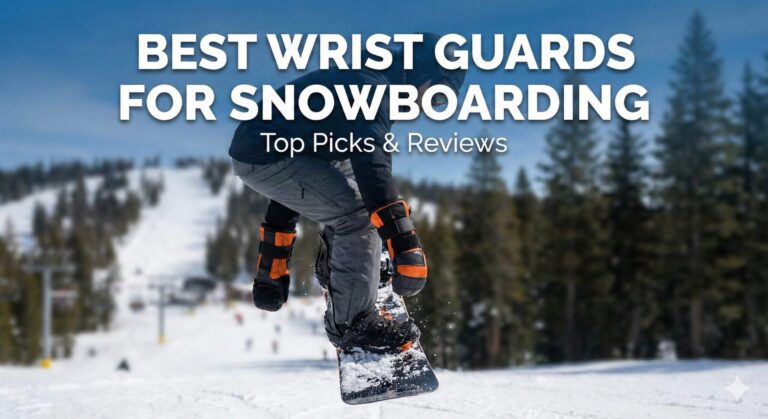
8 Best Wrist Guards for Snowboarding: The Ultimate Safety & Impact Guide
🚀 Key Highlights
- Injury Reduction: Wrist guards can reduce the risk of fractures by up to 50% for beginners.
- The FOOSH Rule: Most breaks happen due to “Fall On Outstretched Hand” – learning to roll is as vital as gear.
- Integrated Tech: 2026 gear focuses on BioMex and D3O tech built directly into mittens.
- Sizing Matters: Standalone guards often require sizing up your gloves by one full size.
There is a specific acronym in the medical world that every snowboarder should know: FOOSH (Fall On Outstretched Hand). It is the most common mechanism of injury in our sport. Whether you are catching your toe edge on a green run or overshooting a jump in the park, your instinct is to put your hands out to break your fall. Unfortunately, often the thing that breaks is your wrist.
Wrist injuries account for nearly 40% of all snowboard trauma. Yet, many riders avoid wrist guards because they think they are bulky, uncomfortable, or “uncool.” This mindset is why snowboarding is dangerous for the unprepared. Modern wrist guards have evolved; they are lower profile, breathable, and often integrated directly into gloves.
Best Overall (Stealth): Burton Impact Wrist Guard – Fits seamlessly under most gloves and offers flexible protection.
Best Heavy-Duty: Demon Flexmeter Double Sided – Medical-grade protection with D3O foam for high-impact falls.
Best Integrated: Level Fly Mitts – The BioMex system is built directly into the glove for zero bulk issues.
Why You Need Wrist Guards: The Anatomy of an Impact
⚠️ The Colles’ Fracture
A typical wrist guard functions like a splint. When you fall, the energy is transferred from your palm up your forearm, bypassing the delicate carpal bones and the distal radius. Without a guard, that energy snaps the radius bone backward—a classic Colles’ fracture that can end your season instantly.
The science of snowboarding falls is rooted in torque and leverage. When your edge catches, your board stops, but your center of mass continues forward at 15-25 mph. Your brain triggers a reflexive survival response: extend the arms. When your palm hits the hardpack, it creates a point of impact that travels through the scaphoid and lunate bones. Without a guard to bridge the gap between the palm and the forearm, the wrist joint takes 100% of the force. A high-quality guard acts as a bridge, distributing that energy across the larger, stronger radius and ulna bones of the forearm.
Furthermore, modern protection isn’t just about hard plastic. We now see the use of “non-Newtonian” materials like D3O. These materials are soft and pliable during normal movement but molecules lock together instantly upon impact to absorb energy. This is a game-changer for riders who previously hated the “robotic” feel of old-school guards. Wearing protection doesn’t make you a beginner; it makes you smart. It allows you to ride with confidence, knowing that a simple slip won’t result in surgery. Just like wearing impact shorts for your tailbone or a helmet for your head, wrist guards are essential PPE.
The Top 8 Wrist Guards for 2025/2026

1. Burton Impact Wrist Guard
The Upside: The absolute king of low-profile protection. It uses a tapered top splint that allows for enough flex to grab your board or adjust bindings without feeling restricted. Because they are so thin, they fit under 90% of standard gloves without needing to buy a new pair.
The Downside: The protection is “light.” If you are a park rider hitting massive booters, the thin splint may not prevent a fracture during a high-velocity landing.
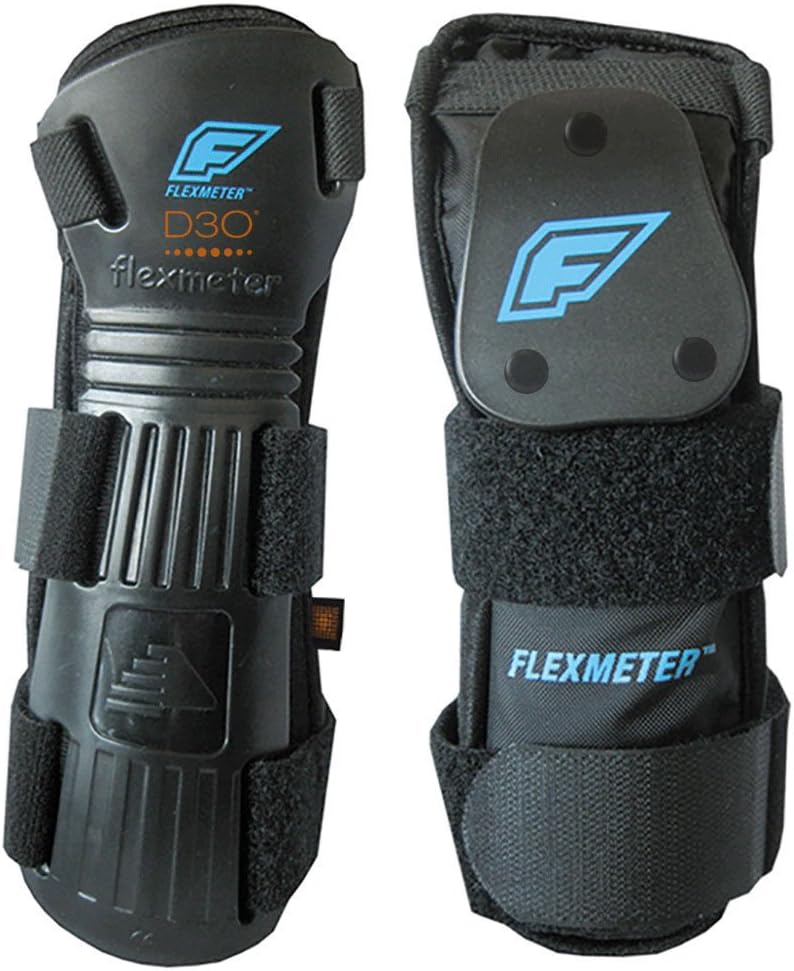
2. Demon Flexmeter Double Sided
The Upside: This is essentially a medical brace disguised as snowboard gear. Developed by orthopedic surgeons, it uses a flexible hinge that allows the wrist to function normally until it hits a dangerous angle, at which point the “Flexmeter” locks out to prevent hyperextension.
The Downside: It is massive. You will almost certainly need to buy gloves one size larger or wear these over your glove cuffs, which can look a bit bulky.

3. Dakine Wristguard Glove
The Upside: Zero hassle. You don’t have to worry about fitting a guard inside a glove because it IS the glove. The rigid nylon support is stitched into the chassis, providing a sleek look with beginner-friendly protection.
The Downside: If you tear the glove shell on a sharp edge, your protection goes with it. You also can’t remove the guard for “lazy” spring riding days.

4. Level Fly Mitts (BioMex)
The Upside: Level uses the BioMex system, which is widely considered the gold standard for integrated protection. It keeps the wrist in an anatomically strong position. Plus, mittens are inherently warmer for those mittens vs gloves debates.
The Downside: High price point. These are an investment in your safety, but they are among the most expensive hand protection on the market.

5. Hillbilly Wrist Guard Gloves
The Upside: Built from heavy-duty goat leather. These are bulletproof. The half-finger design is perfect for those who want tactile feel or for spring conditions where you need a “work glove” vibe with extreme durability.
The Downside: Not waterproof. If you are riding in wet PNW snow, these will soak through quickly and become heavy.

6. Triple Eight Undercover
The Upside: Extremely affordable. This is a classic “skate style” guard adapted for snowboarding. It uses a high-density, impact-resistant splint and a neoprene body that provides decent wrist support for under $30.
The Downside: Neoprene doesn’t breathe well. Your hands will likely be quite sweaty by lunch, and the Velcro straps can be itchy if not positioned perfectly.

7. Seirus Jam Master Exo
The Upside: Uses a mesh exoskeleton design. This is the coolest (temperature-wise) guard on the list. It’s ideal for people who ride in warmer climates or those whose hands overheat easily.
The Downside: The mesh is more prone to tearing than leather or heavy nylon. It provides good support but lower abrasion resistance.
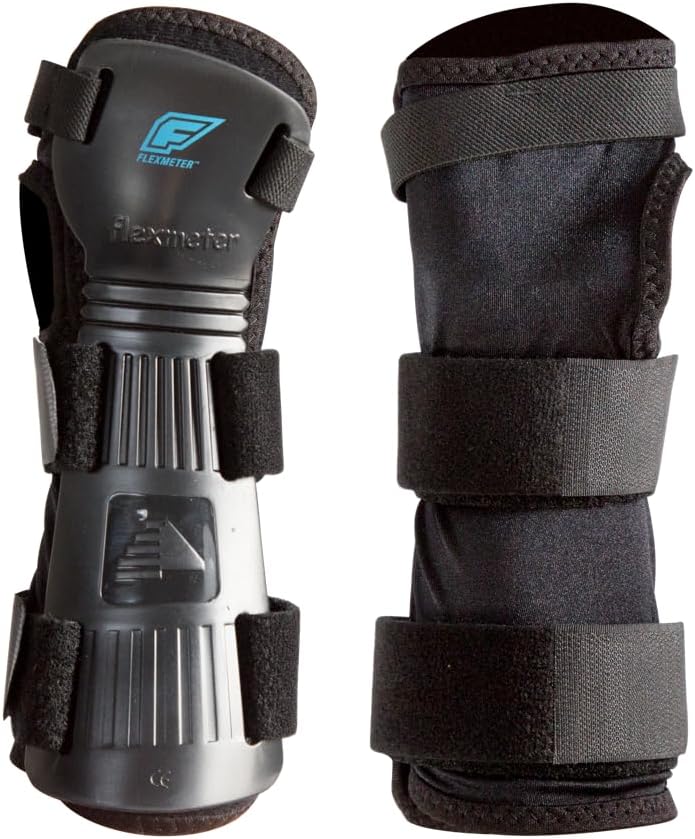
8. Demon Flexmeter Single Sided
The Upside: All the tech of the Demon Double-Sided but only on the dorsal (back) of the hand. This allows your palm to remain flat and unrestricted, making it much easier to grab your board during tricks.
The Downside: You lose the “skid plate” protection on the palm. If you land palm-down on ice, you will feel the impact much more than with a double-sided guard.
Buying Guide: Engineering the Perfect Fit
Choosing a wrist guard involves understanding the trade-off between immobilization and dexterity. If you are learning how to carve or spending your first few days on the bunny hill, you want maximum immobilization. Your goal is to prevent the wrist from moving into a range of motion where it can snap. A rigid, double-sided guard like the Demon Flexmeter is best here.
For park riders or advanced carvers, dexterity is more important. You need to be able to reach down and grab your board without fighting a plastic plate. In this scenario, look for guards that use D3O foam or flexible nylon splints like the Burton Impact. These allow for “natural” movement but stiffen up when an impact force is applied. Another crucial factor is Forearm Length. A guard that is too short will concentrate the force at the end of the splint, potentially causing a break higher up the arm. Look for guards that extend at least 2-3 inches past your wrist crease.
Lastly, consider the Glove Synergy. If you buy a standalone guard, take your current gloves to the shop (or order with a return policy). If the guard is too tight, it will restrict blood flow, and your fingers will freeze. Integrated systems like Level or Dakine are engineered to solve this, but they lack the modularity of separate pieces. If you’re a serious rider, having a separate guard allows you to swap between your light spring gloves and your heavy-duty winter mittens depending on the weather.
Frequently Asked Questions (FAQ)
This is a common myth. While a “radius break” can occur at the top of a guard, this is statistically much rarer than a wrist fracture. Furthermore, a clean break in the middle of the forearm bone is much easier for doctors to fix and heals much faster than a complex, multi-bone wrist joint injury.
90% of snowboard-specific guards are designed to be worn under the glove. This protects the guard from the snow and keeps the aesthetic clean. Only specialized “Exo” guards or heavy-duty skate guards should be worn over the top.
You can, but skate guards have a hard plastic “skid plate” on the palm designed to slide on asphalt. On icy snow, this plate can make your hands slide away from you too fast, potentially causing a shoulder dislocation. Snow-specific guards often use rubberized or foam palm pads for “grip-stop” action.
If you feel tingling or “pins and needles” in your fingertips after 10 minutes of wearing them, they are too tight. This will lead to frostbite in cold conditions. You should be able to fit one finger between the strap and your arm.
Integrated guards (built-in) are more comfortable because they are engineered as a single unit. However, standalone guards are better if you want to use different gloves for different weather conditions.
Absolutely not. If anything, the added confidence allows beginners to progress faster because they aren’t as terrified of the consequences of a fall.
Most plastic splints will last 2-3 seasons. However, if you have a massive “bell-ringer” crash where you land hard on the guards, inspect them for white “stress marks” or cracks. If they are cracked, replace them immediately.
Many do, especially those recovering from injury or those hitting the biggest jumps in the world. Many “Stealth” guards are hidden under gloves so you can’t see them on TV.
Most under-glove guards can be washed in a mesh bag on a cold cycle. Always air dry them; the heat of a dryer can warp the plastic splints.
While not legally mandatory, most instructors highly recommend them for children, as kids’ bones are still developing and their reflexes aren’t as fast to “tuck and roll.”
Conclusion
Wrist guards are the cheapest insurance policy you can buy for your snowboarding career. They keep you on the mountain and out of the emergency room. Whether you choose the stealth of the Burton Impact or the fortress-like protection of the Demon Flexmeter, the best wrist guard is the one you actually wear every single day.
So gear up, check your board wax, and go shred with confidence knowing your wrists are protected from the inevitable FOOSH.