Goofy vs. Regular Snowboard Stance: How to Find Your Dominant Foot
Key Article Highlights
- Biomechanics of Lead Foot Selection
- 3 Living-Room Stance Tests
- Duck Stance vs. Directional Setup
- Switch Riding Fundamentals
- Cerebral Dominance vs. Leg Power
Before you even worry about when is the best time to buy snowboarding gear or strapping into your bindings, you need to answer one fundamental question: Are you Goofy or Regular?
It sounds like a personality test, but in the world of board sports, it is pure biomechanics. Your stance dictates how you set up your equipment, how you turn, and how you balance. Getting this wrong is the number one reason beginners struggle, fall unnecessarily, and wonder why do my feet hurt when I snowboard. In this exhaustive guide, we breakdown the neurological and physical factors that determine your mountain stance.
The Psychology of Stance: It’s Not About Hands
A common misconception is that if you are right-handed, you must be Regular. This is false. While there is a correlation, your “handedness” does not dictate your “footedness.” Your stance is determined by your dominant leg—the leg you instinctively use to catch yourself, balance, or generate power. This leg is your “rudder.” It provides the power for steering and braking. Your front leg is your “pivot.” It guides the board. This is why knowing how to carve on a snowboard feels so different depending on your stance.
Immediate balance improvements; faster turn initiation; reduced muscle fatigue in the lead quad; intuitive edge control.
Constant “counter-rotation” (twisting your torso); higher risk of catching edges; difficulty riding flat catwalks; mental frustration.
3 Proven Tests to Find Your Stance
You can do these tests right now in your living room. You don’t need to be at one of the best snowboarding destinations to figure this out. These tests isolate your vestibular system and your muscle-memory reflex to see which foot takes the lead without your conscious brain interfering.
1. The Slide Test (The Gold Standard)
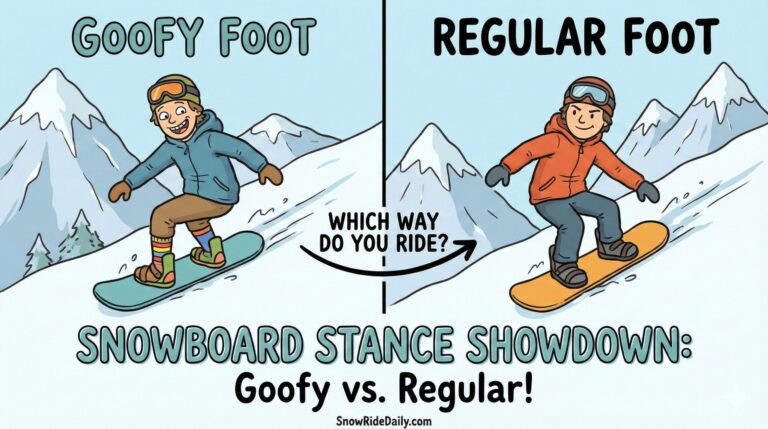
Put on a pair of thick socks on a smooth floor. Run and slide. Which foot naturally goes in front to stabilize you? That is likely your lead foot. This test is superior because it mimics the “dynamic balance” required on snow. If your left foot is forward, you are **Regular**. If your right foot is forward, you are **Goofy**.
2. The Push Test (Neurological Reflex)
Stand with your feet together and close your eyes. Ask a friend to gently push you from behind unexpectedly. The foot you step forward with to catch your fall is your dominant “reflex” foot. In snowboarding, this foot usually becomes your **Back Foot** because it is the one that manages weight shifts and emergency stability corrections.
[Image diagram of a person performing the push test showing lead and trail foot placement]Setting Up Your Gear Based on Stance
Once you know your stance, you need to mount your bindings. This is where many riders get confused. Whether you have best budget snowboard bindings or high-end gear, the setup process is similar. For beginners, a “Duck Stance” (+15/-15 degrees) is recommended because it provides a neutral platform regardless of whether you’re Goofy or Regular.
Your stance also affects your board choice. If you ride a True Twin board, the stance is centered. On directional boards like the Capita Mercury, you will have a “setback” stance, placing you closer to the tail for better powder float and carving power.
The Switch Paradox and Advanced Progression
Advanced riding involves being able to ride both ways fluently. Learning switch is essentially learning to snowboard all over again. It is why snowboarding can be dangerous for intermediates—your balance is reversed. Always wear a helmet and impact shorts when practicing switch.
If you’re wondering are snowboard lessons worth it, the answer is a resounding yes for switch riding. An instructor can help you un-learn your dominant-foot biases and find symmetry in your carving.

Indo Board Balance Trainer
The best tool for stance testing. Improve your fitness and find your balance center at home.
Check on Amazon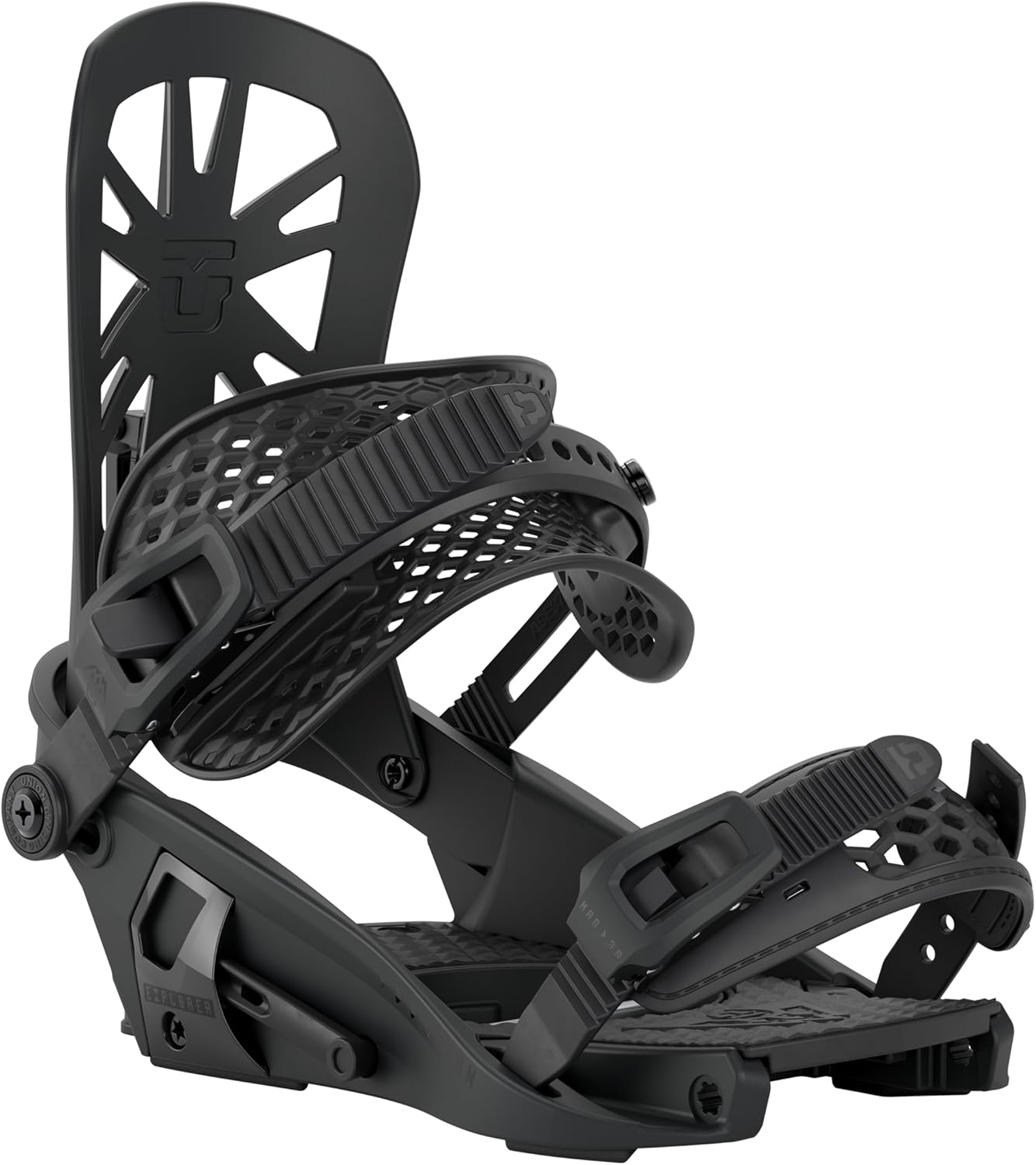
Union Flite Pro Bindings
Lightweight and symmetrical, making it easy to swap between Regular and Goofy setups during testing.
Check on Amazon
Burton Moto BOA Boots
A soft-flexing boot that helps you “feel” your stance. Essential for new riders learning stance geometry.
Check on AmazonExpert FAQ: Snowboard Stance Mastery
Yes, roughly 70% of riders are Regular. However, being Goofy is not a disadvantage; it simply means your right foot is more adept at leading turn transitions.
Technically yes, but it is rare. Once your neurological pathways for edge control are established, switching your permanent lead foot is incredibly difficult.
No, but your weight distribution does. You will lean back on your “rudder” foot more to keep the nose afloat, regardless of your stance.
Mongo is a skating term for pushing with your front foot. In snowboarding, if you unstrap and push with your front foot, it’s awkward and inefficient. Always push with your back foot.
They ride “Switch.” They still have a preferred stance for big jumps, but they can carve and land in the opposite stance fluently.
No, board size is determined by weight and height. Stance only affects where you mount the bindings on that board.
Trust the Slide Test. It involves forward momentum, which is the primary state of snowboarding.
Only in the direction you face. A heelside turn for a Goofy rider is the same mechanical movement as a heelside turn for a Regular rider.
For beginners, yes. It helps you find your “center” before you start experimenting with directional angles like +21/+6.
Yes, it’s called being cross-dominant. These riders often become the best park and freestyle riders because riding switch comes naturally to them.
Conclusion
Finding your stance is the key that unlocks the mountain. It allows you to move from the bunny hill to backcountry snowboarding with confidence. Don’t overthink it—trust your body’s natural instincts. Once your bindings are set, focus on waxing your board and getting your goggles ready for a trip to Colorado.


 Home
Home
 About
About
 My Cart
 Reviews
 Compare