
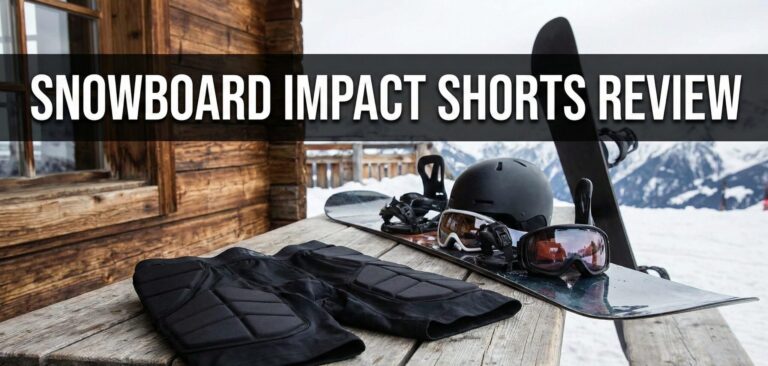
Snowboard Impact Shorts Review: Best Protection for 2026
Ride harder, fall softer, and progress faster. We’ve tested the top padded shorts to save your tailbone from icy slams.
1. Why You Need Protection (Confidence is Key)
There is a dangerous misconception in snowboarding culture that protective gear is strictly for “newbies.” This myth leads to unnecessary injuries. While beginners absolutely benefit from coccyx protection while learning the basics of edge control, intermediate and advanced riders are actually at higher risk due to increased speeds and harder terrain.
Impact shorts provide more than just physical padding; they offer psychological safety. Knowing that a fall on hard-packed ice won’t result in a bruised tailbone allows you to commit to turns and features with aggression. This added confidence is the secret weapon to unlocking faster progression on the mountain.
2. Key Tech & Materials: The Science of Impact
Not all foam is created equal. Cheap, generic “butt pads” often use standard open-cell foam that acts like a sponge—it cushions slightly but bottoms out immediately upon heavy impact. The best snowboard impact shorts utilize non-Newtonian fluids or viscoelastic polymers, commonly branded as D3O or G-Form.
These advanced materials are a game-changer. They remain soft, pliable, and flexible while you are riding, molding perfectly to your body’s contours. However, upon sudden impact, the molecules instantly lock together to disperse kinetic energy, acting like a hard shell for a split second. This is similar to the technology found in high-end wrist guards for fracture reduction, ensuring you stay mobile but protected against severe slams.
3. Hard Shell vs. Soft Foam: Which is Better?
In the early days of snowboarding, protection meant bulky plastic turtle shells strapped to your rear. These were effective at deflecting rocks but were incredibly uncomfortable, especially when sitting on a chairlift for 15 minutes. Today, the debate is largely settled for resort riding.
Soft Foam (Viscoelastic): The ideal choice for 90% of riders. It offers a low-profile fit that slides easily under snowboard pants and provides superior comfort while seated.
Hard Shell: Best reserved for extreme jibbing or boardercross where you might land on metal rails, concrete steps, or jagged rocks. They offer higher puncture resistance but sacrifice significant comfort and flexibility.
4. Breathability & Layering Analysis
Snowboarding is a high-output interval sport. You alternate between intense physical exertion on the descent and sitting still on the lift. If your impact shorts trap too much heat, you risk the “swamp cooler” effect—sweating profusely and then freezing when you stop moving.
Look for shorts that prioritize moisture-wicking fabrics and mesh construction. Brands like Burton and Demon often use breathable materials similar to technical base layers to pull sweat away from the skin. Additionally, padded shorts act as an extra thermal layer, keeping your glutes warm when sitting on cold snow—a huge plus on deep winter days.
5. Sizing & Fit Guide
Fit is arguably the most critical factor in protective gear performance. If the pads shift during a tumble, they cannot protect your bones. Impact shorts should be worn directly over your underwear (or function as your underwear) and under your base layer pants. They must be snug.
The “Second Skin” Rule: They should feel like compression wear. If you are between sizes, we recommend sizing down. The elastic waistband and fabric will relax slightly over time, and a compressive fit aids in muscle recovery and prevents the pads from migrating.
6. Durability Factors & Value
You want gear that survives more than one season of abuse. Inspect the construction details: flatlock seams are essential as they prevent chafing and are less likely to burst under tension than standard seams. Also, check the quality of the waistband elasticity.
When considering the amortization and life cycles of snowboarding gear, investing $80-$100 in quality shorts that last 5 years is significantly cheaper than buying $30 knock-offs that tear after ten days. Cheap mesh rips easily, leaving you with useless pads.
7. Top Pick: Burton Total Impact (G-Form)
The Burton Total Impact shorts remain the gold standard for serious riders. They utilize proprietary G-Form technology, which is incredibly thin and lightweight. You can barely tell you are wearing them, yet they absorb massive amounts of energy on hard-packed landings.
They are fully machine washable, highly breathable, and the ergonomic pads cover the tailbone, hips, and thighs without the “diaper effect” of bulkier competitors. This is the ultimate “set it and forget it” piece of gear.
8. Budget Pick: Demon United Flex-Force
If you aren’t ready to drop top dollar but still want reliable protection, the Demon United Flex-Force series offers excellent value. They typically use a hybrid construction of high-density foam with plastic reinforcement plates.
While they are slightly bulkier than the G-Form options, the extra cushioning can be reassuring. If you are frequenting beginner snowboarding resorts for terrain progression, this extra padding is perfect for repeated low-speed falls.
9. Best For Park Riders: Forcefield
Park riders have unique demands. You are falling on steel rails, boxes, and hard knuckles. For this style of riding, we recommend shorts with wider thigh coverage and high-density shock absorption.
As you climb the snowboard trick progression ladder, catching an edge is inevitable. Shorts like the Forcefield Boom Shorts or similar heavy-duty options offer a barely-there feel but massive shock absorption capabilities to keep you riding after a slam.
10. Feature Comparison Checklist
Before you buy, run through this mental checklist to ensure you get the right gear for your riding style:
- Profile: Can I see it under my pants? (Look for < 15mm thickness).
- Tech: Is it generic foam or branded (D3O/G-Form/VPD)?
- Coverage: Does it protect the hip pointers and ischial tuberosity (sits bones)?
- Waistband: Is it wide and soft to prevent digging in?
- Price: Does the durability justify the cost?
11. Care Instructions
Proper care extends the life of your gear. Never throw impact shorts in a hot dryer. Heat destroys elastic fibers and can degrade the chemical bonds in viscoelastic foam, rendering it useless.
Wash on a cold, gentle cycle and always hang dry. If the pads are removable, take them out before washing the shell to ensure the fabric gets thoroughly cleaned without damaging the inserts.
12. Final Verdict
Impact shorts are the unsung heroes of a complete snowboard kit. They keep you warm, they keep you safe, and they ensure you can ride the next day even after a heavy slam. Don’t wait until you are injured to buy them.
For most riders, the Burton Total Impact is the winner for its stealthy low profile. For those on a budget, Demon United provides robust protection. Whatever you choose, protect your assets and ride longer.
Frequently Asked Questions
Yes, most modern impact shorts are designed with a low profile using D3O or G-Form technology. However, if you wear extremely tight skinny pants, look for “base layer” style shorts rather than heavy-duty armor to avoid restriction.
Soft foam (viscoelastic) is generally better for snowboarding. It hardens on impact but stays flexible while riding, offering superior comfort compared to rigid hard shells which can be painful on chairlifts.
Yes. Most brands allow you to remove the padding inserts and wash the fabric shell. Always air dry them to prevent damaging the elastic or degrading the foam properties.
Absolutely. Beginners spend a significant amount of time sitting on the snow or falling on their rear. Impact shorts drastically reduce bruising, fatigue, and the fear of falling.
Yes, standard impact shorts feature padding on the coccyx (tailbone), hips, and often the outer thighs to protect against side slams and hip pointer injuries.
Yes. Women’s specific shorts are cut with a different hip-to-waist ratio and shorter leg length to accommodate female anatomy comfortably and ensure pads stay in the right spot.
They should fit like a second skin—snug but not restrictive. If they are loose, the pads will shift during a crash, rendering them useless when you need them most.
Not significantly. Modern materials are dense but thin. Under loose or regular fit snowboard pants, they are virtually undetectable to the naked eye.
Technically yes, but snowboard-specific shorts often have better thermal insulation and specific tailbone coverage designed for falling on flat ice rather than concrete.
With proper care, a good pair can last 3-5 seasons. However, if the foam becomes brittle, permanently compressed, or the fabric tears, it’s time to replace them.


 Home
Home
 About
About
 My Cart
 Reviews
 Compare