Slang Terms for Snowboarding: The Complete Rider’s Dictionary & Etymology
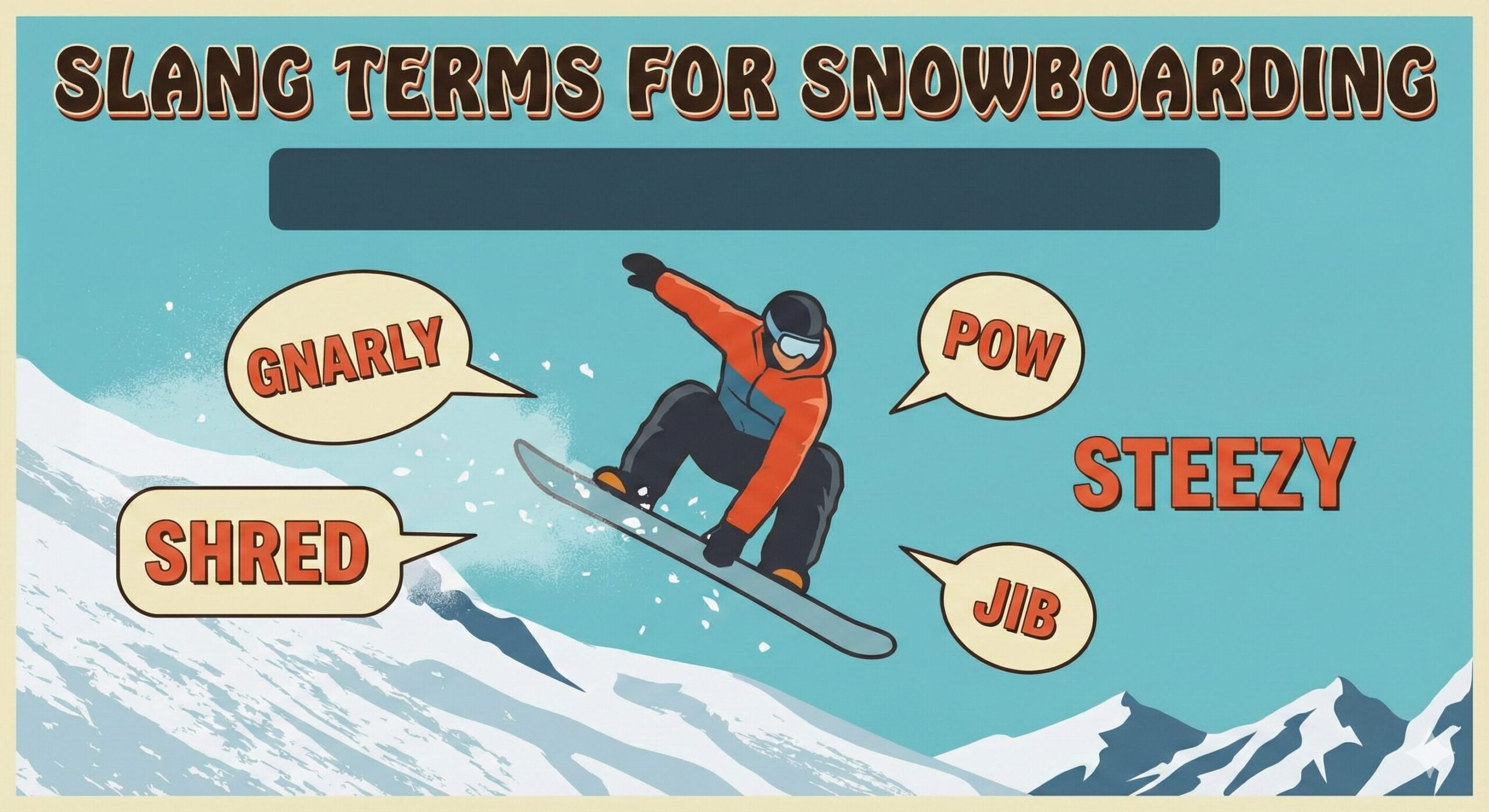
Snowboarding is more than just strapping a plank of wood to your feet and sliding downhill; it is a vibrant, breathing subculture with a linguistic history as rich as its roots in surfing and skateboarding. Since the sport’s inception in the late 1970s and early 1980s, snowboarders have developed a unique lexicon that serves as a badge of honor, a safety mechanism, and a way to distinguish the “core” riders from the tourists. This language evolves every season, influenced by regional dialects from the Alps to the Rockies, and heavily borrowed from the streets where skateboarding paved the way.
Understanding slang terms for snowboarding isn’t just about sounding cool at the “après-ski” bar (though it certainly helps). It allows for precise communication on the mountain. When someone warns you about “death cookies” on a traverse or tells you to watch out for “chunder” in the bowl, they are conveying critical information about snow conditions that could save you from injury. Furthermore, the slang reflects the sport’s rebellious spirit. Snowboarding spent decades fighting for legitimacy against skiing establishments, and its distinct vocabulary was a way to fortify its identity as the punk rock alternative to the alpine establishment.
However, for the uninitiated, stepping onto a lift can feel like entering a foreign country. You might hear phrases like “stomping the landing,” “tacos,” “jerrys,” and “knuckledraggers” all in one lift ride. This barrier to entry can be intimidating. Newcomers often feel alienated not by the difficulty of the sport, but by the insular nature of the culture. That is where this guide comes in. We aren’t just giving you a list of words; we are diving deep into the context, the etymology, and the practical usage of these terms so you can integrate seamlessly into the community.
From the subtle nuances of describing snow texture to the colorful (and sometimes painful) descriptions of crashing, mastering this vocabulary will change how you view the mountain. It connects you to the lineage of riders who came before you and helps you interpret the mountain environment more effectively. Whether you are a total beginner looking to buy your first setup or an intermediate rider hoping to understand what the park rats are yelling about, this is your ultimate handbook to speaking “snowboard.”

Before you start shredding the gnar, ensure your head is protected with industry-leading MIPS technology. Don’t be a Jerry—wear a helmet.
Check Price on AmazonThe Riders: Identities & Archetypes
The snowboarding community is a tapestry of different personalities, skill levels, and stylistic approaches. We label each other not to be exclusionary, but to quickly identify who we are riding with. Understanding these archetypes helps you navigate the social dynamics of the resort and the terrain park.
Originating from 1960s surf culture, a “Grom” is a young rider, usually under the age of 15. But don’t let the age fool you; groms are often the most fearless riders on the mountain. They have a lower center of gravity and rubber bones, allowing them to attempt tricks that adults would hesitate to try. In modern usage, being called a grom is a term of endearment, acknowledging the next generation of rippers who will carry the torch of the sport.
Every sport has a term for the clueless novice, and in snowboarding, it is the “Jerry.” A Jerry isn’t just a beginner; a Jerry is someone who lacks self-awareness. They might wear their goggles upside down, leave a massive gap between their helmet and goggles (the “gaper gap”), or stop in the middle of a blind landing zone. The term “Gaper” specifically refers to the gap on the forehead, but has evolved to mean anyone behaving foolishly on the slopes. Spotting a Jerry is a popular pastime for locals riding the chairlift.
You will rarely see a Park Rat on the summit or in the powder. These riders spend 100% of their time in the terrain park, hiking back up rails and jumps to perfect a single trick. They often wear baggy clothes, ride softer boards, and have a distinct “steeze” (style with ease). While sometimes criticized for ignoring the rest of the mountain, Park Rats are the innovators of freestyle progression.
This describes the vast majority of snowboarders: people with 9-to-5 jobs who can only ride on Saturdays and Sundays. While they may have passion, they often lack the conditioning of the locals. The term implies crowded slopes and a rush to get runs in before the Sunday traffic jam home. To optimize your limited time, check out our guide on fitness for snowboarding to ensure your legs last all weekend.
Originally a derogatory slur used by skiers to insult snowboarders, implying they were primitive or ape-like because they touched the snow with their hands while carving. In a classic act of reclamation, the snowboarding community adopted the term. Now, dragging your knuckles across the snow during a deep, lay-down carve (“euro-carve”) is considered a high-skill maneuver and a badge of honor.

If you’re going to drag your hands in the snow, you need Gore-Tex to keep them dry. Essential for deep carves.
Check Price on AmazonThe Mountain: Snow & Terrain Terms
To a non-skier, snow is just snow. To a snowboarder, snow comes in fifty different varieties, each requiring a different riding technique. The slang used to describe terrain is vital for safety; knowing the difference between “corduroy” and “boiler plate” changes how you edge your board and how fast you should go.
This is what we live for. “Pow” refers to fresh, dry, fluffy snow that hasn’t been packed down. Riding it feels like surfing or flying; it is silent and effortless. “Champagne Powder” is a specific term often associated with Colorado and Utah, describing snow with such low moisture content that it can’t even make a snowball. It is the gold standard of riding conditions.
By 2:00 PM on a powder day, the pristine snow has been chopped up by thousands of riders. It creates uneven piles of heavy snow that harden as the temperature drops. This is “chunder.” Riding through chunder is physically exhausting; it bounces your board around and demands strong leg muscles to absorb the impact. It is the opposite of a smooth ride.
When snowcats (grooming machines) process a run overnight, they leave behind a distinct ribbed pattern that looks like the fabric corduroy. This surface is predictable, grippy, and smooth. “Ripping cord” early in the morning allows for high-speed carving without the fear of hitting ice patches or bumps. It is the ideal surface for beginners and speed demons alike.
Common on the East Coast of the US, this refers to snow that has melted and refrozen into a sheet of solid ice. It is so hard that you cannot get an edge into it. If you fall on boiler plate, you will slide for hundreds of feet, and it will hurt. Riding this requires extremely sharp edges and a tuned board. Learn how to tune your edges to survive these days.
These are chunks of ice, ranging from golf ball to softball size, that are frozen to the surface of the groomers. They are usually the result of poor grooming or freeze-thaw cycles. Hitting a death cookie mid-turn can rattle your teeth, throw you off balance, or cause a washout. They are the nemesis of a smooth ride.
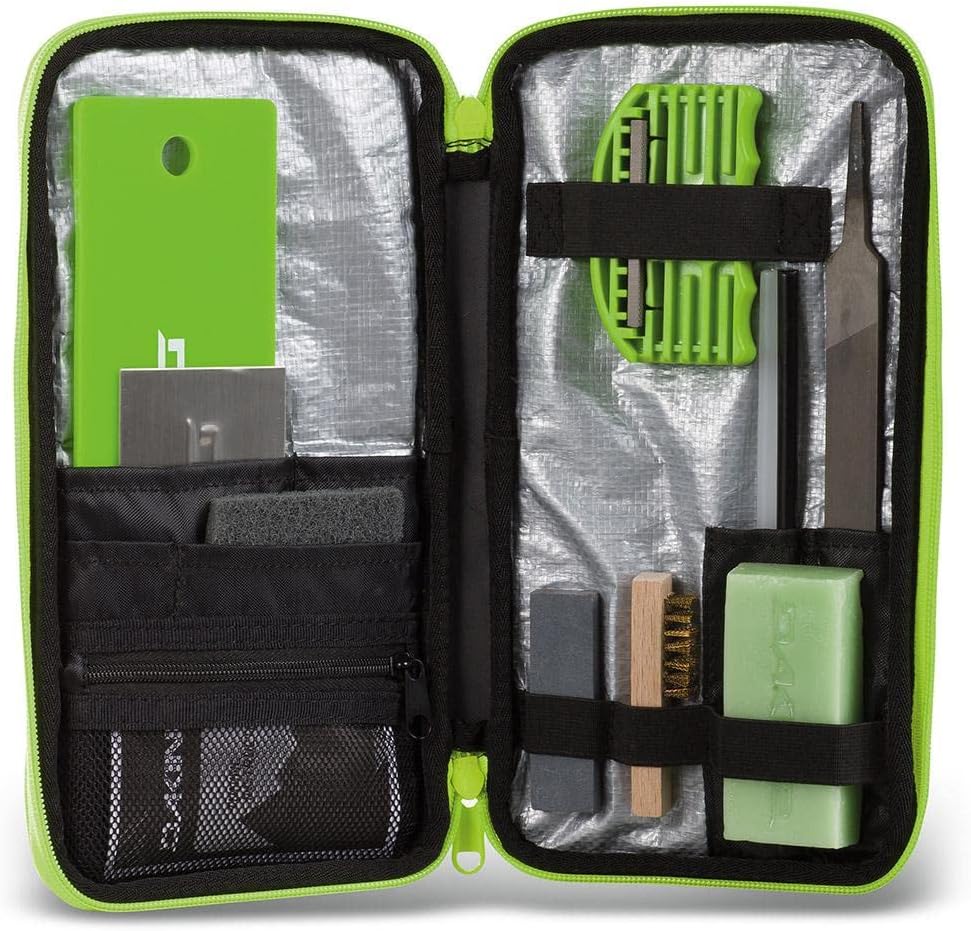
Don’t slip on ice. Keep your edges razor-sharp with a complete home tuning kit. Essential for East Coast riding.
Check Price on AmazonThe Moves: Tricks, Style & Flow
Freestyle snowboarding borrows heavily from skateboarding, but has evolved its own unique set of descriptors. The language of tricks is vast, but these core slang terms describe the feeling and execution of movement on the snow. It’s not just about what you do, but *how* you do it.
A portmanteau of “Style” and “Ease.” Steeze is the ultimate compliment. It means you landed a difficult trick and made it look like you weren’t even trying. A rider with steeze doesn’t flail their arms; they are smooth, controlled, and fluid. You can’t buy steeze; you earn it through years of practice.
To “stomp” a landing means to land a jump with authority and perfection. You hit the ground with both feet simultaneously, knees bent, board flat, and ride away clean without putting a hand down or reverting. The sound of a board slapping the snow cleanly is the “stomp.” It is the definitive end to a well-executed trick.
This refers to pressing your weight onto the nose or tail of the snowboard so that the opposite end lifts off the snow. You then spin or slide on the snow surface, spreading your board around like butter on toast. It requires a flexible board and good balance. Buttering is a way to express style on flat ground without needing a jump.
Jibbing is the act of riding on anything that isn’t snow. This includes rails, boxes, logs, walls, and even benches. It is technical, low-speed, and high-consequence. Jibbing destroys your board’s edges, so many riders have a dedicated “jib board” that they don’t mind scratching up.
To “huck” is to throw yourself off a jump or cliff with reckless abandon. It implies a lack of calculation and a surplus of bravery (or stupidity). “He just hucked a backflip off that cliff.” It is often associated with big mountain riding where the drops are massive.

Improve your balance, core strength, and jibbing skills in your living room with a balance board trainer.
Check Price on AmazonThe Gear: Equipment Slang
Gearheads love slang. Talking about your setup is a major part of the culture. If you walk into a snowboard shop, these are the terms you will hear the employees using. Knowing them ensures you don’t look lost when asking for advice.
Slang for a helmet. While in the 90s helmets were uncool, today they are standard equipment. “Protect the dome” is a common mantra. Modern brain buckets are lightweight, audio-compatible, and essential for riding trees or park features. For a deep dive on safety tech, read about MIPS technology here.
Referencing the snowboard itself. “That’s a fresh stick you got there.” The term “deck” is borrowed directly from skateboarding. It helps differentiate the board from the bindings and boots.
A “Twin” is a symmetrical board where the nose and tail are identical in shape and flex—perfect for park riding and going backwards (switch). A “Directional” board has a distinct nose and tail, often with a setback stance, optimized for riding forward in powder or carving. Knowing which you are riding is crucial for your style.
This describes the profile of the board when it sits flat. “Camber” bows up in the middle, providing pop and edge hold (classic feel). “Rocker” (or reverse camber) bows up at the ends like a banana, providing float in powder and a catch-free ride. “Flying V” or “Hybrid” mixes both. Read our comparison of Camber vs Rocker to choose the right one.
A slang term for a snowboard, often used jokingly by skiers. It refers to the rectangular, flat shape of the board. Sometimes used self-deprecatingly by snowboarders themselves.
The Fails: Crashes & Carnage
You cannot learn to snowboard without falling. A lot. As a result, the vocabulary for crashing is incredibly descriptive and varied. Describing exactly *how* you crashed allows you to share the pain with your friends later.
This is a crash so violent that your gear is scattered across the mountain like items at a yard sale. Goggles fly one way, gloves another, hat somewhere else. If you lose a ski (for skiers) or somehow unstrap a binding, it’s a total yard sale. It’s the ultimate sign of a catastrophic wipeout.
A painful fall where you faceplant into the snow, and your momentum carries your heels up and over your back, striking the back of your head. Your body shape resembles a scorpion striking with its tail. This is notorious for causing back pain and is a common result of catching a toe edge.
This happens specifically when railing. You fall onto a rail or box, and your body folds over it like a taco shell. It usually involves hitting your ribs or stomach. It is one of the most feared crashes in the terrain park due to the hardness of the metal features.
A cartwheel-style crash, usually in deep powder or on a steep slope. The rider flips end-over-end down the hill, resembling a thrown tomahawk axe. It’s disorienting and can last for a long time if the slope is steep enough.
The most common cause of all slams. It happens when the downhill edge of your board digs into the snow unexpectedly, halting the board instantly while your body momentum continues. The result is an instantaneous, brutal slam to the ground. It happens to pros and beginners alike.
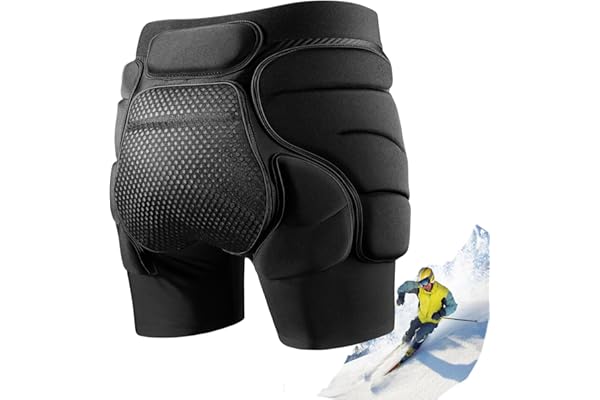
Whether you Taco or Tomahawk, impact shorts provide essential padding for your tailbone and hips. Ride longer with less pain.
Check Price on AmazonThe Lifestyle: Culture & Community
Snowboarding is a lifestyle. The slang extends beyond the physical act of riding into the culture surrounding the resorts, the travel, and the community.
French for “after ski,” this refers to the social activities that happen once the lifts close. Drinking beer, eating nachos, and swapping stories about the day’s riding. It is a vital part of the culture. You don’t have to be a skier to enjoy Après; snowboarders do it just as hard, if not harder.
The lift operator. These are the unsung heroes of the mountain who bump chairs, manage lines, and blast music. Always be nice to the Lifties; they control the magic carpet ride to the top. Many are riders working just to get a free pass.
The coveted position of being on the very first lift of the morning. Riders will line up hours before the resort opens on a powder day to get “fresh tracks” before anyone else touches the snow. Getting first chair is a badge of dedication.
Short for “Gnarly.” Used to describe something extreme, dangerous, or awesome. “Shredding the gnar” is the cliché phrase for going snowboarding, but “that line was gnar” means it was difficult and scary. It is a versatile term for high-intensity situations.
In normal society, this is an insult. In climbing and snowboarding culture, a “Dirtbag” is someone who has dedicated their entire life to the sport, often sacrificing career, hygiene, and housing to ride every day. They might live in a van in the parking lot. It is a term of respect for their commitment to the lifestyle.
Frequently Asked Questions
Shredding is the quintessential verb for snowboarding enthusiastically. It implies riding fast, carving hard, and tearing up the terrain. You don’t just “go” snowboarding; you go to shred.
“Send it” is a phrase of encouragement meaning to commit fully to a trick, jump, or difficult line without hesitation. It originated from a viral video but is now a staple of action sports vocabulary. “Just send it!” means “Go for it, don’t hold back.”
A traverse is riding horizontally across a slope rather than down it, usually to get from one run to another. Snowboarders generally dislike traverses (often called “cat tracks”) because if they aren’t steep enough, you lose speed and have to unstrap and walk.
Bombing a hill means pointing the nose of the board straight downhill and going as fast as possible, usually in a tuck position, without turning to check your speed. It is dangerous on crowded runs but exhilarating on open groomers.
Chatter refers to the vibration of your snowboard when riding at high speeds over hard, uneven, or icy snow. The board bounces rapidly, making it difficult to hold an edge. Stiffer boards reduce chatter.
A kicker is a man-made jump in a terrain park. It is usually built with a steep ramp (transition) designed to “kick” the rider into the air for tricks. They range from small jumps for beginners to massive pro-line kickers.
Sketchy describes a situation, landing, or terrain that is dangerous, unstable, or barely successful. If you land a jump but almost fall, it was a “sketchy landing.” If a run has rocks poking through the snow, it is “sketchy terrain.”
A weather condition where visibility is reduced to near zero due to heavy snow, fog, and flat light. The sky and the ground blend together, making it impossible to distinguish terrain features or which way is down. It causes vertigo and is very dangerous.