
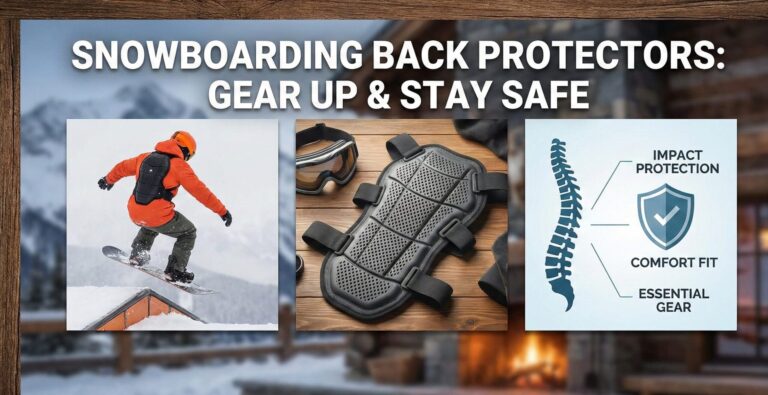
The Ultimate Guide to Back Protectors for Snowboarding: Safety, Tech & Performance
Snowboarding is a sport defined by progression, but progression inevitably involves falling. While helmets have become standard issue on the slopes—and for good reason, as we discuss in our breakdown of MIPS snowboard helmet technology—the spine remains surprisingly vulnerable for many riders. A back protector isn’t just for professionals hitting 60-foot jumps; it’s an essential piece of insurance for anyone navigating icy groomers, tree runs, or crowded parks.
In this comprehensive guide, we are moving beyond the marketing fluff. We will analyze the kinetic energy dissipation of modern materials, compare the ergonomic differences between vest and harness styles, and help you decide if the investment is worth the longevity of your riding career.
2. The Physics of Impact: Why Your Spine Needs Armor
When you catch an edge—specifically the heel edge—the “whip” effect generates significant centrifugal force. Your head and upper back often take the brunt of this energy. Unlike a knee or wrist injury, trauma to the spinal column can have permanent, life-altering consequences.
A back protector functions similarly to a crumple zone in a car. It spreads the force of a point-impact (like a rock, a rail, or a skier’s knee) over a larger surface area. By increasing the duration of the deceleration and distributing the load, the peak force transferred to your vertebrae is drastically reduced.
Gear Up for Safety
Check out the best-selling impact protection vests currently available.
 See Prices on Amazon
3. Hard Shell vs. Soft Shell Protectors
The market is divided into two primary philosophies: rigid deflection (Hard Shell) and energy absorption (Soft Shell).
| Feature | Hard Shell | Soft Shell (Viscoelastic) |
|---|---|---|
| Mechanism | Deflects sharp objects; rigid plastic plates. | Hardens on impact; soft while riding. |
| Comfort | Lower. Can feel restrictive/stiff. | High. Molds to body heat. |
| Profile | Bulky. Requires looser jackets. | Slim/Low Profile. Fits under standard layers. |
| Best For | Rocky freeride terrain; motocross crossover. | Resort riding, park, freestyle. |
For 90% of snowboarders, modern Soft Shell protectors are the superior choice due to their ergonomic compliance. They allow you to twist, grab, and carve without feeling like a turtle.
4. Materials Science: D3O, VPD, and Koroyd
The revolution in back protection comes from Non-Newtonian fluids. These are materials that are soft and pliable in their resting state but lock together on a molecular level when subjected to shock.
D3O (Orange Foam)
The most recognizable name in the game. D3O is soft and flexible but becomes rock-hard instantly upon impact. It resets immediately after, allowing for multiple impacts.
VPD (Visco-Elastic Polymer Dough)
Used primarily by POC, this material is denser than D3O. It excels at progressive dampening. It feels stiffer when cold but becomes incredibly pliable once it warms up to your body temperature.
Combining a quality back protector with impact shorts creates a full “armor system” for your core and hips, essential for learning new tricks in the park.
5. Safety Ratings: EN 1621-2 Explained
If a product doesn’t list an EN 1621-2 certification, do not buy it. This is the European standard for motorcycle back protectors, adopted by winter sports. It has two levels:
- Level 1: Must transmit less than 18kN of force on average. Adequate for general cruising.
- Level 2: Must transmit less than 9kN of force. This absorbs twice as much energy as Level 1. Highly recommended for park riders and high speeds.
6. Fit & Sizing Guide
A back protector that doesn’t fit correctly can be more dangerous than wearing nothing. If it’s too long, the bottom will hit the saddle of your binding when you sit, pushing the entire unit up into your helmet and neck.
The Torso Measurement: Measure from your C7 vertebrae (the bony bump at the base of your neck) to your waistline (iliac crest). Most manufacturers size based on this length, not your overall height.
7. Vest vs. Strap Systems
Vest Style Pros
- Stays perfectly in place during crashes.
- Adds a layer of warmth.
- Often includes chest/rib protection pads.
Vest Style Cons
- Can be too hot in spring conditions.
- Requires washing the whole garment to clean.
Strap/Harness Styles are cooler and lighter but tend to ride up (the “turtle shell” effect) after a few runs. For consistent safety, the vest style is generally preferred by seasoned riders.
8. Integration with Your Layering System
A back protector changes how your other gear fits. If you wear a vest protector, it effectively replaces your mid-layer or fleece on warmer days. On cold days, it should sit directly over your base layer but under your insulation.
Ensure your jacket has enough room in the shoulders. A tight fit here restricts arm movement, which is critical for balance. Furthermore, if you are wearing a backpack, ensure the straps don’t cause pressure points on the protector’s edges.
9. The Safety Ecosystem
A back protector is just one piece of the puzzle. Snowboarding involves complex biomechanics. While the spine is crucial, extremities often take the first hit. Wrist fractures are the #1 injury in snowboarding.
We highly recommend reviewing our guide on FOOSH (Fall On Outstretched Hand) prevention and wrist guards. Integrating wrist protection with back protection covers the two most common trauma vectors for intermediate riders.
10. Top Picks by Category (2026)
- Best Overall: Demon United Flexforce X2 D3O. Offers full rib, chest, and spine protection with extensive D3O coverage.
- Best Low Profile: Burton Total Impact Short. (G-Form technology). Extremely thin, great for those who hate bulk.
- Best for Breathability: POC VPD Air Vest. Uses a perforated mesh structure that vents heat incredibly well.
- Best Budget: BenKen Body Armor. Good hard/soft hybrid protection at a lower entry price point.
11. Durability and Care
Soft shell protectors, specifically those using D3O or VPD, are sensitive to chemicals. Never wash the insert. Most vests have removable pads. Take the pad out, wash the vest fabric, and wipe the pad down with a damp cloth.
Also, store them at room temperature. Leaving a VPD protector in a freezing car overnight makes it brittle and uncomfortable until it warms up against your skin.
Conclusion
Is a back protector necessary? If you value longevity in the sport, the answer is a resounding yes. The technology has evolved to the point where comfort is no longer a valid excuse for skipping safety gear.
Whether you choose a harness for spring riding or a full D3O vest for mid-winter park laps, protecting your spine ensures you’ll be riding for decades to come. Don’t wait for a bad fall to make the investment.


 Home
Home
 About
About
 My Cart
 Reviews
 Compare