The Best Age to Teach a Child to Snowboard: A Parent’s Guide
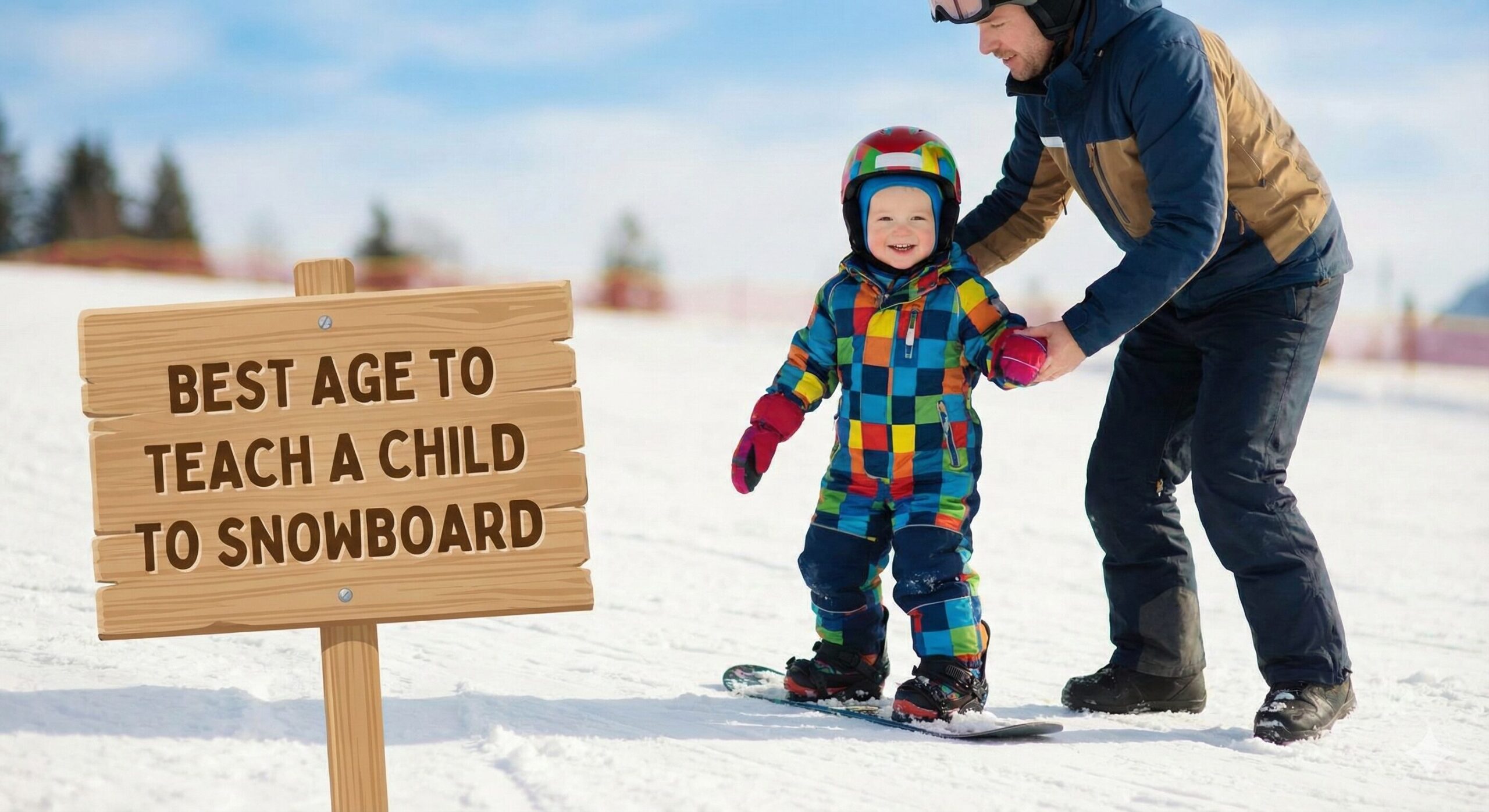
Is it ever “too early” to shred? We break down the developmental milestones, gear requirements, and teaching strategies to get your mini-shredder on snow safely.
For snowboarding parents, the dream is vivid: riding the chairlift with your little one, cruising down a blue run together, and sharing high-fives at the bottom. But when does that dream become a reality? Ask five different instructors, and you might get five different answers about the “magic number.”
Historically, the industry standard was clear: “Teach them to ski at 3, switch to snowboarding at 8.” The logic was that toddlers lacked the muscle development and center of gravity control required for standing sideways. But times have changed. With the advent of specialized kids’ gear (like Burton’s Riglet system) and reverse-camber technology, the barrier to entry has dropped significantly.
If you are wondering why snowboarding is fun for families, it’s because it builds resilience and outdoor appreciation. In this guide, we will explore the best age to start, how to assess your child’s readiness, and why the old “ski first” rule no longer applies.
The Three Stages of Readiness
There isn’t a single “perfect” age, but there are distinct developmental windows. Here is what you can expect at each stage.
The “Tow-Around” Phase (Ages 1–3)
Yes, you can put a 2-year-old on a board. No, they will not be linking turns. At this age, the goal is familiarity. It’s about getting them used to the feeling of sliding and wearing boots.
- Goal: Positive association with snow and gear.
- Technique: Pulling them around on a flat surface or living room carpet.
- Gear: Handlebar accessories (Riglet Reel) are essential here.
The “Golden Window” (Ages 3–6)
This is arguably the best age to start structured learning. Kids in this range have developed better gross motor skills. They can squat, jump, and follow basic instructions.
- Goal: Balance, straight-line sliding, and the “falling leaf.”
- Challenge: Attention spans are short. Lessons must be gamified.
- Gear: Rocker boards that prevent edge catches are mandatory.
The “Rapid Progression” Phase (Ages 7+)
If you wait until 7 or 8, the learning curve is much steeper (in a good way). A 7-year-old has the cognitive ability to understand “heel edge” vs. “toe edge” mechanics. They can progress from a bunny hill to a green run in a few days.
- Goal: Linking turns, speed control, and chairlift independence.
- Advantage: Muscle strength allows for proper edge engagement.

Recommended Starter Board: Burton Chopper / Chicklet
The industry standard for learning. Catch-free edges and a super soft flex make learning painless.
Check Price on AmazonIt’s Not Just a Number: Signs Your Child is Ready
Chronological age is just a guideline. Physical and emotional maturity matters more. Before booking a trip to one of the snowboarding resorts for beginners, look for these signs:
Checklist for Parents:
- Squat Strength: Can they squat down and stand back up without using their hands? Snowboarding requires constant knee flexion.
- Resilience: How do they handle falling? If a stumble on the playground leads to a meltdown, snowboarding might be tough. It involves a lot of falling.
- Instruction Following: Can they listen to a stranger (instructor) for 30 minutes?
- Shoe Size: Finding snowboard boots smaller than a toddler size 7-8 can be difficult (though brands are improving).
The Great Debate: Skiing vs. Snowboarding First
You will hear it from grandparents and old-school instructors: “Put them on skis first.” Is there truth to this?
Historically, yes. Skiing allows legs to move independently, which is natural for a walking toddler. Snowboarding locks the feet together, which can feel restrictive. However, modern teaching methods have leveled the playing field.
If your ultimate goal is to have a snowboarding family, start them on a snowboard. Transitioning from skiing to snowboarding later often means “unlearning” the forward-facing stance. Plus, learning how to stop heel lift and manage edges is better learned early.
For a deeper dive into the mechanics, read our comparison on is it easier to ski or snowboard.
Essential Gear for Mini-Shredders
Nothing ruins a day faster than a cold, wet, or uncomfortable child. Do not skimp on the essentials.
1. The Helmet (Non-Negotiable)
Kids fall. A lot. A properly fitted helmet is critical. Look for MIPS technology if possible, as it protects against rotational forces. Check out our guide on MIPS snowboard helmet technology explained to understand why this matters.
2. Mittens over Gloves
Dexterity doesn’t matter for a 4-year-old; warmth does. Mittens keep fingers together, sharing body heat. This is a key reason why snowboarders wear mittens universally.
3. Boots and Bindings
Ensure boots fit correctly. If they are too big, the child will claw their toes for grip, leading to cramping. Velcro or BOA lacing systems are lifesavers for parents’ sanity compared to traditional laces. (See: BOA vs speed lace).
4. Protection
For kids 7 and older who are starting to ride harder, consider wrist guards and even impact shorts to cushion the inevitable butt-checks.

Safety Pick: Giro Crue MIPS Kids Helmet
Top-tier protection with a low-profile design that kids won’t complain about wearing.
Check Price on AmazonTeaching Tips: How to survive Day 1
You’ve got the gear, you’ve got the kid. Now what? Here is how to teach without tears.
Keep it Fun (and Short)
For a 4-year-old, a “session” might be 45 minutes. That is fine. If they are cold or hungry, stop immediately. Hot chocolate is a valid part of the curriculum.
Use a Leash/Tether
A snowboard leash or harness allows you to control their speed from behind while they get the feeling of sliding. Wondering about safety cords? Read what are snowboard leashes for.
The “Magic Carpet” is Your Friend
Avoid the chairlift initially. The Magic Carpet (conveyor belt lift) is far less intimidating. Spend your first few days there.
Invest in Lessons
Parents often struggle to teach their own kids due to the emotional dynamic. A professional instructor makes it a game. Read our analysis: are snowboard lessons worth it? The answer is almost always yes for children.
Frequently Asked Questions
Is 3 years old too young to snowboard?
No, 3 is not too young thanks to modern equipment like the Burton Riglet system. While they won’t be carving down mountains, children at this age can learn balance, sliding, and getting comfortable with the gear.
Should a child learn to ski before snowboarding?
This is an outdated myth. While skiing was historically easier for toddlers due to leg independence, modern soft-flex snowboards and rocker profiles make learning to ride sideways just as accessible for young children. Start with what they want to do.
How do I know if my child is Goofy or Regular?
Watch them slide on a hardwood floor in socks. Which foot do they put forward naturally? That is likely their lead foot. You can read more in our goofy vs regular snowboard guide.
How long should a snowboarding lesson be for a 5-year-old?
Keep it short. For ages 3-6, focused attention spans rarely last longer than 45 minutes to an hour. It is better to have multiple short sessions with hot chocolate breaks than one long, exhausting lesson.
Final Thoughts: Patience is Key
The “best” age to teach a child to snowboard is simply the age when they are excited to try it. Whether that is 3 years old in the living room or 10 years old on the mountain, the goal is to foster a love for winter.
Don’t pressure them. Keep the days short, the snacks plentiful, and the gear warm. Before you know it, you won’t be teaching them; you’ll be trying to keep up with them.
Ready to gear up? Check out when is the best time to buy snowboarding gear to save money on kids’ equipment that they will inevitably outgrow next season.
Start the journey today.
Shop Kids’ Snowboard Gear on Amazon


 Home
Home
 About
About
 My Cart
 Reviews
 Compare