
Nidecker Supermatic vs Burton Step On: The Ultimate Battle for Convenience
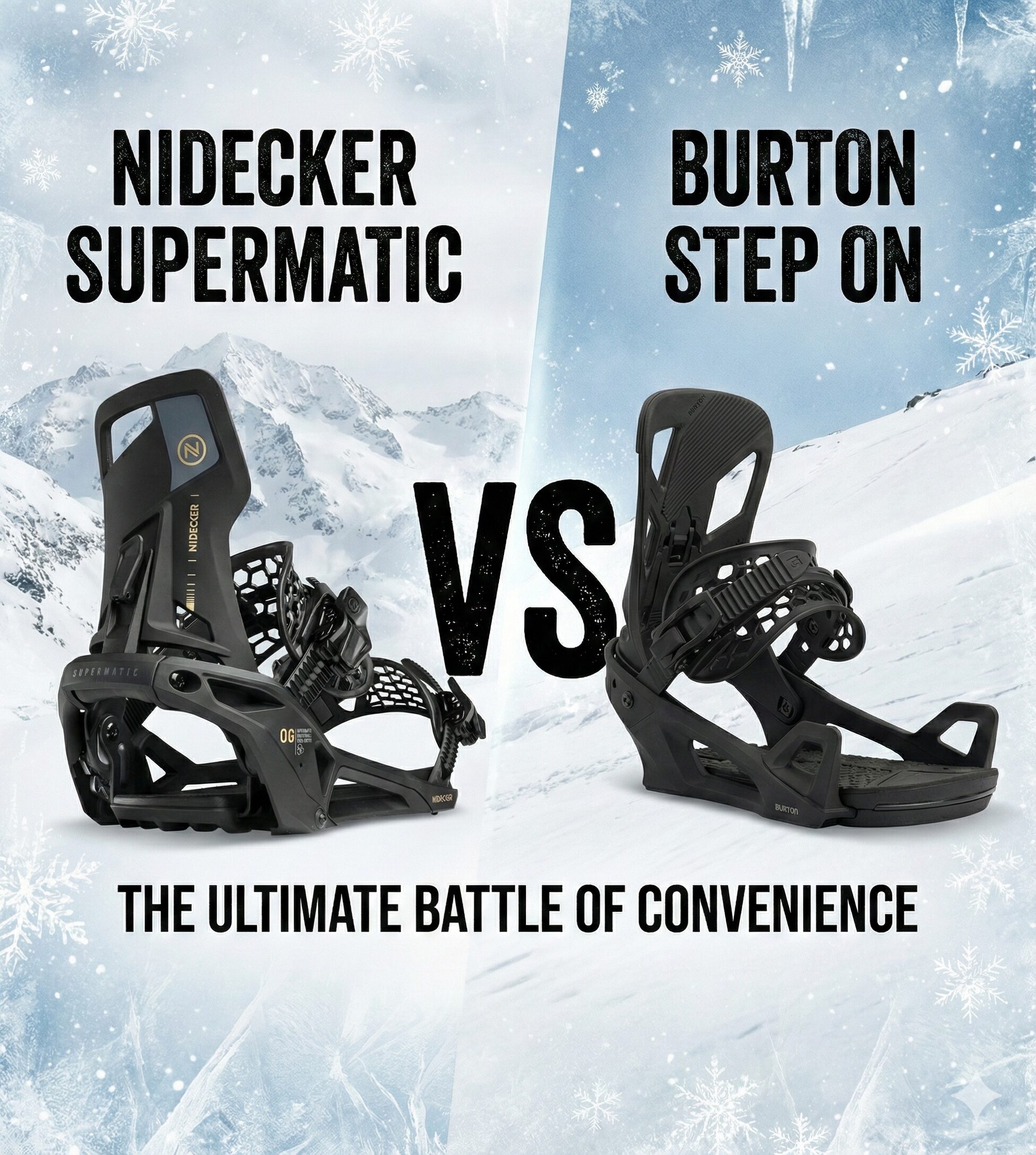
The Step-In Revolution: Why This Is the Most Important Binding Debate in Decades
For decades, the ritual was the same: get off the lift, sit in the snow (getting your butt cold), ratchet down your straps while your skier friends waited impatiently, and then finally stand up to ride. It was a rhythm we all accepted as the “price of admission” for snowboarding. But in recent years, a revolution has taken over the slopes. The age of bending over is ending.
Enter the two heavyweights of the convenience era: The Burton Step On and the Nidecker Supermatic. These aren’t the clunky, unreliable step-in bindings of the 90s — those early systems from companies like Switch and Intec were plagued with accidental releases, poor energy transfer, and boot compatibility nightmares. These are high-performance, precision-engineered systems that promise to get you riding in seconds without sacrificing control.
But which system reigns supreme? Is it the proprietary ecosystem of Burton, or the universal compatibility of Nidecker? If you’re tired of sitting in the snow and want to maximize your vertical feet, this comprehensive comparison will break down every bolt, buckle, and mechanism to help you decide. We’ll also cover two other competitors entering the space — Bataleon FASE and Clew — so you have the full picture. We’ll even dive into some slang terms for snowboarding gear along the way to keep you in the loop.
Burton launched the Step On system in 2017 and it immediately disrupted the market. Nidecker responded with the Supermatic, which first shipped in significant numbers for the 2023–24 season. Both have seen explosive sales growth, with Supermatic units reportedly selling out within days at major retailers. The step-in binding category is no longer niche — it is the fastest-growing segment in snowboard hardgoods.
Nidecker’s official Supermatic overview — see the Drop-In mechanism in action before reading the full breakdown below.

The Contenders: Full Specs & Quick Overview
Before diving into the mechanics, let’s set the stage with a comprehensive spec comparison. The Burton Step On system launched in 2017 and immediately disrupted the market. It requires specific boots with cleats built into the toe and heel. It is sleek, lightweight, and offers a very direct connection to the board. We’ve covered this extensively in our Burton Step On pros and cons guide.
The Nidecker Supermatic is the challenger that arrived to solve Burton’s biggest criticism: proprietary boots. The Supermatic uses a Drop-In system that works with literally any snowboard boot on the market. It looks more like a traditional binding but features a triggered highback that snaps up automatically when you step in.
| Feature | Nidecker Supermatic | Burton Step On |
|---|---|---|
| Boot Compatibility | ✅ Universal (Any Boot) | Proprietary (Step On Boots Only) |
| Entry Method | Drop-In (Reclining Highback + Heel Pedal) | Step On (Toe/Heel Cleats) |
| Binding Weight | 2 lb 14 oz (very heavy) | ✅ 1 lb 13 oz (light) |
| Total System Weight | ~4.7–5.2 lb/foot (binding + any boot) | ~3.8–4.1 lb/foot (binding + Step On boot) |
| Ride Feel | Traditional Two-Strap Feel | Direct, Stiff, Locked-In |
| Backup Entry | ✅ Yes — manual ratchet fallback | ❌ No backup |
| Highback Adjust | Yes — reclining Ultraback | ✅ FLAD™ Forward Lean Adjustment |
| Baseplate Tech | Nylon+ composite, EVA base | Re:Flex / EST options |
| Binding Price | ~$400–$450 | ✅ ~$300–$350 |
| Total System Cost | ✅ ~$400–$450 (existing boots) | ~$650–$950 (must buy boots) |
| Powder Performance | ✅ Hybrid fallback ratchet | Can be tricky (ice damming) |
| Sharing Boards | ✅ Works with any boot size/brand | All riders need Step On boots |
| 2025 Updates | Minor — Carbon Supermatic variant added | Genesis Step On added for comfort |
How They Work: Drop-In vs Cleats — The Engineering Explained
The fundamental difference lies in the engineering philosophy. These two systems approach the same problem — “how do we eliminate the strap ritual?” — from completely different angles, and those different angles produce meaningfully different ride characteristics.
Burton Step On: The Three-Point Connection System
The Burton Step On relies on three mechanical connection points: two toe cleats embedded in the boot’s toe box and one heel cleat at the rear. To engage, you place your heel into the binding’s heel cup first (which clicks in automatically), then press your toes downward until both toe cleats lock with a satisfying double-click. There are zero straps over your foot whatsoever. This results in a radically futuristic look and an incredibly direct, responsive ride — there is no soft strap layer between your boot and the binding’s energy transfer pathway.
Exit is equally fast: a lever at the heel, which can be positioned on either the inside or outside of the binding to suit your preference, disengages the heel cleat. Many riders reposition this lever to the inside for easier one-handed operation. The lack of moving parts in the binding itself — most of the mechanism lives in the boot cleats — keeps the binding exceptionally lightweight and reduces points of failure.
Nidecker Supermatic: Drop-In Technology Explained
The Nidecker Supermatic uses what they call “Drop-In Tech.” It looks like a normal binding with ankle and toe straps because it fundamentally is a strap binding — but with a revolutionary automated entry mechanism built into the highback. The Nylon+ Ultraback highback reclines fully, opening a large rear entry window. You kick your foot in from behind, stomp down on a heel pedal in the baseplate, and the highback snaps up and locks with a firm click. The ankle and toe straps then hold you in exactly as a traditional binding would.
The beauty of the Supermatic’s hybrid design is what Nidecker calls “Dual Entry” capability. On a normal day, you drop in and go in under two seconds. But if you get stuck in deep powder where stepping in cleanly is difficult, or if the mechanism is iced up, you can manually recline the highback, place your foot in traditionally, and ratchet the straps down exactly as you would with any regular binding. This fallback is not a failure mode — it is a deliberate design feature that makes the Supermatic far more versatile in challenging conditions.
The original step-in bindings of the 1990s (Switch, Intec, Shimano) failed because they attached at the boot sole rather than over the boot upper, creating a rigid connection that eliminated the boot’s flex entirely. Both modern systems attach over the existing boot structure, preserving the boot’s intended flex pattern. This is the fundamental engineering insight that makes them viable for high-performance riding.
Burton’s official breakdown of the three-point cleat connection — toe cleats, heel cleat, and the release mechanism.

Boot Compatibility: The Dealbreaker for Most Buyers
This is usually the deciding factor for 90% of buyers — and for good reason. Your boots are arguably the most important piece of snowboard equipment you own. Boot fit is the foundation of comfort and performance. Any binding system that restricts your boot choice is imposing a significant cost on your riding experience.
Burton Step On: The Walled Garden
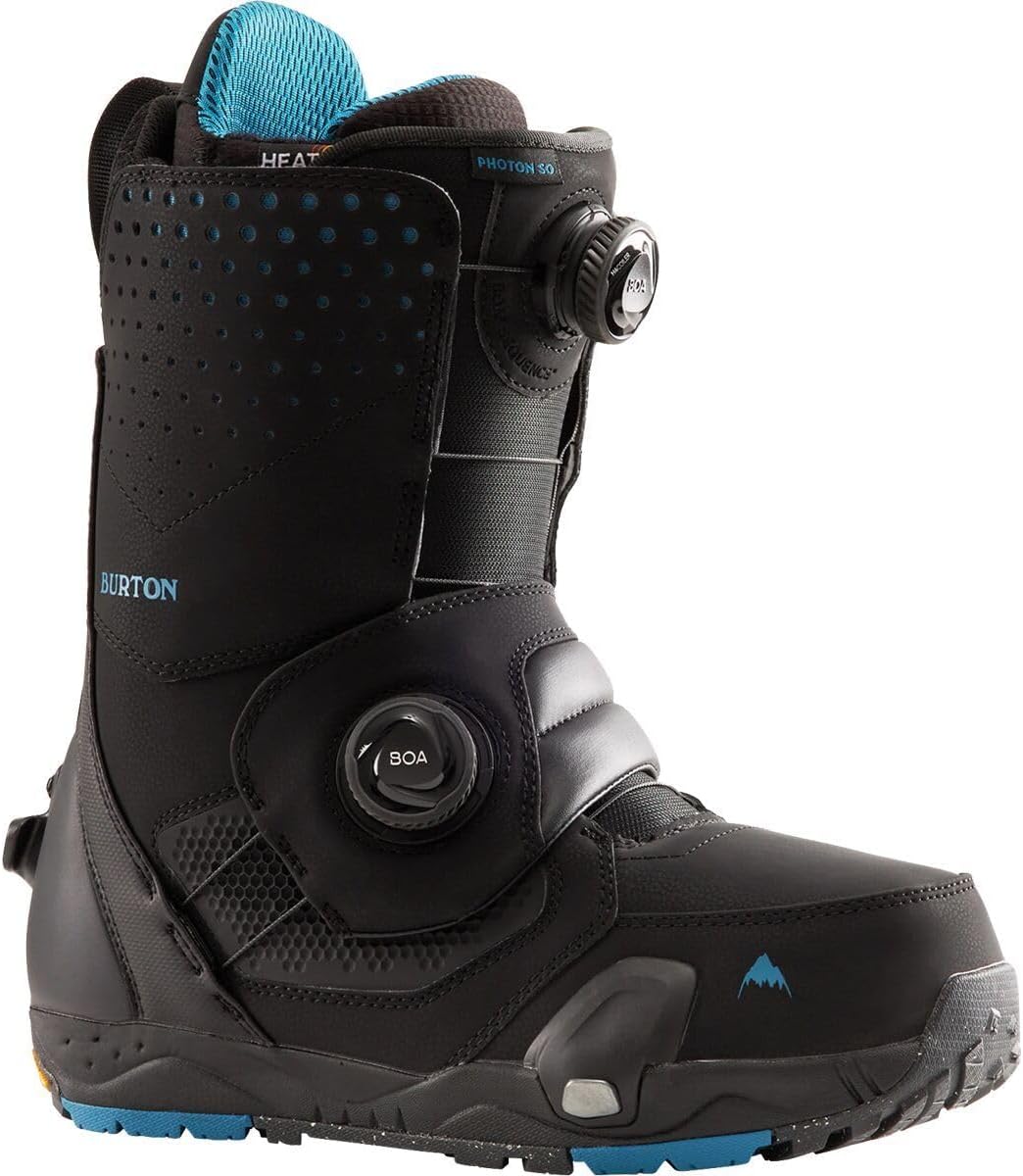
To use Step On bindings, you must buy Step On boots. Initially, this was limited exclusively to Burton boots, but Burton has since licensed the Step On cleat system to DC and Nitro, giving riders access to a broader range of boot constructions. However, you are still restricted to a specific subset of the market. If you have a unique foot shape, a wide foot, or a favorite pair of boots from brands like Vans, ThirtyTwo, Ride, or Salomon, you are simply out of luck. Check our guide on best snowboard boots to see what’s currently Step On compatible.
The Step On boot lineup has expanded significantly since 2017 and now includes models across multiple price points and stiffness ratings. The Burton Photon Step On (stiff, high-performance), the Burton Ion Step On (very stiff, expert-level), the Burton Genesis Step On (softer, more comfort-oriented), and DC Judge Step On are the headline options. Nitro’s Step On offerings have also gained a strong reputation for quality and broader foot-shape accommodation.
Nidecker Supermatic: True Freedom of Choice
The Supermatic works with any snowboard boot — full stop. Vans? ThirtyTwo? Ride? Salomon? Deeluxe? K2? All of them work. This is huge for riders who prioritize boot fit above all else, as they absolutely should. It also means you don’t need to buy new boots when upgrading your bindings, potentially saving you hundreds of dollars.
It’s worth noting that Nidecker has engineered their own boot line specifically to work optimally with the Supermatic’s rear-entry mechanism — Nidecker boots feature a reinforced spine in the heel area that engages more cleanly with the Supermatic’s roller mechanism. Using Nidecker boots with the Supermatic is the closest equivalent to the integrated system advantage that Burton offers with Step On. However, the Supermatic is genuinely excellent with literally any boot, and this is not a reason to switch away from a boot you love.
The Supermatic also works seamlessly with different lacing systems — whether you prefer BOA or speed laces, there is no interference with the drop-in entry mechanism since entry is from the rear of the binding rather than top-down.

Weight: The Real Numbers That Actually Matter
The weight debate between these two systems is more nuanced than most reviews acknowledge — because the Supermatic’s heavy binding weight is partially offset by the fact that Step On boots are not significantly heavier than non-Step On equivalents. Here are the actual measured weights, not approximations:
A Burton Step On binding (1 lb 13 oz) + Photon Step On boot (2 lb 3 oz) = ~4.0 lb per foot. A Nidecker Supermatic (2 lb 14 oz) + Ride Fuse standard boot (2 lb 0 oz) = ~4.9 lb per foot. The Supermatic system is still meaningfully heavier overall — approximately 0.9 lb per foot. Over a full day of riding, this is noticeable. However, many Supermatic riders report that the weight is most felt when carrying the board, not while actually riding.
Performance & Ride Feel: On-Snow Truth
How do they actually feel when you’re carving down a groomer, hitting park features, or navigating variable terrain?
Burton Step On: The “Locked In” Feel
Burton Step On provides a unique sensation that takes most riders a run or two to adjust to. Because there are no straps pushing down on the top of your foot, some riders initially feel “naked” or less secure than they expect. This feeling passes quickly. The response is lightning fast and completely direct — the moment you initiate a heel lift, the board responds without the micro-delay that strap flex introduces. It is excellent for carving (check our guide on how to carve on a snowboard) and high-performance riding where immediate edge-to-edge response is the priority.
The trade-off is that the Step On transfers all vibration and chatter from the snow surface directly to your feet without the dampening layer that strap pressure provides. On hardpack and chopped-up snow, this can be tiring over a full day. Additionally, riders who prefer a “surfy” feel or enjoy pressing and buttering their board may find the locked-in rigidity less playful than a strap binding. One genuine concern flagged by experienced Step On riders: in a toe-edge wipeout at speed, there is no strap to limit dorsiflexion — the boot alone must resist the force of the snow trying to push your toes toward your shin. For most riders this is not an issue, but it’s worth understanding.
Nidecker Supermatic: The Familiar-But-Magical Feel
The Supermatic feels exactly like a traditional binding because it fundamentally is one. You still have an ankle strap and a toe strap holding you in with the same pressure distribution you’ve always had. This provides that familiar, secure pressure that many longtime riders love. The Supermatic dampens vibration better than the Step On due to its larger baseplate and the soft-touch nature of strap pressure. It is particularly well-suited to riders who enjoy a more playful, press-oriented style — the strap system permits the boot flex that buttering and jibbing require.
Some advanced riders do note that the Supermatic’s flex feels marginally softer than comparable traditional bindings at equivalent strap tension settings. This is a function of the mechanism in the highback — the reclining system introduces a small amount of give that wouldn’t exist in a rigid traditional highback. This is not a significant issue for most riders, but for very aggressive carvers who prefer a very stiff, unforgiving setup, the Step On’s three-point direct connection may deliver more satisfying responsiveness.
“The Supermatic is a new technology built into a traditional feeling binding — and that familiarity is both its greatest strength and its most underrated feature.”
— Paraphrased from extensive rider feedback across multiple review platformsSetup & Strap Tuning: The Critical Configuration That Most Reviews Miss
The single most important thing to understand about the Nidecker Supermatic — and the reason many early adopters had a poor experience before understanding this — is that strap tension is completely different from a traditional binding. This is not optional advice; it is the defining setup factor for whether the Supermatic works correctly.
The Supermatic is designed to be ridden with straps set looser than you would set a traditional binding. The ankle strap in particular must not be overtightened — if it is too tight, the reclining highback cannot open fully for entry and exit, causing the “impossible to get in/out” frustration that some reviewers complain about. The correct setup allows the mechanism to function while the straps provide their intended support. Nidecker includes a QR code in the box linking to setup videos — watch them before your first session.
Nidecker’s official step-by-step setup guide — strap position, heel pedal calibration, and entry/exit technique. Watch before your first session.
Deep Snow & Ice Entry: The Real-World Stress Test
Convenience systems are great on groomers, but what happens when you are waist-deep in powder, on an icy sidehill, or stuck on a sketchy steep section where you need to step back in quickly?
Burton Step On in powder: Getting into Step Ons in deep snow is genuinely tricky. You need to clear the snow from the baseplate footbed completely to engage the cleats properly. If snow or ice packs into the cleat receiving slots (a phenomenon riders call “ice damming”), the binding will not click properly — or worse, will appear to click but is not fully engaged. You often have to kneel down and clear the mechanism by hand before stepping in. On a groomer or packed surface this never comes up; in genuine deep powder or side-country situations, it requires patience and awareness.
Nidecker Supermatic in powder: The Supermatic has a meaningful advantage here — not because its automatic entry is better in deep snow (it shares some of the same challenges), but because you can simply override the automatic system entirely. Unbuckle the straps, place your foot in traditionally, and ratchet down manually. You lose the speed advantage, but you maintain full function in any condition. This hybrid capability makes it a significantly safer bet for powder days, side-country laps, or any scenario where you might need to re-enter your bindings in challenging terrain.
Both systems can be affected by extreme cold — plastics stiffen and mechanisms become stiffer. The Supermatic’s rear roller benefits from pre-ride waxing in very cold temperatures. The Step On’s cleat system is generally less affected by cold than the Supermatic’s reclining mechanism. In genuinely extreme cold (below -15°C / 5°F), some Supermatic riders report the highback being more reluctant to recline — a quick manual assist resolves this.
Skating & Lift Line Experience
One of the most important — and least-discussed — aspects of daily binding use is the experience of skating with one foot unstrapped: pushing through lift lines, skating to the lift, gliding off the chair. Both systems handle this differently, and it matters for your overall daily experience.
Burton Step On skating: With your back foot unstrapped, the Step On binding platform is very low-profile. There is nothing protruding from the binding that can catch on your free boot or create awkward interference when pushing. The ergonomics of one-footed skating with Step On bindings are extremely clean.
Nidecker Supermatic skating: The Supermatic has a quirk that new users need to know: when the highback is in its reclining entry position (which it defaults to when you step out), it sticks up and out from the board at an angle. If you forget to fold it back in while skating, it can catch on your free boot or create a tripping hazard. The fix is simple — when you step out, manually push the highback down flat against the board. Some riders find this annoying enough to matter; others adapt quickly and don’t think about it after the first day.
All Model Variants: Which Version Is Right for You?
Both brands offer multiple versions of their step-in systems, and choosing the right variant matters as much as choosing the right system.
Burton Step On Family
Step On Re:Flex
The original and most popular variant. Re:Flex baseplate allows board flex to transfer through the binding naturally. Best for all-mountain and freeride. The most recommended starting point.
Step On X
Highest-performance Step On. Carbon composite components, stiffer response. For expert-level aggressive carvers and freeride riders. Noticeably higher price.
Genesis Step On Re:Flex
Softer, more comfort-oriented variant. Larger ankle strap for extra plush support. Ideal for riders who find the standard Step On too stiff or want more all-day comfort.
Step On EST
Designed specifically for Burton’s Channel mounting system. Ultra-minimalist connection between binding and board. Maximum board flex transfer — for Burton board owners only.
Nidecker Supermatic Family
Supermatic (Standard)
The flagship model. Nylon+ composite baseplate, full drop-in mechanism. Works with any boot. The most popular version and the default recommendation. ~$399–$450.
Carbon Supermatic
New for 2025. Carbon fiber highback and reinforced components deliver meaningfully stiffer response without adding significant weight (only 1 oz lighter than standard, but noticeably more responsive). For advanced to expert riders. ~$529–$549.
Supermatic (Women’s)
Gender-specific geometry including narrower stance width range, softer flex rating, and adjusted forward lean defaults. Same mechanism and boot compatibility as the men’s version.
The Carbon Supermatic addresses the most common criticism of the standard model — that its flex feels slightly soft for aggressive riders. The carbon highback delivers a stiffer, more responsive feel without sacrificing dampening. For riders who want the Supermatic’s boot freedom but need competition-level stiffness, the Carbon is the answer. For recreational all-mountain riders, the standard Supermatic’s flex is perfectly sufficient and saves ~$130.
The Full Step-In Landscape: Clew & Bataleon FASE
The step-in binding market now has four players, not two. Any complete comparison owes readers coverage of the other options — both of which solve the convenience problem with different trade-offs.
Clew Bindings: The Minimalist Approach
Clew bindings are the third major step-in system, designed and manufactured in Sweden. The Clew approach is radically different from both Burton and Nidecker: the binding is extremely minimal — essentially a small plate — and the boot connects via a large magnetic/mechanical connector at the rear calf area of the boot. Entry involves stepping onto the small front footpad and then pressing the calf connector until it clicks. The Clew system is arguably even faster than Burton Step On, and the binding itself is strikingly lightweight. However, entry and exit require a reach-and-pull motion at calf height, and the boot compatibility (like Burton Step On) is limited to Clew-compatible boots. The riding feel is genuinely unique — some describe it as “floating” above the board — and opinions are sharply divided.
Bataleon FASE: The Compromise Option
Bataleon’s FASE (Fast Step Entry) system is the newest entrant. FASE uses an AutoBack highback that automatically opens and closes like the Supermatic, combined with a Fast Strap that can be tightened with a single-handed swipe rather than ratcheting. Boot compatibility is broad — most modern snowboard boots work. Bataleon positions FASE as a softer, more playful-feeling speed-entry option, explicitly targeting freestyle and park riders who want convenience without the stiffness of the Step On. The FASE is currently less widely available and has less independent long-term review data than either the Step On or Supermatic, but early responses from the park community have been very positive.
Fastest entry: Burton Step On or Clew (both near-instant). Close second: Nidecker Supermatic and Bataleon FASE (under 2 seconds with practice). Most versatile: Supermatic (only system with full manual backup). Lightest: Burton Step On binding, though total system weight is more complex. Best boot freedom: Supermatic, followed closely by FASE.
Mounting Systems & Board Compatibility
Before purchasing either system, confirm your board’s mounting pattern is compatible. This is an easy thing to overlook and an expensive mistake to make.
Nidecker Supermatic Board Compatibility
The standard Nidecker Supermatic ships with a 4×4 and 2×4 compatible disc — meaning it works with the overwhelming majority of snowboards on the market. If your board has a conventional 4×4 pattern (four mounting holes in a square), the Supermatic fits. The one notable exception is Burton’s EST (The Channel) boards, which require a specific Est-compatible disc that the standard Supermatic does not include. Nidecker does produce a Channel-compatible version, but confirm before purchasing.
Burton Step On Board Compatibility
The Burton Step On Re:Flex variant works with 4×4, 2×4, and Burton’s Channel (The Channel) mounting system — the most versatile mounting compatibility in the Step On lineup. The EST variant is Channel-only. If you are riding a non-Burton board, confirm your board has the appropriate hole pattern before ordering the EST version.
Both systems allow full stance width and angle adjustment within their respective mounting ranges, with no meaningful difference between them in terms of setup flexibility for the average rider.
Rider Profiles: Who Should Buy Which System?
Rather than a binary verdict, the real answer to “which binding?” depends on your specific rider profile. Here is a detailed breakdown across rider types:
🧓 Older / Mobility-Limited Riders
→ Nidecker Supermatic. The rear-entry motion requires no bending and avoids the need to kneel in snow. Multiple 60+ riders report the Supermatic as genuinely life-changing for their enjoyment. The familiar strap feel also eliminates any learning adjustment period.
🏎️ Performance Carvers / All-Mountain
→ Burton Step On X or Re:Flex. The direct three-point connection and immediate edge response gives aggressive carvers the precision they need. No strap-related dampening between intention and execution.
🌊 Park / Freestyle Riders
→ Nidecker Supermatic or Bataleon FASE. The strap-based feel of the Supermatic is more forgiving for pressing, buttering, and jibbing. The softer flex better accommodates the creative, playful riding style of park-focused riders.
👨👩👧 Families / Shared Boards
→ Nidecker Supermatic clearly wins. When multiple family members with different boots share a board, the Supermatic’s universal boot compatibility eliminates the need to buy every rider a pair of Step On boots.
🛒 Complete New Setup Buyers
→ Burton Step On (if budget permits). If you’re buying everything new and fit Burton boots well, the integrated system is seamless. The lower total weight and fastest-in-class entry make it the premium choice when money isn’t the primary constraint.
💰 Budget-Conscious Upgraders
→ Nidecker Supermatic clearly wins. Using your existing boots, the Supermatic’s $400 price is the full cost of entry. Equivalent Burton Step On setup starts at $650+ minimum.
🏔️ Backcountry / Side-Country Riders
→ Nidecker Supermatic. The manual fallback capability is a genuine safety net in uncontrolled terrain where fumbling with a failed entry mechanism is not an option.
🎿 Riding With Skiers
→ Either system, slight edge to Step On. Both systems nearly eliminate the lift-line time gap between snowboarders and skiers. Step On’s slightly faster entry/exit keeps pace with even the fastest skier companions.
Durability, Repairability & On-Mountain Support
Complex mechanisms introduce more potential failure points than simple strap bindings. Both systems have accumulated enough field time to identify their durability characteristics.
Burton Step On Durability
The Step On has been on the market since 2017, giving it the longest real-world durability track record of the two systems. The binding mechanism itself — most of which lives in the boot’s cleats rather than the binding baseplate — is simple, low-profile, and has proven durable under heavy use. The most commonly reported wear issue is gradual loosening of the heel cleat engagement, which develops after many hundreds of days of use and can be addressed by cleat replacement. Burton’s widespread resort presence means that most major ski resorts stock Step On-compatible replacement parts and can service the system on-mountain.
The boots, however, do wear faster than equivalent non-Step On boots in some cases — the constant flexion and loading of the cleat areas in the sole can accelerate liner and sole wear compared to a boot used with traditional bindings. This is a function of the boot bearing more structural load than in a traditional strap system.
Nidecker Supermatic Durability
The Supermatic is newer to the market and has less multi-year wear data available. Early reports are largely positive — the mechanism is robust and the standard Nylon+ composite construction handles typical mountain use well. The main durability concern is the reclining highback pivot: over time and with heavy use, the pivot can develop some play, reducing the crispness of the automatic close. Nidecker addresses this by making the pivot mechanism user-serviceable and selling replacement pivot kits.
The Supermatic’s complexity means that on-mountain servicing may be more challenging than the Step On — fewer resort shops currently stock Supermatic-specific parts, though this is changing as the system grows in market share. The Carbon Supermatic’s reinforced components improve long-term durability for heavy riders and aggressive riders who put maximum stress on the mechanism.
No matter which binding you choose, a compact multi-tool is essential for on-mountain adjustments. Stance adjustments, screw tightening, and strap position tweaks should never require removing your gear to find a tool. See below.

Price & Value: The Complete Cost of Entry
The cost comparison between these two systems depends heavily on what gear you already own, which most reviews fail to account for properly.
| Scenario | Nidecker Supermatic | Burton Step On |
|---|---|---|
| Have Existing Boots | ✅ ~$399–$450 total | ❌ ~$650–$950 (must buy new boots) |
| Buying Everything New | ~$400–$450 (binding only) + existing boot cost | ~$650–$950 (binding + Step On boots) |
| Carbon / Premium Upgrade | Carbon Supermatic: ~$529–$549 | Step On X: ~$400–$450 (+ boots) |
| Resale Value | Good — universal boot compat helps resale | Good — Step On system has loyal buyer base |
| Long-Term Cost | Boot replacement: any boot on market | Boot replacement: Step On boots only (higher cost) |
Final Verdict: The Definitive Buyer’s Guide
Nidecker Supermatic
Universal boot compatibility, best value, hybrid entry, familiar feel
Burton Step On
Lightest, fastest, most direct response, longest proven track record
✅ Choose the Nidecker Supermatic if:
- You love your current boots and don’t want to change them.
- You want the familiar feel of straps with the convenience of fast entry.
- You ride in deep powder often and want the safety net of manual ratchets.
- You share a board with friends or family members who have different boots.
- You want the lowest total cost of entry — especially if you own good boots already.
- You are an older rider or have limited mobility and want to avoid bending over.
- You want the playful flex feel for pressing, buttering, or park riding.
- You venture into side-country or any terrain where reliable entry matters more than speed.
✅ Choose the Burton Step On if:
- You want the lightest possible total system weight.
- You want the absolute fastest entry and exit speed available.
- You prefer a stiff, direct, responsive ride without any strap-related flex dampening.
- You are buying a completely new setup — boots and bindings — with no existing investment to protect.
- You fit Burton, DC, or Nitro Step On boots well and are happy within that boot ecosystem.
- You ride primarily on groomers, hardpack, and in the park where powder entry is not a concern.
- You ride with skiers regularly and want the absolute minimum time between getting off the lift and being in motion.
Real-world comparison of both systems in action — entry speed, exit, and ride feel across multiple snow conditions.


 Home
Home
 About
About
 My Cart
 Reviews
 Compare