
Snowboard Pants vs. Ski Pants: The Complete Truth Behind the Gear You Wear on the Mountain
One question, thousands of answers online — most of them wrong. Here’s what actually separates these two types of snow pants, and what it means for your ride.
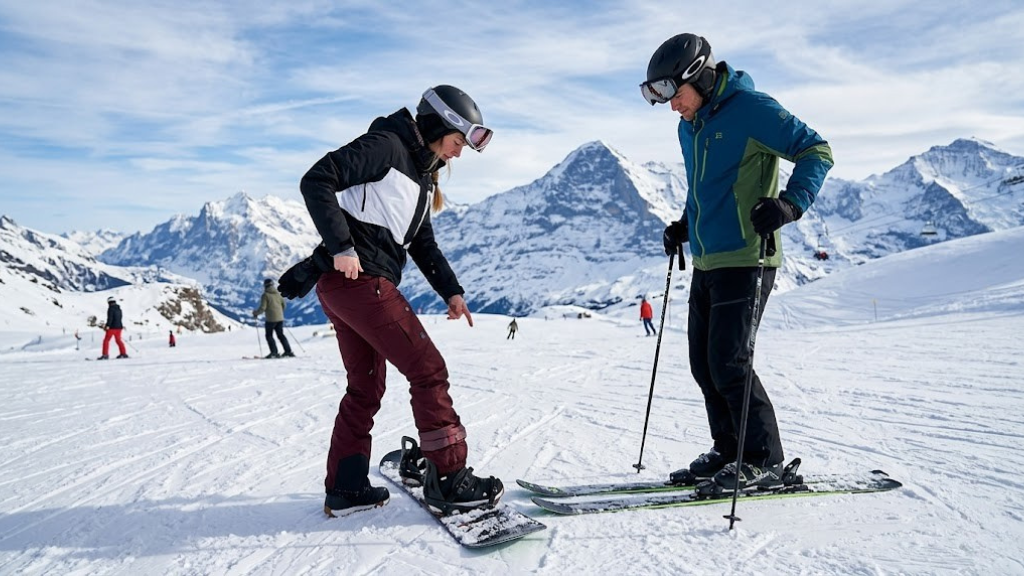
No — snowboard pants and ski pants are not exactly the same, though they share the same fundamental goal: keeping you warm, dry, and mobile on the mountain. The differences come down to fit philosophy (baggy vs. athletic), reinforcement locations (seat and knees for snowboarding, inner leg for skiing), powder management systems (integrated powder skirts vs. boot gaiters), and venting placement (thigh vs. lateral). In practice, both can often be used interchangeably for casual resort riding — but serious athletes on either side will tell you the purpose-built option matters significantly once you push the limits of the sport.
Why This Question Comes Up Over and Over Again
Walk into any ski resort rental shop and ask the staff whether snowboard pants and ski pants are interchangeable. You’ll get one of three responses: a confident “yes, totally,” a hesitant “mostly, but…,” or a full ten-minute breakdown of the engineering differences that’ll make your head spin. The truth, as is so often the case in gear debates, lives somewhere in that nuanced middle ground — and the answer you need depends entirely on who you are, how you ride, and what conditions you’re riding in.
The confusion is understandable. From ten feet away, a pair of snowboard pants and a pair of ski pants look nearly identical. They’re both insulated (or shell-only). They both have waterproof-breathable membranes. They both zip and button at the waist. They’re both sold next to each other in the same outdoor retailer, sometimes on the very same rack. Even the brands — Burton, Volcom, The North Face, Arc’teryx, Salomon, Oakley — often make both types, and the visual cues that separate them can be remarkably subtle when you’re not trained to look for them.
But “looks the same” and “functions the same” are two different things entirely. The design philosophy, construction priorities, reinforcement strategy, cut geometry, pocket placement, waist interface design, and ventilation architecture of purpose-built snowboard pants differ from purpose-built ski pants in ways that accumulate into a meaningfully different riding experience. None of these differences is catastrophic — you won’t fall off the mountain because you wore ski pants on a snowboard — but they compound in ways that become more important as your skill level rises, as the conditions become more extreme, and as you spend longer days on the hill.
This guide is the most comprehensive comparison of snowboard pants and ski pants ever assembled. Over the course of the next several dozen pages, we’re going to explore every possible angle of this question: the history of how these garments evolved separately, the materials science behind their construction, the biomechanics that drive their distinct fit requirements, the engineering of their ventilation and powder-management systems, and the practical performance implications for real riders in real conditions. We’ll also cover the economics — when it makes financial sense to buy sport-specific gear, when a crossover option makes more sense, and where the best value lies across multiple price tiers.
Whether you’re a brand-new beginner trying to figure out what to buy before your first lesson, a seasoned skier adding snowboarding to your quiver, a budget-conscious rider looking to maximize every dollar, or an obsessive gear nerd who just wants to understand the technical distinctions at a deep level — you’re in exactly the right place. Let’s start from the beginning.
It’s also worth establishing what this article is not going to do. We’re not going to tell you that you must buy snowboard-specific pants to enjoy snowboarding, or that wearing ski pants while shredding park laps will get you laughed off the mountain. The snow-sports community has spent decades shedding those kinds of gate-keeping attitudes, and good riddance. This is about genuine, practical performance knowledge so you can make informed decisions with your own money, in service of your own riding goals.
With that framing in place, let’s start where all good gear stories start: at the beginning.

A Brief History of Snow Pants: How Two Sports Developed Two Different Garments
To understand why snowboard pants and ski pants are different today, you have to understand the separate evolutionary paths each sport’s apparel took over the past century. These aren’t garments that started as one thing and got adapted — they emerged from fundamentally different performance cultures, aesthetic philosophies, and technical demands. Tracing that history is the best way to understand why the differences that exist today actually exist.
The Skiing Side: A Century of Refinement
Alpine skiing as a modern recreational sport traces its formalized roots to early twentieth-century Europe, with organized competitive events like the famous Arlberg-Kandahar race beginning in 1928. From the very beginning, the skier’s challenge was maintaining speed and control while moving primarily in one plane — the downhill fall-line — using two independent legs and a set of poles for balance. The athletic demands of this movement produced a very specific set of apparel needs: garments that were close-fitting enough not to flap in the wind at high speed, flexible enough to accommodate deep knee bends and hip angles during turns, and warm enough to withstand hours in open mountain environments.
Early ski pants were made of heavy wool knit fabrics — practical but prone to water absorption and incredibly heavy when wet. The introduction of synthetic nylon fabrics in the 1950s changed everything, offering both water resistance and lighter weight. The form-fitting stretch pants popularized in the 1960s by European racers — those iconic, skin-tight silhouettes you see in vintage ski photography — reflected the sport’s obsession with aerodynamics and performance efficiency. The ski pants of the 1960s and ’70s were fundamentally about reducing resistance and maximizing freedom of movement in a very specific, leg-scissoring athletic pattern.
Through the 1970s, recreational ski pants evolved toward more practical two-piece designs — separating jacket from pants for easier layering and movement. The introduction of Gore-Tex in 1976 revolutionized the category entirely, offering a waterproof-breathable membrane that eliminated the need to choose between staying dry and sweating to death. Throughout the 1980s and into the 1990s, ski pants became increasingly technical, with brands like Descente, Bogner, and eventually Spyder, The North Face, and Arc’teryx competing on membrane technology, insulation systems, and fit refinement.
Through all of this evolution, the fundamental demands remained consistent: fitted or semi-fitted silhouette, inner-leg reinforcement against ski edge abrasion, boot gaiters or integrated boot interfaces, and articulated patterning for hip-flexion-dominated movement. Every design decision was made in service of the upright, two-legged, forward-facing skier whose most intense wear points were the inner thighs (from ski edge rubbing) and the knees (from deep forward-flex).
The Snowboarding Side: Born in Counterculture, Designed for Different Demands
Snowboarding’s story begins not in a European alpine tradition but in American counterculture. Jake Burton Carpenter, Tom Sims, and others were largely influenced by surfing and skateboarding — sports defined by style, sideways stances, and a deliberate rejection of the athletic establishment’s norms. When snowboarding began gaining resort access in the mid-1980s — a process that required literal legal battles, as many resorts banned snowboarding well into the 1990s — its practitioners brought with them the aesthetic language of surf and skate: baggy, durable, functional street clothes adapted for snow conditions.
The baggy fit wasn’t just a fashion statement, though it certainly became one. It served real performance functions specific to how snowboarders move. Unlike skiers who stand upright and scissor their legs, snowboarders assume a crouched, sideways stance with both feet attached to a single board. Falls in snowboarding tend to involve full-body contact — sitting, sliding, kneeling — rather than the angular, tumbling falls more typical of skiing. Snowboarders spend considerable time sitting in the snow at the top of runs, while resting, while watching friends, while adjusting bindings. The seat of a snowboarder’s pants experiences wear patterns and contact points that ski pants simply weren’t designed to manage.
The early snowboard-specific apparel companies — Burton Snowboards’ clothing line being the obvious pioneer — began engineering pants specifically around these demands in the late 1980s and early 1990s. Reinforced seats and knees became standard. Looser, more skater-influenced fits allowed for the deep squats and hip-drop turns that characterized snowboard technique. Powder skirts — panels of stretch fabric inside the pants that interface with a jacket’s powder skirt, sealing out snow during deep powder immersion or crash landings — became a standard feature, since snowboarders are much more likely to be fully submerged in deep snow than skiers on groomed runs.
By the mid-1990s, snowboard pants and ski pants had diverged into clearly distinct categories, with separate design philosophies, marketing cultures, and technical specifications. The divergence only deepened through the late 1990s and 2000s as snowboarding’s cultural footprint expanded — culminating in the sport’s Olympic debut at the 1998 Nagano Games — and as both sports pushed their respective performance envelopes into increasingly specialized territory.
The Convergence Era: 2000s–Present
Starting in the mid-2000s and accelerating through the 2010s, the gear industry saw a partial convergence driven by several forces: skiers began borrowing elements of snowboard aesthetic (baggier fits, more streetwear-influenced designs), freeride and park skiing developed needs that more closely paralleled snowboard demands, and the rise of athleisure culture pushed both sports toward more versatile, crossover-friendly designs.
Today, the market features everything from fully sport-specific technical garments to explicitly crossover “snow pants” designed to work equally well for both activities. Major brands like The North Face, Patagonia, and Arc’teryx market pants as winter-sports-agnostic. Brands like Burton and Volcom remain deeply snowboard-specific in their design language, while brands like Spyder and Phenix remain rooted in ski tradition. In between lies a massive middle ground of products that borrow from both traditions.
Understanding this history helps explain why the differences between snowboard and ski pants aren’t arbitrary — they’re the accumulated result of a century of evolution in response to genuinely different athletic demands, cultural contexts, and performance priorities.
The first mass-market snowboard-specific pant with an integrated powder skirt was introduced by Burton in 1989 — the same year halfpipe snowboarding was first demonstrated at the U.S. Open. The design patent for the waist-sealed powder skirt interface system dates to 1991.
Materials and Construction: What These Pants Are Actually Made Of
Before we can meaningfully compare the performance of snowboard pants and ski pants, we need a common language for the materials and construction techniques that define what these garments can do. Both types of snow pants share a fundamental three-layer logic — outer shell, middle insulation (in insulated versions), and inner lining — but the specific materials chosen for each layer and the construction techniques used to combine them differ in important ways between the two categories.
Outer Shell Fabrics: The First Line of Defense
The outer shell of any snow pant is its most critical layer — it’s what interfaces with wind, snow, lift chairs, rough terrain, and every other environmental challenge the mountain throws at you. The choice of outer shell fabric determines waterproofing performance, breathability, durability, packability, and to a significant degree, the overall aesthetics and weight of the garment.
Nylon vs. Polyester: The Foundation Debate
Both nylon and polyester are petroleum-derived synthetic fabrics that form the substrate of most snow pants, but they have distinct performance characteristics that lead different manufacturers to favor one over the other.
Nylon offers superior abrasion resistance, which is why it dominates the construction of purpose-built snowboard pants where the seat and knee panels take repeated punishment from snow, ice, and hard ground contact. Nylon’s strength-to-weight ratio is excellent, and it holds DWR (Durable Water Repellent) coatings well. Its primary disadvantages are slightly lower moisture-wicking efficiency compared to polyester and a tendency to feel slightly stiffer in very cold temperatures. Denier ratings for snowboard pants typically range from 150D to 600D in reinforced areas, with lighter-duty sections using 70D to 100D face fabric.
Polyester holds its shape better over long periods, is more cost-effective to produce, and dries faster than nylon. It’s the preferred base fabric for ski pants, where abrasion demands are somewhat lower than snowboard pants, and where a crisper drape and slightly lighter construction contribute to a more packable, less bulky garment. High-end ski pants often use polyester-spandex blends (typically 8–12% spandex/Lycra) to achieve four-way stretch without sacrificing water resistance, which is valuable for the deep knee angles of alpine carving.
Stretch Fabrics: Where the Sports Diverge Most Sharply
One of the clearest material-level differences between the two categories is how each handles the stretch fabric question.
Ski pants — especially those targeting carving performance, racing, or mogul skiing — frequently feature significant stretch panels, either through spandex-blended outer fabrics or through strategically placed power-stretch inserts. The goal is to maintain an articulated, form-fitting silhouette while accommodating the deep hip and knee flexion of aggressive alpine skiing. Some race-cut ski pants use stretch content across the entire pant; more general-purpose versions use stretch panels in specific locations like the back of the knee, the seat, or the upper inner thigh.
Snowboard pants, by contrast, typically achieve freedom of movement through generous fabric allocation rather than stretch. The baggy or relaxed fit provides ample room for the deep squats, wide-stance postures, and ground-contact positions of snowboarding without relying on stretch content in the outer shell. This approach is generally more durable — stretch fabrics lose elasticity faster than non-stretch fabrics under the abrasion and compression cycles that snowboard pants endure — and it preserves the aesthetic language that defines snowboard style.
That said, modern snowboard pants increasingly incorporate stretch panels in targeted locations (typically the back of the waistband and the knee articulation panels) to improve close-fitting comfort without sacrificing the overall baggy aesthetic or durability of the outer shell.
Woven vs. Knit Constructions
Most snow pants use woven outer fabrics (where threads interlace at right angles) rather than knit fabrics (where loops interlock). Woven fabrics offer superior abrasion resistance and retain their shape under stress, making them the standard for both ski and snowboard pants. However, softrack — a woven fabric with a fleece-like face — appears in some snowboard pants as an insulating outer layer, and knit-woven hybrid technologies like 3-layer constructions have become increasingly common in premium offerings from both categories.
Insulation Systems in Snow Pants
Snow pants broadly divide into two categories: shell pants (outer layer only, no built-in insulation) and insulated pants (with built-in synthetic or down insulation between the outer shell and inner lining). The choice between shell and insulated affects not just warmth but weight, packability, moisture management, and layering flexibility.
Shell Pants: For the Serious Rider
Shell-only snow pants have no built-in insulation — they’re a weatherproof outer layer that you wear over your own base layers and optional mid-layers. They’re lighter, more packable, more breathable, and highly versatile because you can adjust warmth by adding or removing layers underneath. They’re the choice of expert skiers and snowboarders who generate significant body heat through athletic exertion, who ride across a wide temperature range, or who are primarily concerned with maximizing moisture vapor transmission (breathability) to prevent sweat accumulation during intense effort.
Both ski and snowboard shell pant markets are extensive. The construction priorities differ mainly in abrasion resistance and fit — the waterproofing and breathability technologies are largely shared across the two sports.
Insulated Pants: For Most Resort Riders
Insulated pants are the choice of most recreational skiers and snowboarders riding at typical resort temperatures (roughly 15°F to 35°F / -9°C to 2°C). Modern insulated snow pants use one of three insulation systems:
Synthetic fill is the dominant choice for both ski and snowboard insulated pants. Brands like PrimaLoft, Thinsulate (3M), Coreloft (Arc’teryx), and THERMOLITE use ultra-fine polyester fibers engineered to trap warm air while remaining lightweight and compressible. Critically, synthetic insulation maintains roughly 70–85% of its insulating effectiveness when wet, unlike down, making it the safer choice for the snow-contact conditions of both sports. Synthetic fill weight in pants typically ranges from 40g to 120g per square meter (gsm), with higher fill weights for colder conditions and lower weights for milder temperatures or more active use.
Down fill remains relatively uncommon in pants specifically (compared to jackets) because of the wet-weight vulnerability issue. When down gets wet — which is highly likely when you’re sitting in snow or taking falls — it loses most of its loft and insulating capability. That said, some premium ski pants (particularly from European luxury brands) use water-resistant treated down (sometimes called “hydrophobic down”) to mitigate this weakness. Snowboard pants rarely use untreated down in insulated versions for this exact reason.
Fleece-bonded systems — where a polyester fleece liner is laminated directly to the interior of the outer shell — represent a third approach, common in mid-price insulated pants from both categories. This system is extremely durable and easy to care for, but less thermally efficient per unit of weight than dedicated synthetic fill, and less breathable than loose fill constructions because the bonded layers reduce air permeability.
| Insulation Type | Wet Performance | Weight | Packability | Durability | Typical Price Premium |
|---|---|---|---|---|---|
| PrimaLoft Gold | Excellent (94% wet) | Light | High | Very High | High |
| 3M Thinsulate | Excellent (97% wet) | Very Light | High | High | Medium |
| Standard Synthetic | Good (75–85% wet) | Medium | Medium | Medium | Low |
| Water-Resistant Down | Good (70–80% wet) | Very Light | Very High | Low | Very High |
| Standard Down | Poor (10–30% wet) | Lightest | Highest | Low | High |
| Bonded Fleece | Good (no loft to lose) | Heavy | Low | Very High | Low |
Lining Materials: The Comfort Interface
The inner lining of a snow pant is often underappreciated, but it significantly affects comfort during extended wear. Options include:
- Taffeta lining: The most common, lightweight nylon or polyester woven fabric that allows easy on/off over base layers without friction. Standard in mid-range to premium pants of both types.
- Mesh lining: Used in warm-weather or shell-only pants where breathability is prioritized over wind resistance. Common in freeride snowboard pants worn in spring conditions.
- Fleece lining: Found in cold-weather insulated versions, adds warmth and comfort at the cost of some breathability. More common in ski pants targeting groomed-run recreational skiers than in snowboard pants.
- Moisture-wicking lining: A newer development using polyester micro-fiber or merino wool blend linings that actively pull moisture away from base layers, improving comfort during heavy exertion.
For a deeper dive into what goes underneath your pants and why base layer choice matters as much as the outer shell, our comprehensive snowboard layering guide covers the full clothing system from skin to shell.
Waterproofing and Breathability: The Technical Heart of the Matter
If there’s one performance dimension where the conversation about ski pants vs. snowboard pants gets the most technically interesting, it’s waterproofing and breathability. Both properties are critical for snow sports — but the specific demands of each activity create different priorities that are reflected in how manufacturers specify their products.
Understanding Waterproofing and Breathability Ratings
Before we can compare products meaningfully, we need to understand what the numbers actually mean. Most snow pants use a two-number rating system to describe their waterproofing and breathability: for example, “20K/20K” or “10,000mm / 10,000g.”
Waterproofing: The Hydrostatic Head Test
Waterproof ratings are measured in millimeters (mm) using what’s called a “hydrostatic head test.” In this test, a column of water is placed over a fabric sample and increased in height until water begins to seep through. The height at which penetration occurs — measured in millimeters — is the waterproof rating. Higher numbers indicate more waterproof fabric.
- Under 5,000mm: Barely water-resistant, adequate only for light drizzle or very brief snow exposure. Not appropriate for any serious snow-sports use.
- 5,000–10,000mm: Entry-level waterproofing. Adequate for dry snow conditions and moderate activity, but will wet out under sustained pressure (sitting in wet snow) or prolonged exposure.
- 10,000–20,000mm: Mid-range waterproofing. Appropriate for most resort conditions, handles sitting in snow without immediately wetting through, good for all-day wear in variable conditions.
- 20,000mm+: High-end waterproofing. Appropriate for wet conditions, extended powder immersion, and backcountry use where prolonged exposure is inevitable. Generally found in premium and performance-focused products.
This is where snowboard pants and ski pants start showing a significant divergence in typical specifications. Because snowboarders spend dramatically more time in direct snow contact — sitting at run tops, falling during trick attempts, crawling around in powder — snowboard pants as a category tend to specify higher waterproof ratings than comparable-priced ski pants. The seat and knee panels of premium snowboard pants often receive an additional application of DWR coating or a laminated waterproof tape at seams specifically because these areas are subjected to sustained pressure (sitting) rather than just impact or surface contact.
If you’re shopping for baggy snowboard pants with proper hydrostatic head ratings, understanding these numbers is essential — a pants rated at only 5,000mm will fail spectacularly during a long powder session when you’re sitting in waist-deep snow trying to strap in your bindings.
Breathability: The MVTR Rating
Breathability ratings are expressed as grams of moisture vapor that can transmit through one square meter of fabric in 24 hours (g/m²/24hr), measured by the Moisture Vapor Transmission Rate (MVTR) test, also called RET (Resistance to Evaporative Transfer) in some standards. Higher MVTR numbers mean more breathable fabric.
- Under 5,000g: Low breathability. Fine for low-intensity activity or very cold, dry conditions where sweat isn’t a major concern.
- 5,000–10,000g: Moderate breathability. Adequate for light to moderate activity, entry-level resort use.
- 10,000–15,000g: Good breathability. Suitable for most resort skiers and snowboarders at moderate activity levels.
- 15,000–25,000g: High breathability. Appropriate for highly active riders who generate significant body heat.
- 25,000g+: Premium breathability. Used in technical freeride and backcountry products where sustained high-output exertion demands maximal moisture vapor escape.
The breathability demand divergence between skiers and snowboarders is more nuanced than the waterproofing difference. Competitive alpine skiers at high speeds generate enormous metabolic heat and need very high MVTR ratings. Meanwhile, recreational lift-served snowboarders often alternate between sitting still (on the lift, at the top of runs) and burst activity, which creates a different thermal regulation challenge. Park snowboarders hiking laps in the park terrain area need high breathability for the uphill effort, while freeride skiers descending technical couloirs need it for sustained high-speed effort.
Waterproof-Breathable Membrane Technologies
The specific waterproof-breathable membrane used in a snow pant determines how well it performs at both ratings simultaneously, how it performs in wet conditions versus dry cold, and how it ages with use.
Gore-Tex remains the gold standard membrane technology, used by Arc’teryx, Salomon, Black Diamond, and dozens of other premium brands in both ski and snowboard pants. Gore-Tex’s expanded PTFE membrane structure has a unique combination of high waterproofing and high breathability maintained even when wet — a critical advantage over many competing technologies that lose breathability efficiency in rain or sustained wet conditions. Gore-Tex Pro, the highest-performance version, offers exceptional breathability and extremely high waterproofing, typically found in shell pants priced above $400.
DRYRIDE Durashell (Burton’s proprietary technology) is the most widely recognized snowboard-specific waterproof-breathable system. It’s found throughout Burton’s pants lineup and competes directly with Gore-Tex in its top-tier versions. The DRYRIDE 2L system layers a breathable membrane between the outer face fabric and inner lining; the DRYRIDE 3L system bonds all layers together for reduced weight and improved breathability, though at the cost of some soft-hand feel.
H2No Performance Standard (Patagonia) uses a combination of DWR coating and either a laminated membrane or a 2.5-layer construction depending on the product tier. Patagonia’s approach emphasizes sustainability alongside performance, using recycled face fabrics and bluesign-certified processes.
eVent technology uses a Direct Venting (DVvent) structure that allows moisture vapor to escape without needing body heat to activate the membrane — unlike Gore-Tex which requires a temperature differential to drive vapor transmission. This makes eVent particularly advantageous in cold, low-activity conditions where Gore-Tex may underperform breathability ratings.
Proprietary membranes from brands like Volcom (V.Science), Oakley, Columbia (OutDry), and many others typically perform comparably to Gore-Tex in laboratory testing at 2L constructions, but may show more variability after repeated wash cycles and extended use in the field.
DWR Coatings: The Overlooked Performance Layer
Applied to the outer face fabric of virtually all snow pants regardless of brand or price, DWR (Durable Water Repellent) is a chemical finish that causes water to bead and roll off the surface rather than saturating the fabric. When DWR is working properly, the outer shell maintains its appearance and breathability even in wet snow — water beads and falls away rather than soaking into the face fabric, which would reduce the temperature differential that drives vapor transmission through the membrane.
When DWR fails — typically through washing, abrasion, or simple age — you’ll notice that the outer shell of your pants appears to “wet out” in snow rather than shedding water. This doesn’t immediately cause leakage (the waterproof membrane below is still doing its job) but it significantly degrades breathability and adds thermal weight to the pant. Reapplication of DWR is one of the most important and least-discussed maintenance tasks for snow pants of either type.
The specific abrasion patterns of snowboard pants mean that DWR coatings in the seat area of snowboard pants typically fail faster than in ski pants, where abrasion is more distributed. Some premium snowboard pants use a higher-durability DWR application in the seat panel specifically to address this.
Many riders don’t realize that washing with standard detergent rapidly degrades DWR coatings. Always wash snow pants with a technical garment wash (like Nikwax Tech Wash), tumble dry on low heat to reactivate DWR, and reapply spray-on DWR (like Nikwax TX.Direct) once the beading starts to fail. Doing this properly extends the effective life of your waterproofing significantly — for both snowboard and ski pants.
| Technology | Primary Brand(s) | Waterproofing | Breathability | Wet Breathability | Used More In |
|---|---|---|---|---|---|
| Gore-Tex Pro | Arc’teryx, Salomon | Excellent | Excellent | Best | Both |
| Gore-Tex 2L/3L | Multiple brands | Very Good | Very Good | Very Good | Both |
| DRYRIDE 3L | Burton | Very Good | Very Good | Good | Snowboard |
| eVent DVvent | Multiple brands | Excellent | Excellent | Excellent | Ski/Freeride |
| H2No Performance | Patagonia | Good–Very Good | Good–Very Good | Good | Both |
| Generic proprietary | Volcom, Oakley, etc. | Good | Good | Moderate | Both |
| DWR-only (no membrane) | Budget brands | Poor | High | Poor | Beginner |

Fit and Cut: The Most Visible — and Most Misunderstood — Difference
Ask any experienced snow-sports retailer what separates snowboard pants from ski pants on a surface level, and they’ll probably point to fit within about three seconds. It’s the most immediately visible difference, the most culturally loaded distinction, and simultaneously the most frequently oversimplified aspect of the comparison. Let’s get past the surface-level “baggy vs. tight” framing and look at what’s actually going on in the pattern engineering of these two garment types.
The Biomechanics of Snowboarding vs. Skiing: Why Fit Matters
Snowboarders and skiers move in fundamentally different ways, and understanding those movement differences is the only way to understand why the fit of their pants evolved so differently.
Skiers face forward, with their hips aligned roughly parallel to the direction of travel. Their primary athletic movements involve hip abduction (spreading legs), hip flexion (bending forward at the hips), and knee flexion in a parallel or carving position. The most extreme positions — deep carving turns, mogul absorption, jump landings — involve significant forward lean with both knees bent simultaneously, driving the pants’ critical stress points into the upper thigh, the knee, and the inner leg. Skiers rarely sit in their pants; they stand, crouch, or lean. Their pants see relatively limited contact with snow surfaces except during falls.
Snowboarders stand sideways on their board, with hips roughly perpendicular to the direction of travel. Their primary athletic movements involve hip rotation (leading with the front shoulder or hip through turns), lateral hip flexion, and knee flexion in an asymmetric sideways stance. Critically, snowboarders make frequent, deliberate contact with the snow: sitting at run tops, kneeling to adjust bindings, sliding on rails and boxes, falling on both the frontside (forward) and backside (backward) during learning and trick attempts. The seat, the knees, and the side panels of snowboard pants experience types and amounts of wear contact that ski pants simply don’t encounter.
This movement difference also affects how much room is needed in the pant for unrestricted motion. While a skier’s primary axis of movement is sagittal (front-to-back), a snowboarder’s includes significant frontal plane movement (side-to-side). A pant that fits a skier perfectly may bind uncomfortably at the outer hip or thigh when the rider stands sideways on a snowboard and drives through a heelside turn. Conversely, a pant that fits a snowboarder’s sideways stance optimally might feel excessively roomy and wind-resistant in the tucked position of a high-speed alpine skier.
Snowboard Pants Fit Philosophy: Relaxed to Baggy
The fit spectrum for snowboard pants runs from “relaxed” (also called “regular” or “slim” in snowboard terminology) at the more fitted end, through “cargo” or “standard” fit in the middle, to “baggy” or “street” at the most relaxed extreme. Even the most “slim” snowboard pants by mainstream brands like Burton, Volcom, or Oakley typically feature more seat and thigh room than comparable-waist-size ski pants.
The key design features of a well-fitting snowboard pant include:
- Low-rise waist positioning: Traditionally, snowboard pants featured a lower rise (shorter distance from crotch seam to waistband) than ski pants, reflecting the skateboard/streetwear influence. Modern snowboard pants range from low- to mid-rise, with the low-rise being a quick giveaway of snowboard heritage.
- Generous seat room: Enough fabric in the seat to allow unrestricted hip rotation and to accommodate sitting on a board without pulling down at the back waistband.
- Articulated knees: Shaped knee panels (often with a forward angle bias reflecting the neutral snowboard stance) that prevent the pants from pulling taut during deep knee flexion.
- Wide thigh room: More circumference in the upper thigh than ski pants to accommodate the sideways stance and lateral hip movement patterns.
- Straight leg or slight taper: Most snowboard pants maintain a relatively consistent leg width from thigh to ankle, with a slight outward flare at the ankle to fit over snowboard boots. The dramatic taper of ski pants (to fit over ski boots) is absent.
- Extended inseam: Snowboard pants typically run slightly longer in the inseam than ski pants because they need to drape over the top of snowboard boots rather than tuck inside them.
Ski Pants Fit Philosophy: Athletic to Technical
Ski pants run the opposite direction on the fit spectrum, from “regular” or “relaxed” at the roomiest end, through “fitted” or “athletic,” to “race cut” or “slim” at the most technical extreme. Even the most relaxed ski pants typically maintain a cleaner silhouette and more vertical drape than snowboard pants.
Key design features of properly fitting ski pants include:
- Higher rise waist: Ski pants typically feature a higher rise than snowboard pants — the waistband sits at or above the natural waist. This provides additional coverage over the kidneys and lower back in the forward-leaning skiing posture without generating a gap between jacket and pants.
- Tailored seat and thigh: Less excess fabric in the seat and thighs, which reduces wind resistance and improves aerodynamics for higher-speed skiing while keeping the pant clean and unobtrusive in the bindings and ski boot interface area.
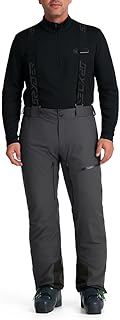
- Inner-leg taper: Ski pants taper significantly at the inner leg from the thigh down to the ankle, designed to clear the ski boot cuff without catching or binding.
- Boot gaiters/cuffs: Most ski pants feature a built-in boot gaiter or integrated cuff system that wraps under the arch of the ski boot or secures around the lower leg of the ski boot. This prevents snow from entering the boot during falls and keeps the pant leg clean against the boot.
- Suspender compatibility: Many ski pants (particularly bibs and technical racing pants) feature attachment points or are specifically designed to work with detachable suspenders, which help maintain waist position during aggressive movement.
- Articulation at back of knee: Rather than the full-seat articulation of snowboard pants, ski pants focus articulation engineering specifically at the back of the knee to accommodate the deep forward knee-over-toes flexion of alpine carving.
The Visual Shorthand: How to Tell Them Apart at a Glance
Once you know what to look for, the fit differences between snowboard and ski pants are immediately apparent on a rack or on a person. Here’s the quick visual checklist:
- Fitted to slim silhouette in thigh area
- Tapers strongly toward the ankle
- Boot gaiter visible at ankle
- Higher rise waistband
- Inner leg often has stretch or reinforcement panel
- Suspender buttons often visible at waistband
- Sometimes has zippered lower leg for easy on/off over ski boot
- Shorter overall length (sits on top of ski boot)
- Relaxed to baggy silhouette through hips and thighs
- Relatively straight leg from hip to ankle
- Slight flare at ankle to fit over boot
- Lower rise waistband (often sits at or below hip)
- Seat often reinforced (different texture or double-layer)
- Powder skirt visible at inner waistband
- Longer overall length (drapes over top of snowboard boot)
- More exterior pockets, often larger
The Gender Dimension: How Fit Differs Across Men’s, Women’s, and Unisex Options
The fit divergence between snowboard and ski pants is equally pronounced — and in some ways more nuanced — in women’s and gender-neutral offerings. Women-specific snow pants, regardless of sport designation, typically feature a higher rise, a wider hip-to-waist ratio, and a shorter inseam than men’s versions. But the cultural and performance differences between the two sports persist even within women’s offerings.
Women’s snowboard pants from brands like Roxy, Burton, Volcom, and Billabong maintain the relaxed-to-baggy fit philosophy of men’s snowboard pants while adjusting proportions for typically wider hips and shorter legs. Women’s ski pants from brands like Spyder, Obermeyer, Bogner, and Kjus tend toward fitted, contoured silhouettes that emphasize athletic performance and aesthetics simultaneously. The technical construction differences are identical to the men’s category; only the proportional adjustments differ.
Youth snow pants generally follow the same pattern with somewhat simplified construction — juvenile snowboard pants are typically baggier and more durable in high-contact zones, while youth ski pants are more fitted and include ski-boot-interface features.
“The fit of your pants is the single biggest factor in whether you’re comfortable on the mountain all day. A great membrane in pants that don’t fit your sport is like a great engine in a car that handles wrong — the individual component is excellent, but the system is compromised.”
— Senior gear editor, major outdoor industry publicationFeature-by-Feature Comparison: The Details That Actually Matter
Beyond fit and materials, the practical functional differences between snowboard pants and ski pants come down to a collection of specific design features. Some of these are small conveniences; others represent genuinely significant performance differentiators. Let’s go through every major feature category systematically.
Ventilation Systems: Thigh Vents vs. Lateral Vents
Every serious snow pant — at least those in the mid-price tier and above — includes some form of active ventilation system to allow heat and moisture vapor to escape rapidly during intense exertion. The location and design of these venting systems differ meaningfully between snowboard and ski pants, and this is one of the areas where the functional divergence is most practically significant.
Ski Pant Venting: The Inner Thigh Standard
The vast majority of ski pants place their primary vents on the inner thigh — a long, zippered opening running from just below the crotch down the inner leg, typically 10–20cm in length. This placement is optimal for skiers for two reasons. First, the inner thigh is the highest-heat zone in the alpine skiing movement pattern, where muscular effort is most concentrated. Second, inner-thigh vents don’t interfere with the aerodynamic silhouette of the ski pant’s outer leg, maintaining clean lines for high-speed performance while providing maximum airflow when needed.
On high-end ski pants, these inner-thigh vents sometimes mesh with corresponding vents in the insole area of ski boots, creating a direct ventilation channel from the foot up through the leg — an elegant integration of boot and pant systems. The zipper pulls on ski pant vents are typically small and streamlined to avoid catching on ski boot buckles.
Snowboard Pant Venting: Thigh and Side Options
Snowboard pants use both inner-thigh and outer-lateral vent placements, with the outer-lateral thigh vent being perhaps more common in the category. Outer-thigh vents run along the side seam of the pant, typically from mid-thigh to just below the knee, and open with a large-throw zipper. These vents are very effective for rapid heat dump during park hiking or backcountry uphill travel — situations much more common in snowboarding culture than in traditional lift-served skiing.
Some snowboard pants offer dual venting — both inner thigh and outer lateral — for maximum airflow versatility. These tend to be found in premium freeride snowboard pants where the rider may alternate between lift-served descents and skin-track uphill travel.
The difference in vent placement also affects practical use: inner-thigh vents are typically accessible even when wearing bindings, while outer-lateral vents may be partially covered by snowboard bindings if they extend low enough on the outer thigh.
Powder Skirts vs. Boot Gaiters: A Critical Divergence
One of the most practically significant feature differences between snowboard pants and ski pants is how they handle snow entry at the waist (or top) and at the ankle (or bottom). Getting snow inside your pants is immediately miserable and potentially dangerous in cold temperatures; the systems designed to prevent this differ fundamentally between the two sports.
Snowboard Pants: Integrated Powder Skirts
The powder skirt is arguably the defining feature of a purpose-built snowboard pant. It’s an inner panel of stretch fabric — typically 4-way stretch polyester/spandex — attached to the interior of the pants at waist height, designed to form a snow-proof seal between the pants and the jacket by connecting with the powder skirt of a compatible jacket.
When properly connected, the jacket’s powder skirt and the pants’ powder skirt interlock (using a snap or Velcro interface) to create a waterproof seal around the entire waist, preventing snow from entering in any direction — whether you’re fully immersed in powder, tumbling backward in a crash, or sitting in deep snow at the top of a run. This system is essential for backcountry snowboarding, deep powder freeride, and anyone who falls frequently (which describes virtually every beginner and most park riders).
The powder skirt also provides secondary benefits: it keeps base layers in place during the hip-extension movements of snowboarding (so your top doesn’t ride up and expose your lower back), and it adds a small amount of additional insulation at the waist, which is a cold zone in the gap between jacket and pants.
Ski Pants: Boot Gaiters and Lower-Leg Interface
Rather than focusing on waist-level snow entry prevention, ski pants focus on ankle-level management through boot gaiters. A ski pant gaiter is a tube of stretch nylon that wraps snugly around the lower leg of the ski boot, preventing snow and moisture from working up between the boot and pant leg during falls or deep snow traversing.
Why the focus on the ankle rather than the waist? Because skiers’ primary snow-entry vulnerability is at the boot-pant interface when they fall — the pant leg can ride up and allow snow in through the boot collar. The waist is typically well-sealed by the jacket-pant overlap (made possible by the ski pant’s higher waist rise), and powder skirts are less necessary because skiers are much less frequently fully submerged in deep snow with pressure applied from all directions simultaneously.
Some ski pants (particularly those marketed for deep-snow freeride skiing) do include powder skirts in addition to boot gaiters, recognizing that the two protection systems address different snow-entry vectors. However, the boot gaiter remains the standard feature of ski pants while the powder skirt remains the standard feature of snowboard pants.
If you use snowboard pants, make sure your jacket has a compatible powder skirt for the snap/Velcro interface. Most Burton pants connect with Burton jackets, most Volcom pants connect with Volcom jackets — but many brands use non-standard interfaces. When buying pants and jacket from different brands, always check powder skirt compatibility or look for pants with a generic stretch inner waistband that fits inside any jacket.
Pockets, Storage, and Practical Features
Pocket architecture is another area where the two garment types reflect genuinely different use patterns.
Snowboard Pants: More Pockets, Bigger Openings
Snowboard pants almost universally feature more pocket options than ski pants at equivalent price points. Typical snowboard pant pocket configurations include: two hand-warmer pockets with large openings (to accommodate gloved hands), two thigh cargo pockets (large zippered or Velcro-secured pouches on the outer thigh), and often a media or phone pocket (sometimes with a headphone port).
The larger pocket openings reflect snowboarding culture’s roots in skateboarding and hip-hop streetwear, where visible, accessible storage was part of the aesthetic language. They also reflect practical snowboarding realities: reaching into your pants pockets while wearing thick gloves or mittens is a different experience than the same action in skiing, where you have ski poles in hand and tend to keep both hands in use during movement.
Ski Pants: Streamlined Pockets, Less Storage
Ski pants typically feature fewer and smaller pockets than snowboard pants, reflecting the ski-specific concern with aerodynamic cleanliness and the practical reality that skiers keep their hands in ski gloves on pole grips for much of their time on skis. Standard ski pant pockets include two hand pockets (smaller than snowboard versions, often fleece-lined for hand warming) and sometimes a single zip-secured back pocket. Cargo pockets, while present in some freeride ski pants, are less common in the category overall.
The trend toward larger cargo pockets in ski pants has been one of the clearest examples of snowboard culture influencing ski apparel, particularly in the freeride and park-ski segments.
Waistband Construction: The Critical Comfort Zone
The waistband of a snow pant affects all-day comfort, fit security, and integration with your base and mid layers more than almost any other feature. Here again, the two sports use different approaches.
Snowboard pant waistbands typically feature a combination of internal adjustment systems (usually a hidden Velcro tab system or internal drawcord that allows fine-tuning without an external waistband adjustment that looks like a visible band of excess fabric) and a stretch inner waistband panel. The outer waist closure is typically a single-button snap plus a hidden zipper — simple and clean, consistent with the streetwear influence of snowboard apparel.
Ski pant waistbands tend to be more structured and security-focused, often featuring a clip-buckle or D-ring adjustment, wider waistband panels for better weight distribution, and suspender attachment points inside the waistband. Some technical ski pants feature full suspender integration from the factory — essentially a hybrid pant-bib construction that provides superior position stability during the aggressive movement of high-level skiing.
For a more detailed comparison of bib-style pants versus standard waistband designs, our guide to ski bibs vs. pants covers the tradeoffs in both warmth and deep powder performance comprehensively.
Cuff Construction: Over-Boot vs. Under-Boot
The bottom of the pant leg — how it terminates and how it interacts with footwear — is the final major fit and feature difference between the two garment types.
Snowboard pants are designed to sit over the top of snowboard boots, with the pant cuff draping down over the boot entry collar. To prevent the cuff from catching on boot buckles, laces, or BOA dials, snowboard pant cuffs typically feature a wider circumference at the ankle, sometimes include a small velcro tab to cinch the cuff, and often use a reinforced fabric panel on the inner-front of the cuff where it contacts the boot entry hardware.
Ski pants are designed to sit under or around ski boot, with the boot gaiter tucking beneath the rear-entry panel of the ski boot. This requires a much narrower cuff circumference and often a lace hook or rubber grip strip on the inside of the cuff to prevent the gaiter from riding up during skiing. Some ski pants feature a full-length ankle zipper (from calf to ankle) to allow easy entry over ski boots.
Feature Comparison Table: Ski Pants vs. Snowboard Pants
| Feature | Ski Pants | Snowboard Pants | Crossover Impact |
|---|---|---|---|
| Waist/Seat Snow Seal | High waist + jacket overlap | Integrated powder skirt | High — missing key protection |
| Ankle Snow Seal | Boot gaiter (under ski boot) | Boot cuff (over snowboard boot) | Very High — incompatible if switched |
| Primary Vent Location | Inner thigh | Outer thigh or inner thigh | Moderate |
| Reinforced Zones | Inner leg, back of knee | Seat, knees, cuffs | High — durability impact |
| Pocket Volume | 2–3 pockets (smaller) | 4–6 pockets (larger) | Low — convenience only |
| Waistband Style | High-rise, structured | Low-to-mid rise, relaxed | Moderate |
| Cuff Style | Narrow gaiter, under/around boot | Wide, over boot | Very High |
| Stretch Content | High (face fabric or panels) | Low (fabric allocation) | Low — comfort preference |
| Suspender Support | Common | Less common | Low |
| Pass Pocket | Common (right thigh) | Common (left or right thigh) | None |
| Waterproof Rating (typical) | 10K–20K mm | 15K–30K mm | High — snow-contact patterns differ |
Durability and Abrasion Resistance: Where Purpose-Built Design Really Pays Off
Perhaps the single most practically significant difference between purpose-built snowboard pants and purpose-built ski pants is where and how each garment is reinforced against abrasion and wear. These reinforcement decisions reflect deep knowledge of sport-specific wear patterns — and getting them wrong (or opting for a cross-sport garment that compromises on both) has real consequences for how long your pants last and how well they perform as they age.
The Wear Patterns of Snowboarding
Snowboarding creates several distinct wear vectors that are largely absent in skiing:
Seat abrasion is probably the single most defining durability challenge of snowboard pants. Snowboarders sit in the snow to rest, to adjust bindings (a process that can take 2–5 minutes per binding, twice per run on some terrain), and simply as a natural part of the sport’s movement vocabulary. Each sitting session involves sustained compression of the seat fabric against snow, ice, or hardpack — abrasive contact that degrades both the DWR coating and the face fabric of an unprepared garment rapidly.
Quality snowboard pants address seat abrasion through several strategies: double-layer construction (two layers of face fabric bonded together in the seat area, doubling the abrasion resistance), a higher-denier face fabric in the seat panel (often 300D–600D vs. 70D–150D in the main body), or a separate material entirely for the seat panel, sometimes using a textured Cordura-like fabric with significantly higher abrasion resistance than the main shell material.
Knee abrasion is the second major wear zone in snowboarding, driven by kneeling on a board (a common position during binding adjustment and rest), falling on frontside (forward falls land on the knees more often than elbows), and terrain park contact with boxes, rails, and jib features. Purpose-built snowboard pants reinforce the knee area with the same double-layer or higher-denier strategies used in the seat.
Cuff abrasion occurs at the bottom of the pant leg where it contacts the snowboard boot’s entry system. The repeated rubbing of the pant cuff over BOA dials, laces, and buckles creates a wear pattern specific to snowboarding. Snowboard pants address this with reinforced inner-cuff panels (often a separate wear-strip of durable nylon at the leading edge of the cuff).
The Wear Patterns of Skiing
Skiing creates a different constellation of wear vectors, most of which are concentrated at the inner leg:
Inner-thigh/inner-calf abrasion from ski edges is the primary durability concern for ski pants. As a skier’s legs pass each other during parallel-ski turns, the edge of the uphill ski can contact the inner surface of the opposite leg’s pant. At speed, this edge contact can cut through unprotected fabric rapidly. Most ski pants address this with a reinforced inner-leg panel — typically a stretch Cordura or packcloth panel running from the upper inner thigh down to the boot gaiter — that resists edge cuts while maintaining the stretch properties needed for deep knee flexion.
Boot-interface wear occurs where the boot gaiter makes contact with the ski boot’s buckle mechanism and lower cuff. This is a sustained friction point during skiing movement and is addressed in most ski pants through a reinforced gaiter material (typically a smooth, hard-wearing nylon rather than the softer main-body fabric).
Lift-chair abrasion is relevant for both sports but particularly for skiing, where the rear of the thigh contacts the chair surface while the tips of the skis dangle. In ski pants with seat exposure on lift chairs, this creates moderate rear-thigh wear — less severe than snowboard seat abrasion because the contact is brief and not sustained like sitting in snow.
What Happens When You Use the Wrong Pants
Using ski pants for snowboarding means exposing unprotected seat and knee panels to snowboard-specific abrasion patterns. This accelerates wear at locations the ski pant manufacturer never reinforced. You’ll typically see DWR failure in the seat area first, followed by thinning of the face fabric, followed eventually (and quite fast in high-frequency riders) by actual membrane or fill failure — a damp, cold patch in your seat that no amount of DWR reapplication will fix because the membrane itself is compromised.
Using snowboard pants for skiing — specifically, the risk direction from edge contact — is less severe because the reinforced seat and knee panels of a snowboard pant provide some general abrasion resistance. However, the absence of a dedicated inner-thigh reinforcement panel means edge abrasion can eventually penetrate the lighter face fabric used in the inner-leg area of snowboard pants. This is more of an issue for aggressive carving skiers than for casual resort skiers who don’t generate extreme edge-crossing patterns.
Denier Ratings by Zone: A Practical Guide
| Pant Zone | Good Snowboard Pant (D) | Good Ski Pant (D) | Key Wear Agent |
|---|---|---|---|
| Main Body | 70D–150D | 70D–150D | Wind, general wear |
| Seat Panel | 300D–600D reinforced | 70D–150D standard | Snow contact/abrasion |
| Knee Panel | 200D–400D reinforced | 100D–200D | Falls, kneeling |
| Inner Thigh | 70D–150D (often unstrengthened) | 200D–400D Cordura | Ski edge contact |
| Cuff/Gaiter | 200D–400D (boot contact) | 150D–300D (gaiter) | Boot hardware friction |
| Cargo Pocket Face | 150D–300D | N/A (usually no cargo) | Object loading |
When evaluating pants in a store, pinch the fabric in the seat area and stretch it firmly. Then do the same with the main body fabric. In a quality snowboard pant, the seat fabric will be noticeably stiffer and harder to stretch than the main body. In a ski pant, the inner-thigh panel (if there is one) will be the reinforced zone. If the fabric is uniform denier throughout, the pant is likely a crossover design or a budget option that hasn’t invested in zone-specific reinforcement.
Insulation and Warmth: Matching Thermal Performance to Sport-Specific Needs
Staying warm on the mountain is the most fundamental requirement of any snow-sports garment, but what “warm enough” means depends enormously on what you’re doing, where you’re doing it, and how hard you’re working. The insulation systems of snowboard pants and ski pants reflect these different thermal demands in ways that aren’t always obvious from spec sheets alone.
Activity Level and Metabolic Heat: The Base Equation
Before any comparison of insulation specifications is meaningful, we have to acknowledge the most important variable in the warmth equation: your own metabolic heat output. A highly athletic skier descending a sustained vertical at high speed generates enormous body heat — easily enough to make a well-insulated pant feel uncomfortably hot after just a few minutes. A novice snowboarder standing nervously at the top of a gentle slope may generate very little heat and need substantially more insulation to stay comfortable in the same air temperature.
This variability is why the ski and snowboard industries both offer the full spectrum from uninsulated shell pants to heavily insulated expedition-weight pants. The choice of insulation level is ultimately a personal decision based on your metabolic rate, your activity intensity, your typical riding temperature range, and how much you rely on external insulation rather than your own heat generation.
That said, there are some generalizable patterns worth noting between the two sports:
- Competitive and performance-oriented alpine skiers tend to use lighter insulation or shell-only pants because their activity intensity is high enough that over-heating is a greater risk than under-heating. They add insulation through base layers and mid-layers that can be removed as conditions warm.
- Recreational resort skiers often prefer insulated pants with moderate fill weights (80–120g synthetic) for all-day comfort without overheating during lifts or moderate terrain.
- Beginner and learning snowboarders often prefer more insulated pants because learning involves lower activity intensity (more standing, more falling, less continuous effort) and more ground contact, which increases heat loss.
- Advanced freeride and backcountry snowboarders tend toward shell or lightly insulated pants, similar to performance skiers, for the same metabolic-heat-management reasons.
- Park snowboarders tend toward mid-weight insulation or shell designs because park riding involves alternating high-intensity laps with significant chair-lift or hike recovery periods.
Insulation Fill Weights: What the Numbers Mean for Each Sport
The fill weight of insulation in snow pants is typically specified in grams per square meter (gsm). Here’s how to interpret those numbers in practical terms for both ski and snowboard applications:
| Fill Weight | Warmth Level | Best For | Temp Range |
|---|---|---|---|
| Shell (0g) | Layer-dependent | Expert riders, backcountry, high-output | All temps (layer to adjust) |
| 40–60g | Lightly insulated | Active all-mountain, mild temps, ski park | 25°F–40°F (-4°C–4°C) |
| 80–100g | Moderately insulated | Most resort use, beginner–intermediate | 15°F–30°F (-9°C–-1°C) |
| 120–160g | Heavily insulated | Cold-weather resort, beginners, children | 0°F–20°F (-18°C–-7°C) |
| 200g+ | Expedition weight | Extreme cold, chairlift-heavy days | Below 0°F (-18°C) |
Targeted Insulation: Zoning Strategies in High-End Pants
At the premium end of both the ski and snowboard pant market, you’ll find designs that use different insulation levels in different zones of the same garment — heavier fill in the seat, lower back, and thighs (where heat loss is greatest), with lighter fill or venting panels in the inner thigh and waistband area (where overheating is most likely).
Snowboard-specific versions of this zoning strategy typically concentrate extra insulation in the seat area (both because this is a cold zone from ground contact and because additional loft provides supplementary cushioning during falls and sitting). Ski-specific zoning focuses more on the lower back and outer thigh, which are the coldest zones during the forward-leaning ski posture.
Warmth and the Snow-Contact Difference
One underappreciated warmth difference between the two sports relates back to the snow-contact issue. When a snowboarder sits in cold snow for extended periods (strapping in, resting, watching friends), the ground contact creates a conductive heat loss pathway that insulated pants must work against more aggressively than in skiing, where ground contact is brief and limited to falls. This is one reason why well-designed snowboard pants sometimes include a slightly heavier fill weight in the seat panel compared to the rest of the garment — it’s not just about abrasion resistance, but also about thermal management during ground contact.
The Base Layer Factor
No discussion of snow pant warmth is complete without acknowledging the crucial role of base layers in the thermal system. The pants themselves are only part of the equation — what you wear underneath is equally or even more important for regulating temperature, managing moisture, and maintaining comfort across the full range of mountain conditions.
For a comprehensive guide to building an optimal layering system under your snow pants — covering base layer weights, materials, and how to match your underlayers to both your sport and your pants’ insulation level — see our detailed merino wool vs. synthetic base layer comparison.
- Maximum versatility — add or remove layers
- Better breathability during intense activity
- Longer useful temperature range
- Lighter and more packable
- Easier to dry out if wet
- Requires proper layering system underneath
- Higher total cost (pants + mid-layer)
- More to manage when conditions change
- Cold on lifts if you only have one mid-layer
Price and Value: What You Actually Get at Each Budget Level
Snow pants represent one of the more significant gear investments in the ski or snowboard setup, and the price spread — from $60 budget options to $1,200+ Gore-Tex pro models — is wide enough to be intimidating. Understanding what you actually get at each price tier, and how the value equation differs between sport-specific and crossover designs, is essential for making a smart purchase decision.
The Entry Level: $60–$150
At the entry level, both ski and snowboard pants are typically manufactured with polyester outer fabrics using a DWR coating rather than a full waterproof-breathable membrane. This means they’ll shed light snow and brief contact effectively but will eventually wet out in sustained wet snow or when sitting. Insulation at this tier is usually a simple polyester batting in the 60–80g range.
The ski/snowboard distinction at this price tier is largely aesthetic and fit-based — the performance specifications are similar, and neither type will include the reinforcement features that truly differentiate the categories. If you’re buying your very first pair of snow pants and you know you’re going to upgrade within a season or two, entry-level pants of either type get the job done in mild conditions.
However, if you’re planning to ride more than 10–15 days per season, the lack of meaningful waterproofing membrane at this tier becomes a real limitation quickly. The $60 ski pants from a big-box store that seemed like a great deal will leave you cold and damp within a couple of hours in anything other than cold, dry powder conditions.
The Mid-Range: $150–$350
This is where the genuine performance tier begins. Mid-range snowboard and ski pants in the $150–$350 bracket typically feature:
- A genuine waterproof-breathable membrane (not just DWR), typically rated 10,000–15,000mm waterproof / 10,000–15,000g breathability
- Critically taped seams (the membrane seals the seams from the inside, closing the otherwise-leaky holes left by stitching)
- Zone-specific reinforcement (seat reinforcement for snowboard pants, inner-thigh reinforcement for ski pants)
- Quality insulation systems (PrimaLoft or equivalent synthetic, 80–120g fill weight)
- Genuine powder skirt (snowboard) or quality boot gaiter (ski)
- Decent venting system (zippered inner-thigh or outer-thigh vents)
This is the sweet spot for most recreational riders who ride 10–30 days per season under typical resort conditions. The performance step-up from entry-level to mid-range is far more significant than the step from mid-range to premium — you’re adding genuinely critical protection systems that make a real difference in day-to-day comfort and multi-day durability.
At this tier, the ski/snowboard distinction begins to matter more. A $200 snowboard pant will have meaningfully better seat protection than a $200 ski pant, and a $200 ski pant will have better inner-leg construction. Buying a ski pant for snowboarding (or vice versa) at this price level represents a real trade-off in sport-specific durability.
The Premium Tier: $350–$600
Premium snow pants in the $350–$600 range offer a significant step up in both materials quality and construction refinement:
- Higher-rated membranes (20,000mm+ waterproofing, 20,000g+ breathability)
- Premium face fabrics (higher denier, improved DWR durability, better abrasion resistance)
- Full seam taping throughout (not just critical seams)
- Superior insulation systems (PrimaLoft Gold, Thinsulate, or equivalent)
- Advanced pocket systems with waterproofed zippers and fleece-lined hand pockets
- Articulated patterning with multiple panel construction for superior fit and freedom of movement
- Enhanced reinforcement in wear zones
At this tier, sport-specific design becomes a significant performance advantage for committed athletes. The Burton [AK] line, Patagonia Powder Bowl, and Arc’teryx Sabre for snowboarding, and Arc’teryx Cassiar, Spyder Dare, and Salomon QST for skiing, represent what genuinely purpose-built design looks like when executed at this level.
The High-Performance and Pro Tier: $600–$1,200+
At the top of the market, you’re typically paying for Gore-Tex Pro or equivalent premium membrane technology, ultralight face fabrics, and meticulous construction details. The most significant practical advantages at this tier are weight (genuinely lighter construction for the same or better performance), breathability (notably better in high-output conditions), and longevity (higher denier fabrics and superior seam construction mean significantly longer service life).
The value calculation at this tier depends heavily on how much you ride. For someone who rides 40+ days per season and expects their pants to last 4–6 seasons, the math on a $700 pair of Gore-Tex pants amortized over 200+ riding days begins to look reasonable. For someone who rides 10 days a year, the mid-range tier provides most of the practical performance for much less investment.
| Price Tier | Waterproofing | Breathability | Reinforcement | Insulation | Who It’s For |
|---|---|---|---|---|---|
| $60–$150 | DWR only | Limited | None | Basic poly | 1–5 days/yr beginners |
| $150–$250 | 10K–15K mm | 10K–15K g | Basic zones | PrimaLoft-type | 10–20 days/yr |
| $250–$400 | 15K–20K mm | 15K–20K g | Good zoning | Quality synthetic | 20–40 days/yr |
| $400–$600 | 20K+ mm | 20K+ g | Excellent | PrimaLoft Gold | 30–50+ days/yr |
| $600–$1,200+ | 30K+ mm Gore-Tex | 25K+ g | Pro-grade | Shell or lightest fill | 50+ days/yr, pros |
For detailed analysis of where snow pants fit into the broader economics of getting into snowboarding or skiing, including amortization models for gear across seasons, see our data-driven breakdown of snowboarding gear costs and lifecycle amortization.
Can You Actually Use Ski Pants for Snowboarding (and Vice Versa)?
Here’s the practical bottom line that most people are actually looking for when they search this question: Can you use the pants you already have for a different sport? The answer, as promised, is nuanced — and it depends on your skill level, the specific pants, the conditions, and what you’re willing to compromise.
Using Ski Pants for Snowboarding: The Real Verdict
Let’s start with the more common scenario: a skier adding snowboarding, using their existing ski pants.
The good news: For a beginner snowboarder taking lessons at a resort, your ski pants will work perfectly well. You’ll be doing limited, low-speed riding on groomed terrain, your falls will be modest, and you won’t be spending hours sitting in deep powder. The waterproofing will hold, the fit will be functional (possibly a bit restrictive, but not prohibitively so), and you won’t have any obvious functional failures. Thousands of people take their first snowboard lessons in ski pants every year with no problems.
The concerns begin when:
- You start sitting in snow regularly: Ski pant seat areas typically lack the DWR durability and face-fabric abrasion resistance for sustained snow contact. After 5–10 days of snowboarding, you’ll likely notice your ski pants getting wet in the seat faster than before — the DWR is wearing out in a pattern the manufacturer never designed for.
- You need the powder skirt system: If you’re riding powder or taking falls in deep snow, the lack of an integrated powder skirt means snow will work its way in at the waist. You can mitigate this with a high-waist ski pant and a jacket that overlaps generously, but you lose the sealed waist system.
- The cuff situation gets awkward: Ski pant boot gaiters simply don’t fit correctly over snowboard boots. The gaiter is designed to tuck inside or around a ski boot’s fixed structure; snowboard boots are soft-sided and don’t provide the same rigid interface. You can typically stuff the gaiter down inside your snowboard boot lacing, but it’s not clean and the Velcro won’t secure properly.
- The fit becomes limiting: Ski pant fits vary widely, but the trimmer cuts particularly inhibit the sideways stance and hip rotation of snowboarding. If your ski pants are an athletic or race cut, you may find the thigh room restricting your movement in ways that become frustrating as your skill level increases.
The verdict: Ski pants work for casual resort snowboarding at beginner to intermediate levels, with some minor inconveniences. For serious snowboarding — anything involving regular deep powder, park riding, backcountry, or more than about 15 days per season — sport-specific pants make a meaningful difference.
Using Snowboard Pants for Skiing: A Different Set of Trade-Offs
The reverse scenario — using snowboard pants for skiing — is actually quite common and involves somewhat fewer critical technical issues, at least at moderate skiing levels.
The good news is more substantial here: Snowboard pants, by design, tend to be overbuilt relative to the demands of casual resort skiing. The reinforced seat and knee construction exceeds what skiing requires; the waterproofing specs are typically higher; the pocket capacity is generous; and the relaxed fit, while not ideal for high-performance carving, is perfectly comfortable for recreational piste skiing at beginner to intermediate levels.
The concerns begin when:
- The fit interferes with ski technique: Aggressive carving skiers need the pant to move with them through deep forward lean and wide stance variations. Baggy snowboard pants can bunch at the back of the knee in a deep ski tuck or carve, which is uncomfortable and potentially restrictive. This is primarily an issue at higher performance levels; beginners and intermediates rarely encounter it.
- The cuff system is incompatible: Snowboard pant cuffs are designed to drape over a snowboard boot. Wearing them over ski boots means the cuff sits oddly — either catching on ski boot buckles or bunching above the boot rather than tucking cleanly under the boot collar. Some skiers simply tuck the pants inside their ski boots, which creates a somewhat sloppy look but functions acceptably.
- Edge abrasion on the inner leg: As discussed earlier, snowboard pants lack the inner-thigh reinforcement that ski pants use to protect against ski edge abrasion. For casual resort skiers who don’t generate extreme edge-crossing patterns, this isn’t a major durability risk. For aggressive carvers on icy slopes, it’s a genuine concern over multiple seasons.
- Wind resistance at speed: Baggy snowboard pants catch significantly more air than fitted ski pants at higher speeds. Most recreational skiers never approach the speeds where this becomes meaningful, but for anyone pursuing groomed performance skiing, the baggy silhouette is a perceptible handicap.
The verdict: Snowboard pants work reasonably well for casual and recreational resort skiing. The main compromises are the cuff interface issue and, for more advanced skiers, the fit interference with high-performance technique. If you’re primarily a snowboarder adding some ski days, using your snowboard pants for skiing is a perfectly reasonable cost-saving measure.
The Crossover Sweet Spot: Truly Dual-Sport Pants
Recognizing that many mountain users don’t want to maintain separate wardrobes for skiing and snowboarding, many brands now explicitly design and market “snow pants” or “mountain pants” that split the difference between the two sports’ demands.
The best crossover designs typically feature:
- A relaxed (but not baggy) fit that works comfortably in both a skiing forward stance and a snowboarding sideways stance
- A mid-rise waistband that accommodates both the powder-skirt system common to snowboarding and the jacket-overlap system common to skiing
- Reinforcement in both the seat area (for snowboard sitting) and the inner leg (for ski edge protection), though typically at somewhat lower specs than fully sport-specific pants
- A flexible cuff system that works reasonably well with both boot types — often a simple stretch cuff with a small velcro tab rather than either a full powder skirt or a dedicated boot gaiter
- Pockets that serve both sports reasonably well
Popular examples of true crossover designs include the Patagonia Powder Bowl, the REI Co-op Powderbound Insulated Pant, and the Columbia Ridge 2 Run Pant. These aren’t the best option for committed specialists in either sport, but they provide solid performance for the large population of mountain users who move between skis and a board seasonally or even within the same trip.
The Final Decision Matrix: Should You Buy Sport-Specific?
| Your Situation | Recommendation | Why |
|---|---|---|
| Beginner, 1–5 days/yr, one sport only | Crossover OK | Not enough volume to justify specialization |
| Intermediate, 10–20 days/yr, one sport | Sport-specific preferred | Durability differences become meaningful |
| Advanced, 20+ days/yr, dedicated to one sport | Sport-specific required | Performance and durability differences are significant |
| Dual-sport rider, skiing + snowboarding | Crossover design or two pairs | Depends on volume in each sport |
| Park/freestyle specialist | Snowboard-specific regardless of board type | Durability in contact zones is paramount |
| Backcountry specialist | Shell pant, sport-specific membrane/fit | Performance in extreme conditions justifies premium |
| Budget buyer, any skill level | Best crossover in budget | Below $150, spec differences matter less than fit |
Top Brands Compared: Who Makes the Best Snowboard Pants and Ski Pants in 2025
Understanding the brand landscape is essential for navigating the snow pants market intelligently. Different brands have genuinely different design philosophies, manufacturing standards, and market positioning — and knowing where each brand sits helps you evaluate products within its portfolio accurately.
Best Snowboard Pants Brands
Burton: The Definitive Snowboard Apparel Standard
Burton’s apparel line — organized into three tiers: [AK] (premium performance), Burton (core), and Covert (lifestyle) — has set the design and performance benchmark for snowboard-specific pants since the company began producing apparel in the late 1980s. Burton’s DRYRIDE waterproof-breathable technology matches or exceeds competitive membranes in most conditions, and their understanding of snowboard-specific reinforcement, powder skirt design, and pocket architecture is unsurpassed. If you’re buying purpose-built snowboard pants, Burton’s mid-range to premium lines are the standard against which everything else is measured.
Signature Burton snowboard pants: [AK] GORE-TEX 2L Cyclic Bib, Cargo 2L Pant, Ballast Bib, Benchmark Insulated Pant
Volcom: Style, Sustainability, and Genuine Performance
Volcom brings surf and snowboard culture together in apparel that manages to be genuinely stylish while meeting legitimate technical requirements. Their top-tier L Gore-Tex line offers full Gore-Tex protection in snowboard-specific fits; their V.Science series provides good-value mid-tier performance. Volcom’s powder skirt integration is industry-standard, and their reinforcement construction is solid. A strong choice for riders who value aesthetics alongside performance.
Oakley: Technical Snow Apparel Done Right
Oakley’s snow pants deserve more credit than they typically receive in gear roundup conversations. Their Biozone Insulated and Shell Pant lines feature genuinely technical construction with snowboard-specific fits, comprehensive reinforcement systems, and good waterproofing ratings. Oakley’s integration of their protective eyewear and apparel design languages creates a coherent system approach that experienced riders appreciate.
ThirtyTwo: Rider-Owned and Park-Focused
ThirtyTwo’s involvement in snowboard pants reflects their deep roots in the park and freestyle community. Their Basement and Grasser pant lines are genuinely designed around the needs of park riders — extra-durable seat and knee construction, cinch-style adjustment systems for on-mountain fit tweaks, and wide-leg constructions that accommodate the loose jeans-over-boots aesthetic of contemporary park culture.
Picture Organic Clothing: Sustainability Without Sacrifice
Picture Organic deserves recognition as the leader in environmentally sustainable snow apparel manufacturing without meaningful performance compromise. Their pants use bio-sourced or recycled materials throughout the construction, work with bluesign-certified supply chains, and deliver genuine waterproof-breathable performance at competitive price points. For riders who value environmental responsibility in their gear choices, Picture offers compelling options in both snowboard and ski categories.
Best Ski Pants Brands
Arc’teryx: The Technical Peak of Ski Apparel
Arc’teryx’s ski pant lineup — anchored by the Sabre, Cassiar, Micon, and Sentinel models — represents the absolute technical pinnacle of ski-specific pants design. Their trim, clean silhouettes incorporate Gore-Tex Pro or Gore-Tex PACLITE constructions, inner-thigh reinforcement with Schoeller-Dynatec or similar high-performance materials, and meticulous articulated patterning that genuinely improves freedom of movement in an athletic skiing posture. The price is formidable ($400–$700), but the quality of construction and design earns every dollar for dedicated skiers who prioritize performance.
Spyder: The Competition Ski Legacy
Spyder’s deep roots in alpine racing — they’ve outfitted Olympic and World Cup ski teams for decades — give their ski pants technical credibility that few brands can match. Their Dare, Propulsion, and Leader pant lines apply competition-derived design principles to products accessible to serious recreational skiers. Spyder’s inner-thigh protection systems, boot gaiter engineering, and articulated-knee construction are industry benchmarks in the ski pant category.
Salomon: Performance at Every Price Point
Salomon’s ski pants occupy a strong position across price tiers, from the accessible QST Active line at around $150 to the premium QST Gore-Tex Bib at $500+. Their design approach is more versatile than pure racing brands — Salomon acknowledges that most skiers aren’t racing specialists and designs accordingly — without sacrificing the ski-specific construction details that distinguish the category from crossover pants.
Descente: Precision Japanese Engineering
Descente’s ski pants represent a Japanese manufacturing philosophy that emphasizes extreme precision in fit and construction detail above all else. Their pants are narrower, more precisely cut, and more technically detailed than comparable-price Western alternatives. The tradeoff is that they’re less forgiving of unconventional body proportions and require careful size selection. For skiers who can make the fit work, Descente delivers unmatched precision.
Bogner: Luxury Alpine Tradition
Bogner occupies the luxury end of the ski pants market, where performance and aesthetics receive equal weight. Their pants feature premium fabrics, refined details, and a pedigree connecting contemporary performance to the classic European alpine tradition. For resort skiing where both technical performance and elegant mountain-town style matter, Bogner’s offering is unrivaled — at prices that reflect the positioning.
Performance Comparison: Top Brands at Each Tier
| Brand | Sport Focus | Price Range | Waterproof Rating | Best Feature | Rating |
|---|---|---|---|---|---|
| Arc’teryx | Ski (+ crossover) | $400–$700 | Gore-Tex Pro | Articulated patterning | ⭐⭐⭐⭐⭐ |
| Burton [AK] | Snowboard | $350–$600 | Gore-Tex 2L/3L | Powder skirt system | ⭐⭐⭐⭐⭐ |
| Patagonia | Crossover/Both | $250–$450 | H2No Performance | Sustainability + performance | ⭐⭐⭐⭐½ |
| Spyder | Ski | $180–$500 | Spyder Hi.CUS / GTX | Inner leg reinforcement | ⭐⭐⭐⭐½ |
| Volcom | Snowboard | $130–$450 | V.Science / GTX | Style + function balance | ⭐⭐⭐⭐ |
| Salomon | Ski | $150–$500 | AdvancedSkin 20K / GTX | Value at every tier | ⭐⭐⭐⭐ |
| ThirtyTwo | Snowboard park | $100–$280 | Proprietary 10K–15K | Park durability | ⭐⭐⭐½ |
| REI Co-op | Crossover | $120–$250 | REI brand 10K–20K | Value + versatility | ⭐⭐⭐½ |
| Columbia | Crossover/Ski | $80–$200 | Omni-Tech 10K–20K | Budget performance | ⭐⭐⭐ |

Our Top Recommendations for 2025: Snowboard Pants and Ski Pants at Every Budget
With the full context of everything we’ve covered above, here are our considered recommendations for specific pants in both categories across the full price spectrum for 2025. Each recommendation has been selected based on its execution of the sport-specific design principles outlined in this guide, its real-world durability track record, and the honest value it provides at its price point.
Best Snowboard Pants 2025
Best Overall: Burton Cargo 2L Snowboard Pants — ~$180
Year after year, the Burton Cargo lands in the sweet spot of snowboard-specific performance, construction quality, and price. The 2L DRYRIDE Durashell construction provides genuine waterproof-breathable performance (15,000mm/15,000g rated), the reinforced seat and knees represent serious construction investment for the price tier, the powder skirt is Burton’s proven waist-interface system, and the fit is the classic snowboard standard — relaxed through the thigh with a clean taper to the ankle. Available in a wide range of sizes and colorways, with women’s and youth versions (the Burton Sweetart and Burton Kids Cargo) following the same construction philosophy.
Best Premium: Burton [AK] GORE-TEX 2L Cyclic Pant — ~$450
For serious snowboarders who ride 30+ days per season and want the best protection money can buy at a reasonable luxury premium, the [AK] Cyclic is the standard answer. Gore-Tex 2L construction with critically taped seams, premium face fabric with exceptional DWR durability, reinforced seat panel in 300D ballistic material, full-length adjustable waistband with fleece lining, and thoughtful pocket design including a fleece-lined hand warmer and multiple secure exterior pockets make this the definitive benchmark for performance snowboard pants.
Best Value Under $150: Volcom L Insulated Pant — ~$130
Volcom’s L Insulated delivers genuine snowboard-specific construction — powder skirt, reinforced seat, thigh pockets, correct baggy fit — at a price that makes it genuinely accessible for budget-conscious riders. The V.Science 10K/10K waterproof rating is sufficient for most resort conditions, and the 120g insulation provides reliable warmth for cold-day resort riding. A smart buy for riders who are serious about having the right pants but can’t justify a $200+ spend.
Best for Park: ThirtyTwo Grasser Pant — ~$170
The Grasser is designed specifically for the park and pipe specialist, with a focused investment in the durability features that matter most for rails, boxes, and repeated falls: double-layer seat and knee construction using heavy denier nylon, a wide-leg fit that works with the baggy jeans-over-boots aesthetic of contemporary park riding, and simple, clean pocket design without extraneous features. ThirtyTwo’s commitment to the park community is evident in every detail.
Best Women’s: Roxy Diversion 2L Gore-Tex Pant — ~$350
Roxy’s top-tier women’s snowboard pants finally offer the full Gore-Tex waterproofing, powder skirt, and snowboard-specific reinforcement that women riders have long deserved in a women’s-specific design (not just a resized men’s version). The Diversion features a women’s-specific rise and hip proportion, articulated seat construction, and a clean, modern aesthetic that stands up to both resort and backcountry conditions.
Best Ski Pants 2025
Best Overall: Salomon QST Active X Pants — ~$180
Salomon’s QST Active series has earned its position as the best-value genuine ski pant on the market through consistent execution of the fundamentals: 20K/20K waterproof-breathable membrane, inner-thigh Cordura reinforcement, quality boot gaiter construction, zippered inner-thigh venting, and a clean athletic fit that works for a wide range of skiing styles without the restricted feel of race-cut designs. Available in men’s and women’s cuts across a full size range.
Best Premium: Arc’teryx Sabre AR Pants — ~$500
Arc’teryx’s Sabre AR (All-Round) is the ski pant that serious skiers aspire to because everything about it is exactly right: Gore-Tex PACLITE PLUS construction for weather protection without excessive weight, Schoeller-Dynatec inner-thigh reinforcement that resists edge abrasion for multiple seasons of heavy use, articulated knees and seat for unrestricted movement in aggressive skiing positions, and a fit that manages to be both athletic and comfortable without any of the restrictive stiffness that affects less well-designed technical ski pants. The price is significant, but the per-day cost over a 5–7 season lifespan is eminently reasonable.
Best Value Under $120: Columbia Bugaboo IV Pants — ~$90
Columbia’s Bugaboo IV represents the most competent entry-level ski pant available. The Omni-Tech waterproof-breathable membrane (10K/10K rated) provides legitimate protection for dry-snow resort conditions, the insulation is adequate for mild to moderate temperatures, and the construction includes basic inner-gaiter and boot interface features. It won’t last or perform like a mid-range option, but for someone who skis 5–8 days per year and needs functional pants without a large investment, the Bugaboo IV delivers.
Best for Racing/Performance: Spyder Dare Athletic Fit Pants — ~$250
For skiers who prioritize performance fit over casual comfort, Spyder’s Dare Athletic Fit pants deliver the closest experience to a technical race pant available to the general consumer. The stretch polyester face fabric with 4-way movement, deeply articulated knee and hip panels, and extremely clean aerodynamic silhouette make these the choice of advanced recreational racers and mogul skiers who need their pants to get out of the way of their skiing.
Best Women’s: Spyder Power Pant — ~$220
Spyder’s women’s Power Pant has been a consistent recommendation for serious female skiers for years. It combines genuine ski-specific construction — inner-thigh reinforcement, quality boot gaiter, zippered inner-thigh vents — with a women’s-specific fit that correctly proportions the hip-to-waist ratio without resorting to a shapewear aesthetic. The SpeedWick moisture management system in the lining makes an appreciable comfort difference on hard physical days.
Best Crossover: Patagonia Powder Bowl Pants — ~$300
If you genuinely need one pant to serve both skiing and snowboarding at a serious performance level, the Patagonia Powder Bowl is the best single answer in the market. It features a relaxed-athletic fit that works well in both stances, H2No Performance waterproofing (equivalent to 20K performance in most field conditions), a semi-functional powder skirt that interface with most jacket powder skirt systems, moderate inner-leg reinforcement, and Patagonia’s lifetime repair guarantee. It’s not the absolute best at either sport specifically, but it’s excellent at both — and the sustainability credentials of Patagonia’s manufacturing make it a particularly compelling choice.
How to Choose: The Complete Buying Decision Framework
Armed with everything we’ve covered, you’re now equipped to make a truly informed decision about your next snow pant purchase. Rather than a simple list of product recommendations, this section provides a decision framework that accounts for your specific riding profile, budget, and priorities.
Step 1: Define Your Sport Commitment
Be honest with yourself about how you ride:
- Pure skier, no snowboarding: Buy ski-specific. The inner-leg reinforcement, boot gaiter system, and fit are meaningfully better for your sport.
- Pure snowboarder, no skiing: Buy snowboard-specific. The seat reinforcement, powder skirt, and correct baggy fit are meaningfully better for your sport.
- Primarily one sport, occasional other: Buy for your primary sport. The occasional days on the other activity won’t wear out your pants or require performance compromises that a dedicated pant couldn’t manage.
- Genuinely 50/50 between sports: Consider a premium crossover design like the Patagonia Powder Bowl, or — if budget allows — own two pairs optimized for each sport.
Step 2: Assess Your Riding Intensity and Conditions
- Groomed resort, casual pace: Mid-range insulated pant in your sport category. 10K–15K waterproofing is sufficient.
- Groomed resort, aggressive athletic skiing/boarding: Mid-range to premium shell pant. Higher breathability matters; 15K–20K waterproofing recommended.
- Powder/off-piste, lift-served: Premium pant with 20K+ waterproofing and full-seam taping. Powder skirt (snowboard) or high-coverage boot gaiter (ski) essential.
- Backcountry/splitboard: Shell pant only, Gore-Tex Pro preferred. Weight and breathability are paramount; no insulated pant is appropriate for the exertion levels involved.
- Park/freestyle: Reinforced snowboard-specific pants regardless of board type. Durability is the priority.
Step 3: Determine Your Thermal Profile
Do you tend to run hot (sweating heavily on exertion) or cold (uncomfortable on lifts and standing at run tops)? Match insulation level accordingly:
- Hot runners: Shell pant or maximum 60g insulation
- Average thermoregulation: 80–100g insulation for typical resort temperatures
- Cold runners or extreme-cold conditions: 120g+ insulation
Step 4: Set a Realistic Budget
Be honest about your riding days per season and how many seasons you expect to use the pants. Calculate your per-day cost target:
- 5 days/yr × 3 seasons = 15 days total → $150 target pant = $10/day (reasonable)
- 20 days/yr × 4 seasons = 80 days total → $250 target pant = $3/day (excellent value)
- 40 days/yr × 5 seasons = 200 days total → $500 target pant = $2.50/day (justified)
Step 5: Evaluate Specific Products Against the Framework
With your sport, intensity, thermal profile, and budget defined, evaluate specific products by checking:
- Does the waterproof rating match my conditions? (10K minimum, 20K+ for wet/powder)
- Does the reinforcement pattern match my sport? (Seat/knee for snowboard, inner-thigh for ski)
- Does the fit work for my body and my movement pattern?
- Does the cuff system match my boot type?
- Is the powder skirt or boot gaiter present and quality?
- Are the seams critically taped or fully taped? (Critical minimum for regular use)
Sizing and Fit Guidance
Snow pant sizing varies significantly between brands, and fit is arguably the most important purchase decision you can make — better than any performance specification. General guidelines:
- Try on pants over your actual base layer, not over jeans or casual trousers
- Check that the waistband sits where you want it and doesn’t gap at the back when you bend forward
- Simulate your sport’s movement pattern in the fitting room — squat for snowboard stance check, deep knee bend forward for ski stance check
- Check cuff length with your sport’s actual boot (or a boot of approximately the same height)
- For snowboard pants: you should be able to sit cross-legged on the floor without feeling the seat pull taut
- For ski pants: you should be able to perform a deep squat with both knees bent past 90° without the back-of-knee fabric binding
If you’re willing to plan ahead, end-of-season sales (typically March through May) offer the deepest discounts — often 30–60% off retail on ski and snowboard pants. Buying last season’s model at half price usually means getting pants with identical technical specifications to the current season’s version with a slightly different colorway. For detailed data on snow gear pricing cycles, our analysis of the best time to buy snowboarding gear covers the inventory liquidation calendar comprehensively.
Care and Maintenance: Extending the Life of Any Snow Pant
The best purchase decision is only half the equation — how you care for your pants determines how long they perform at their original specification.
Washing: Turn pants inside out, close all zippers and Velcro, and wash on a gentle cycle with cold water using a technical garment wash (Nikwax Tech Wash, Granger’s Performance Wash, or similar). Never use standard detergent or fabric softener, which degrade DWR coatings and can damage membrane bonding.
Drying: Tumble dry on low heat after washing. The heat reactivates the DWR coating’s water-beading properties. If you don’t have a dryer, hang-dry and then use a warm iron on low heat through a cloth to reactivate DWR.
DWR reapplication: When you notice water soaking into the face fabric rather than beading, it’s time to reapply DWR. Spray-on DWR (Nikwax TX.Direct Spray-On) applied to a clean, slightly damp pant provides the most even coverage. Wash-in DWR is an option but can reduce breathability if over-applied.
Storage: Store pants loosely hung or folded in a dry, well-ventilated space out of direct sunlight. Avoid long-term compression storage (like stuffed in a stuff sack) which damages insulation loft over time.
Seam tape inspection: After each season, inspect the critical seams (crotch, inner leg) for tape peeling or delamination. Many manufacturers offer repair services for seam tape failure; third-party repair tapes are also available for DIY fixes.
Beyond the Basics: Advanced Considerations for Serious Riders
For riders who want to go deeper than the standard comparison, this section covers several advanced topics that rarely make it into mainstream gear reviews but matter significantly at higher performance levels.
The Bib Pants Question: Are Bib-Style Pants Better for Either Sport?
Bib pants — which extend the back panel up to the lower back or mid-back and attach with shoulder straps or a chest piece, like ski/snowboard overalls — represent a significant design variant in both categories. The bib configuration offers several performance advantages that have made them increasingly popular across both sports:
- Complete waist coverage: The extended back panel eliminates the gap between jacket and pant entirely, providing weather protection without relying on either a powder skirt or a correctly positioned jacket. This is particularly valuable in powder conditions.
- No waistband compression: Many riders find bib straps more comfortable than a waistband during full-day wear, particularly through the hip flexion of aggressive skiing or the crouched snowboard stance.
- Stability during movement: The shoulder attachment prevents the pants from shifting during extended dynamic movement — a real advantage for park snowboarders who invert and for aggressive skiers in heavy terrain.
- Extra layering underneath: The absence of a restrictive waistband makes it easier to layer additional mid-layers underneath in cold conditions.
The bib format is well-established in snowboarding (where Burton, Volcom, and most major brands offer bib versions of their main pant lines) and increasingly popular in skiing (where Salomon, Arc’teryx, and others offer bib ski pants). For a comprehensive comparison of bibs vs. regular pants specifically for deep-powder performance, our guide to ski bibs vs. pants covers the tradeoffs in technical detail.
Soft Shell vs. Hard Shell: The Technical Pants Continuum
Most consumers associate “snow pants” with hard-shell construction — stiff, weather-beating outer fabrics with high-tech waterproof membranes. But soft-shell snow pants — made with stretch-woven outer fabrics that prioritize comfort and movement freedom over maximum weatherproofing — represent a significant and growing segment of the market, particularly in the ski freeride space.
Soft-shell ski pants (like Arc’teryx’s Gamma series worn as snow pants, or Strafe’s freeride soft-shells) use woven-stretch fabrics like Schoeller’s Dryskin or WB400 that provide 3- to 4-way stretch, good breathability, and moderate water resistance without a laminated membrane. They’re extremely comfortable and highly breathable — arguably better in those dimensions than hard-shell alternatives — but won’t match a full membrane garment in sustained wet conditions. In cold, low-humidity snow conditions (like the famously dry powder of the American Rockies or Japan’s Hokkaido mountains), soft-shell ski pants can actually outperform hard-shell options because they breathe better without sacrificing meaningful weather protection.
Snowboard-specific soft-shell pants are less common, primarily because the frequent deep-snow immersion of snowboarding pushes the water-resistance limits of soft-shell materials quickly. That said, there’s a growing market in snowboard soft-shell pants for dry-snow backcountry touring where the breathability advantages outweigh the weather protection limitations.
Suspenders and Integrated Systems: Keeping Your Pants Where They Belong
The question of waist stability — how you keep your pants in the right position all day during active sports — is solved differently by the two sports and across different product tiers.
In ski pants, suspenders (sometimes called “braces”) represent a traditional solution carried forward from the bundled ski suit aesthetic of the European alpine tradition. Many technical ski pants include internal suspender attachment points that allow detachable suspenders to be added for longer tours or race days when maximum waist stability is critical. The suspender format also allows a lower-waisted pant that is more comfortable during exertion while maintaining coverage through dynamic movement.
In snowboard pants, the integrated powder skirt itself provides significant waist stability by connecting the pants to the jacket and preventing the pants from shifting independently. This makes external suspenders largely unnecessary in the snowboard context, though some advanced snowboarders — particularly those who ride large drops and inverted features — use bib-format pants to ensure maximum waist stability during aerial movements.
The Environmental Impact of Snow Pants: What Sustainable Options Exist
As the outdoor industry grapples seriously with its environmental footprint, the snow pants category has seen significant movement toward more sustainable materials and manufacturing processes. The primary environmental impact vectors of snow pants are:
- Perfluorocarbon (PFC) DWR coatings: Traditional fluorocarbon-based DWR treatments are highly effective but are classified as persistent organic pollutants — they don’t break down in the environment and have been found in wildlife and water systems globally. The industry is transitioning to C0 and C6 PFC-free DWR treatments that are less persistent, though debates continue about their comparative performance durability.
- Waterproof membrane production: Both PTFE (used in Gore-Tex) and polyurethane (used in most proprietary membranes) require chemical-intensive production. Recycled content versions of both are available and increasingly used.
- Face fabric origin: Virgin polyester and nylon face fabrics have significant petroleum and production footprints. Recycled-content fabrics (using post-consumer PET bottles or recycled nylon from fishing nets) are increasingly available and perform comparably to virgin materials.
The most environmentally progressive brands in the snow pants category in 2025 are Patagonia (comprehensive recycled materials program, lifetime repair guarantee, and detailed environmental impact reporting), Picture Organic Clothing (bio-sourced materials, bluesign certification, and GOTS organic cotton in some components), and Norrøna (detailed supply chain transparency and Textile Exchange participation). These brands offer credible environmental positioning without meaningful performance compromises at equivalent price points.
Pants and Goggle Integration: The System Approach
Advanced riders increasingly think about their outerwear not as individual garments but as an integrated system where each piece is optimized to interface with the others. Snow pants, in this framework, connect upward to the jacket powder skirt, and downward to the boot system, and the three together form a complete weather-protection envelope with no weak points.
Within the snowboard world, Burton’s System Builder approach — where Burton jackets, pants, and boots are designed to interface seamlessly — represents the most developed version of this integrated thinking. The DRYRIDE Durashell construction appears across both Burton pants and jackets; the powder skirt snap interface is standardized across the line; and the boot-pant interface is considered in both the pant cuff design and the boot collar construction.
Within the ski world, Arc’teryx’s LEAF and ski collections, and Salomon’s premium alpine systems, implement similar integration logic, with jacket and pant designs explicitly engineered to work together as a weather-protection unit.
Regardless of which brands you ultimately choose, thinking about your pants as one component of a system — rather than in isolation — leads to better purchasing decisions and better on-mountain performance.
Protective Pants: Impact Shorts and Knee Pads Underneath
One dimension of the snow pants discussion that rarely gets mentioned is what you wear underneath for impact protection — and this is an area where snowboarding and skiing have genuinely different needs.
Snowboarders fall more often and more heavily on their hips and tailbone — the classic backside fall has broken many a tailbone and hip among beginners and intermediate riders. Wearing impact shorts (padded underwear with hip pads and/or tailbone protection) under snowboard pants is genuinely recommended for beginners and for advanced riders pushing their limits in terrain parks or on big-mountain features. The fit of snowboard pants, with their relaxed seat and thigh construction, accommodates impact shorts naturally without visible bulge or restriction.
Skiers are more vulnerable to knee injuries — ACL tears are the most common serious ski injury — and while pants themselves provide no meaningful ACL protection, some knee pad systems designed to work under ski pants offer collision impact protection for mogul skiers and those in high-energy fall situations. The more fitted cut of ski pants makes some impact short configurations uncomfortable or visually obvious.
For a detailed review of protective underlayers for snowboarders, including impact short designs optimized for both maximum protection and comfortable integration with snow pants, our guide to best impact shorts for snowboarding covers kinetic energy dissipation metrics in detail.
Color, Style, and the Mountain Culture Dimension
It would be incomplete — even dishonest — to discuss the snowboard pants vs. ski pants debate without acknowledging the cultural and aesthetic dimensions that have historically been central to the distinction between the two sports’ apparel.
For most of the 1980s and 1990s, the visual identity of snowboarders and skiers was starkly different: snowboarders in baggy, brightly patterned or streetwear-influenced pants; skiers in form-fitting, often monochromatic or subtly colorblocked designs. This aesthetic divergence was partly functional (as we’ve covered) and partly an explicit statement of subcultural identity — snowboarders defined themselves partly through their rejection of skiing’s more formal visual language.
That aesthetic divergence has softened significantly through the 2010s and into the 2020s. Contemporary skiing has absorbed significant visual influence from snowboard culture, and snowboarding’s aesthetic has matured away from its most aggressively counterculture posture. Today you’ll find baggy pants on freeride skiers, close-fitting technical pants on performance snowboarders, and a wide middle ground of crossover aesthetics that blur any clean categorical boundary.
What remains as a genuine visual differentiator is the silhouette language: snowboard pants still tend toward a looser, more relaxed visual weight, while ski pants still tend toward a cleaner, more athletic-contoured appearance. These aren’t just style preferences — they reflect the genuine fit differences that serve the respective sports — but they’ve become less rigidly enforced as cultural markers than they were two decades ago.
Frequently Asked Questions
The Bottom Line: Same Mountain, Different Tools
After this exhaustive deep-dive through materials science, biomechanics, feature engineering, brand analysis, and practical riding experience, the answer to “are snowboard pants and ski pants the same?” is clear and nuanced in equal measure.
They are not the same. They share a fundamental purpose — keeping you warm, dry, and mobile in a challenging mountain environment — and they share many of the same technologies and materials. But the specific design decisions that separate a purpose-built snowboard pant from a purpose-built ski pant are real, meaningful, and earned through decades of iterative refinement in response to genuinely different athletic demands. The reinforced seat of a snowboard pant, the inner-thigh Cordura of a ski pant, the powder skirt interface, the boot gaiter, the distinct fit philosophies — these aren’t arbitrary marketing distinctions. They’re the accumulated evidence of what actually wears out where, what actually gets cold when, and what actually restricts movement in each sport.
At the same time, they’re not so different that using one for the other is a catastrophic mistake — especially at entry and intermediate levels in typical resort conditions. Countless riders ski in snowboard pants and snowboard in ski pants every day, and they have perfectly good days on the mountain. The differences become more meaningful as you push into more extreme conditions, more frequent riding, and higher performance levels. That’s the honest answer.
What should you do with all this knowledge? Use it to make a better-informed purchase decision. If you’re buying your first snow pants, buy for your primary sport at the best quality level your budget allows — the sport-specific design will serve you better than a compromised crossover from day one. If you’re a dual-sport rider deciding whether to buy two pairs or one crossover, weigh your volume in each sport honestly and spend accordingly. If you already own good pants for one sport and you’re adding the other, give those pants a trial run before investing in a second pair — you might find the compromises acceptable for your riding level, or you might find they’re exactly the motivation you need to invest in purpose-built gear for your new passion.
Either way, you now know the difference. That’s worth something.
Ready to Find Your Perfect Pair?
Browse our curated selections for the best snowboard pants and ski pants at every budget — sport-specific options tested and ranked by our team of year-round mountain riders.
See Our Top Snowboard Pants →


 Home
Home
 About
About
 My Cart
 Reviews
 Compare